Bruges… It’s 'medieval everything' on steroids! Churches, streets, canals - and it’s all so picture perfect and spotlessly clean. If it weren't for the hoards of people, you’d almost think, “Heaven must be like this!”
We deliberately kept Bruges until near the end of our trip, as its reputation is such that we knew it would be a true highlight. Antwerp, Liege, and Ghent all prepared us for how to explore a Belgian city, and they all built up nicely to the splendor of Bruges.
Minnewater (“Lake of Love”):
Not far from Bruges Station, you can take a slight side-route into the city's historic centre by passing through Minnewaterpark.
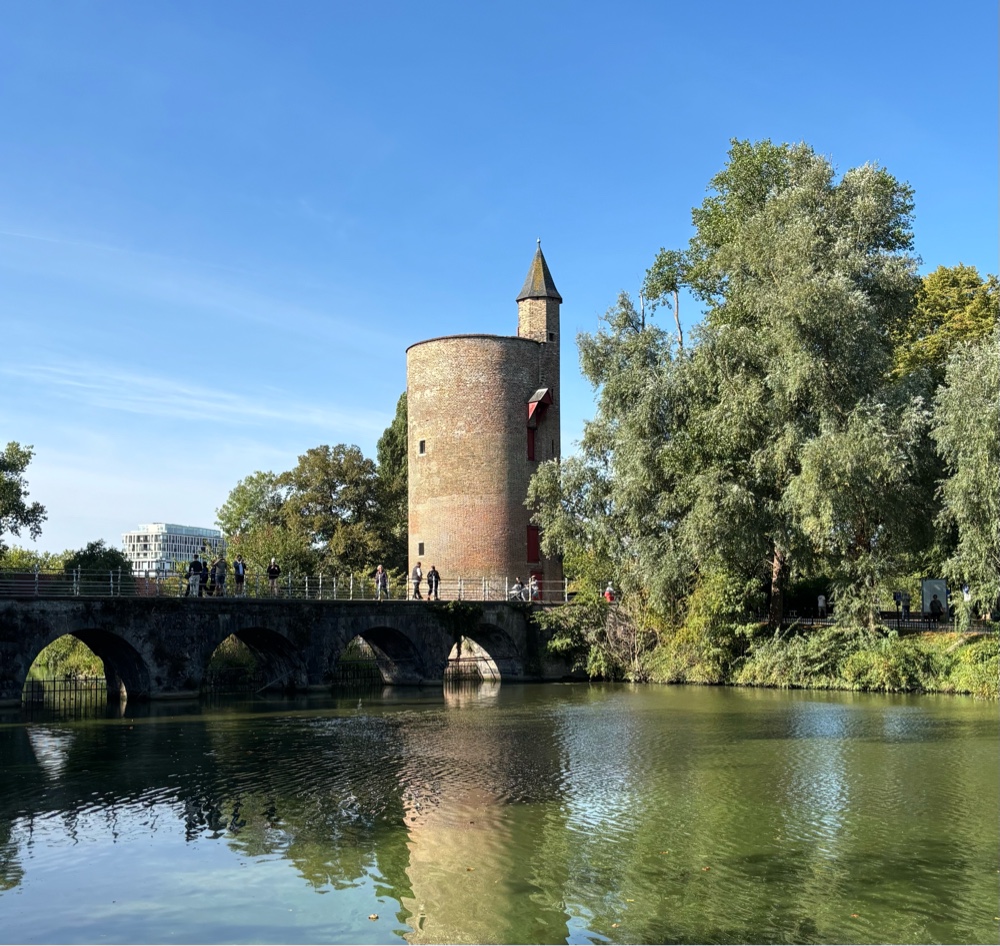 |
| One of the first things you see in Minnewaterpark is this 12th century gun tower. |
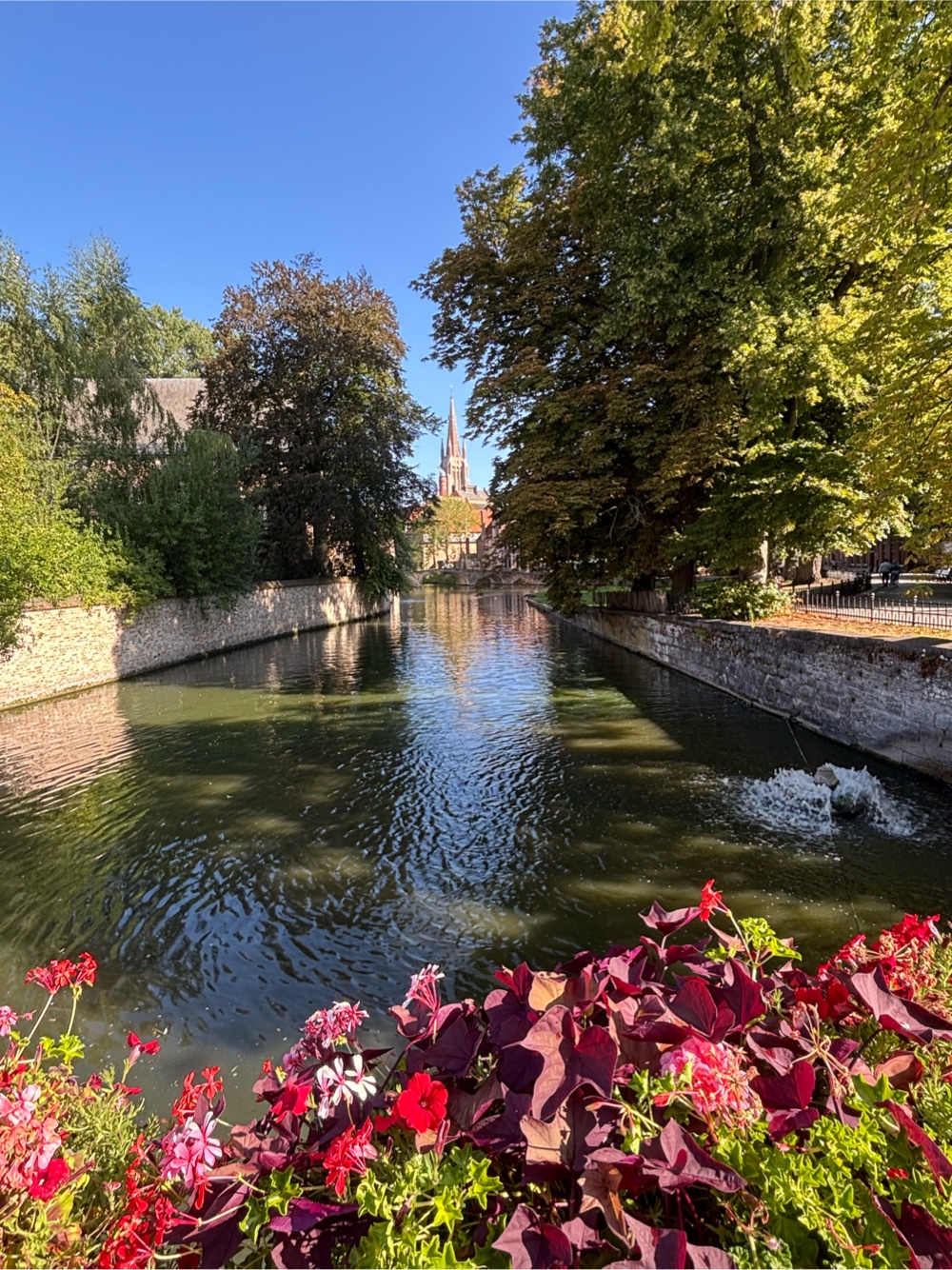 |
| After leaving the station, one catches the first glimpse of a Bruges canal in Minnewaterpark, |
Ten Wijngaerde
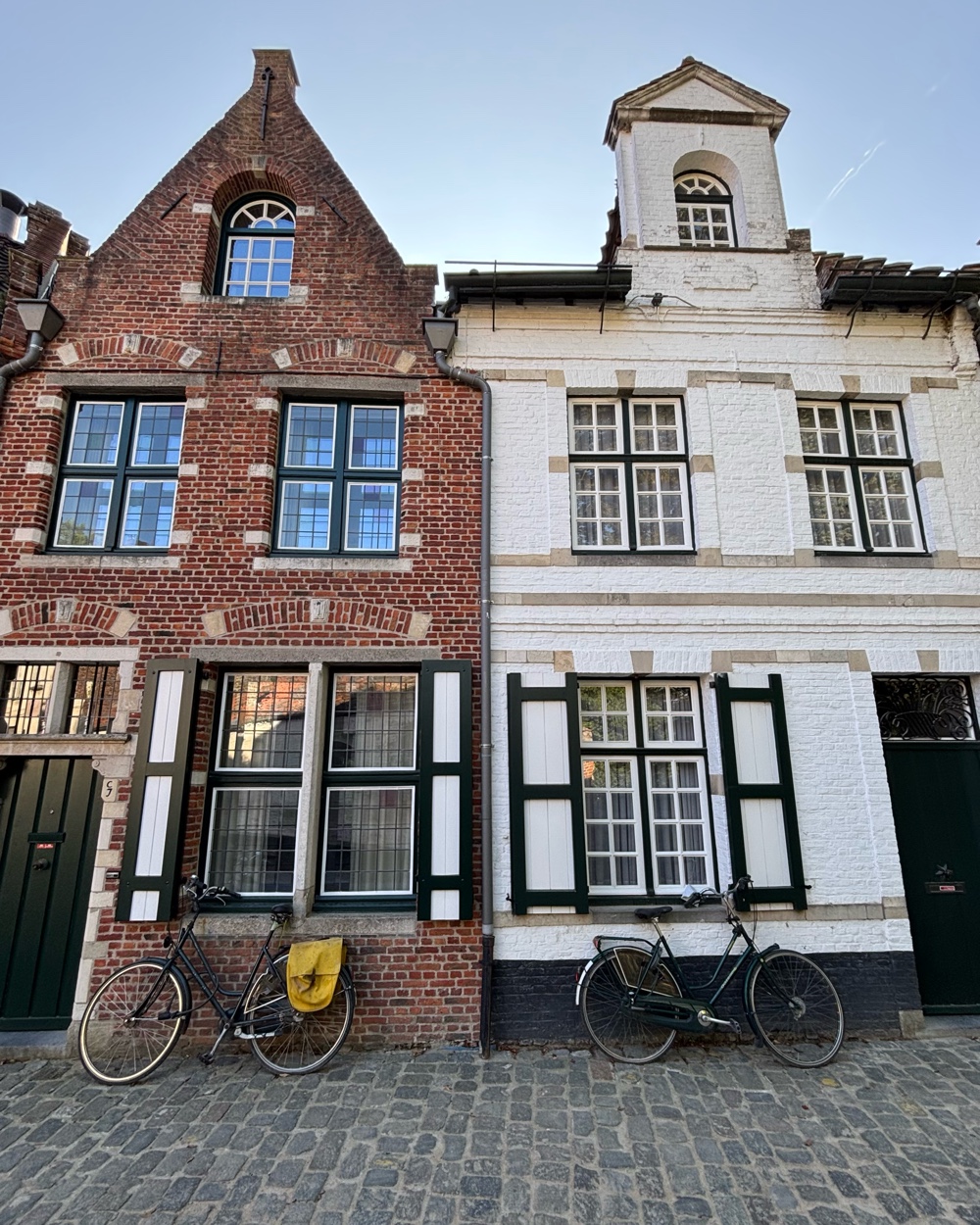
Beguinage "Ten Wijngaerde" dates to 1245 and forms part of the UNESCO-listed Flemish Béguinages. The whitewashed houses surrounding the tranquil green courtyard are a contrast to the busy centre of Bruges that formed the rest of our day in the city.
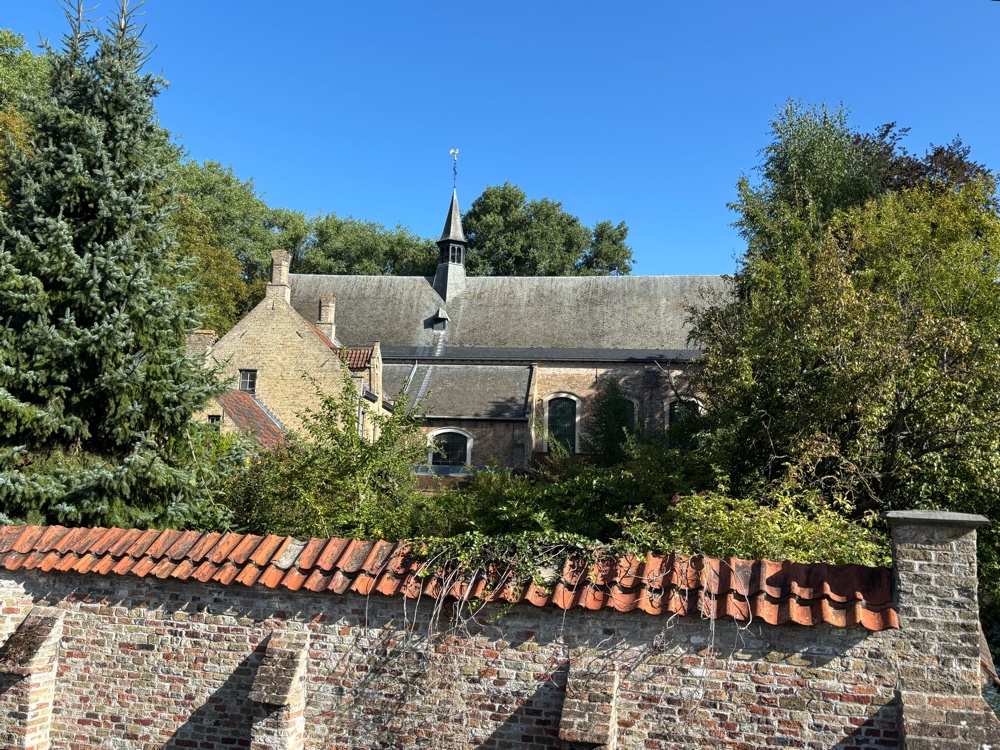 |
| ___kerk is a small church in Ten Wijnaerde. |
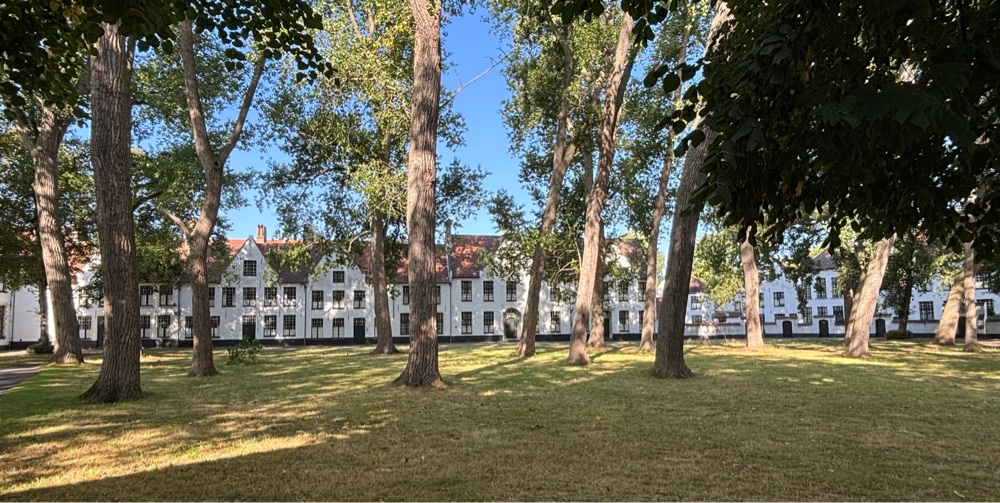 |
| The whitewashed row houses of Ten Wijngaerde. |
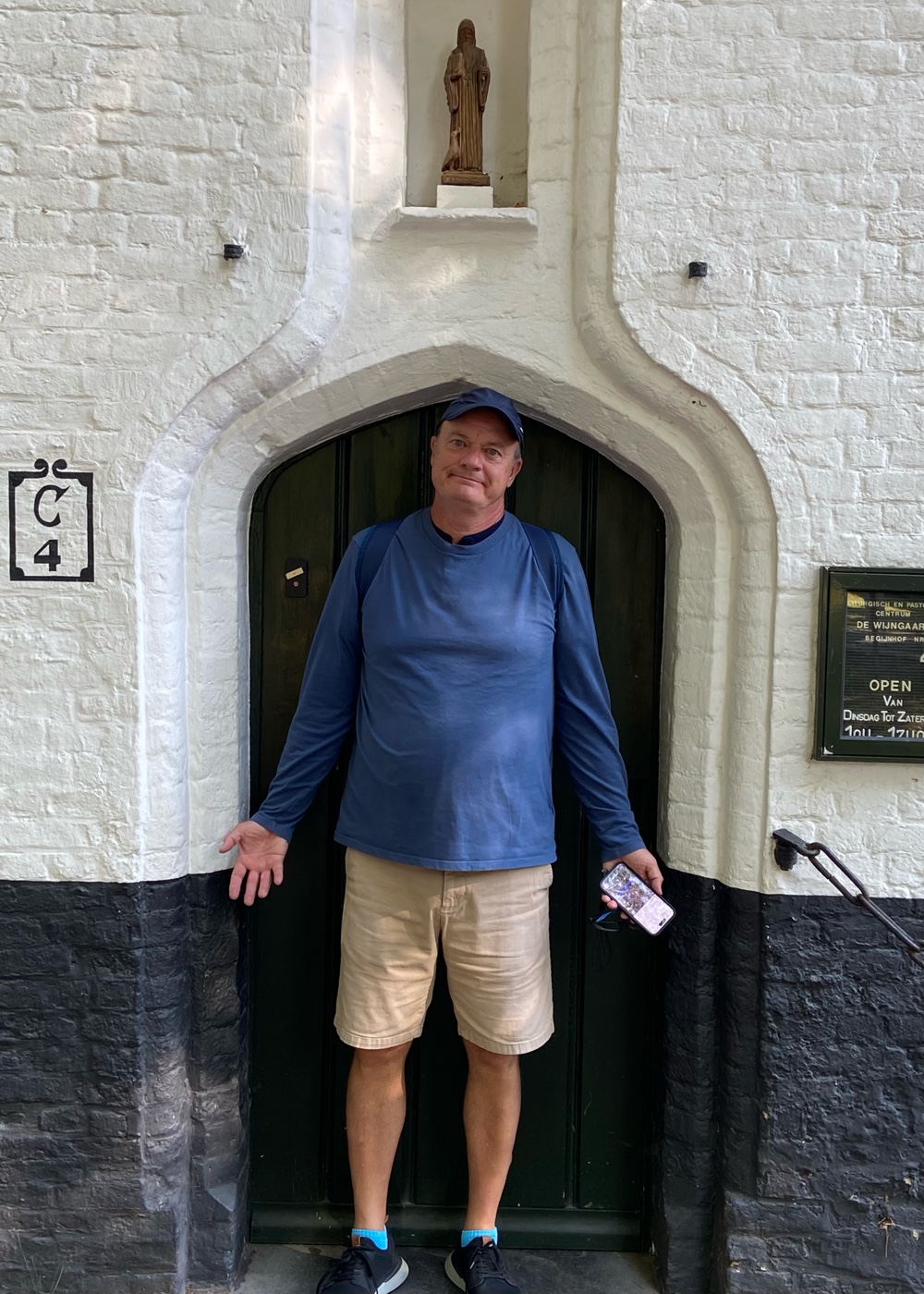 |
| Apparently, not all Medieval doorways were built with 21st century 6’ tall men in mind! |
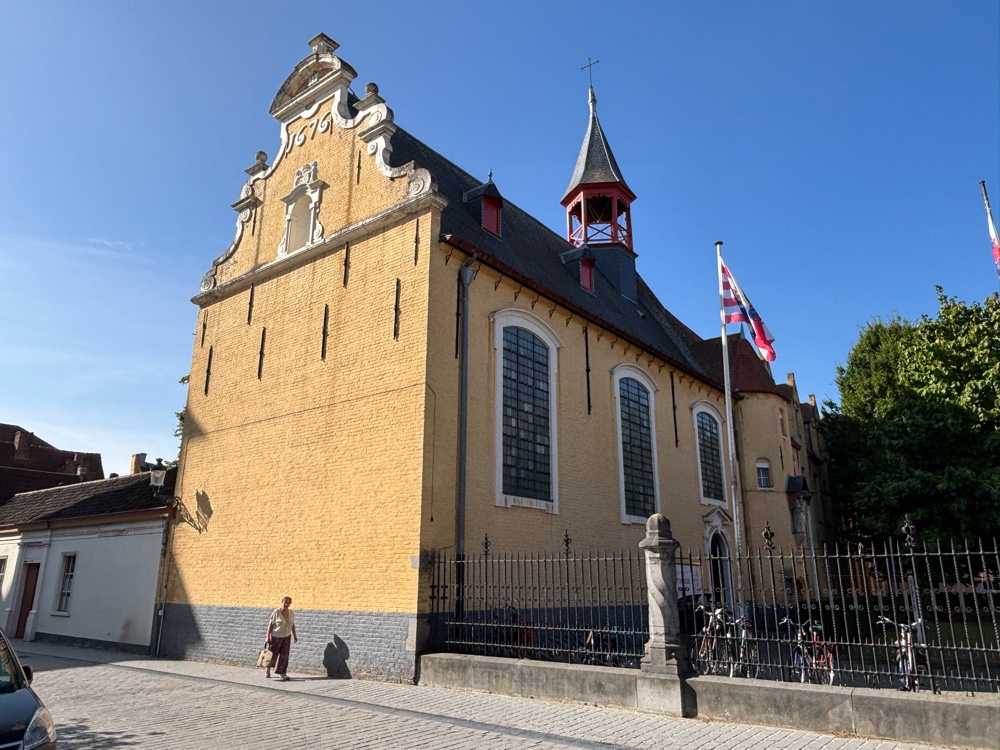 |
| Heading north towards the historic centre along the Main Street of Katelijnestraat, most buildings date from the 1600s or 1700s, like this 1676 church. |
Bruges’ Historic Centre
Nearing the historic centre, one is suddenly surrounded by one major site after another.
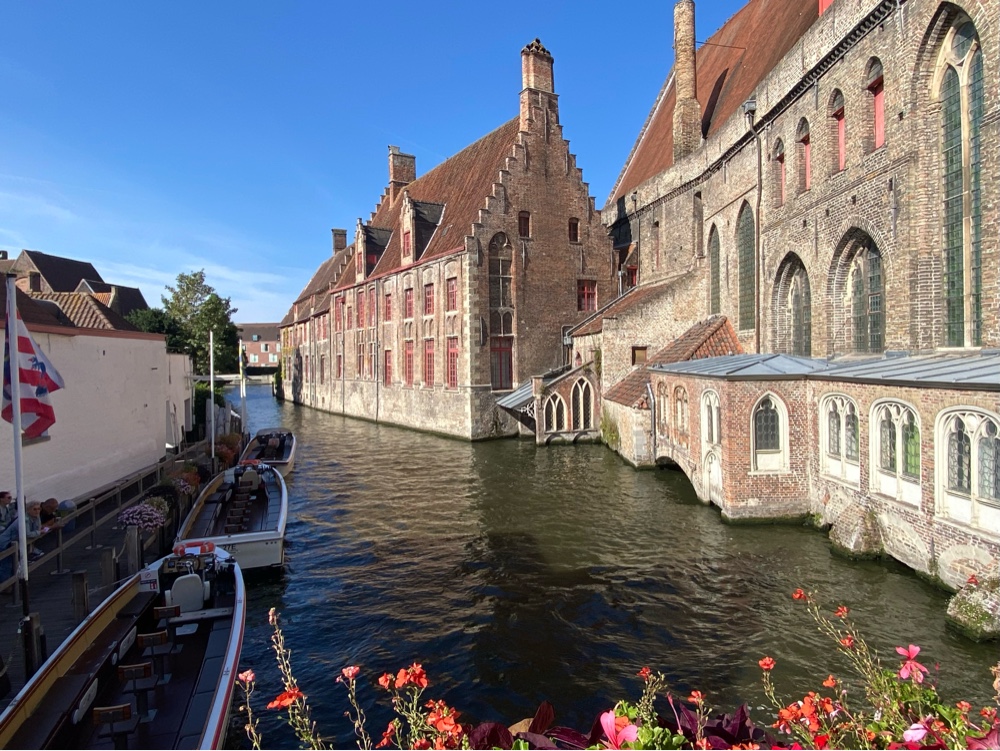 |
| St. John’s Hospital was an active hospital until the 1970s. |
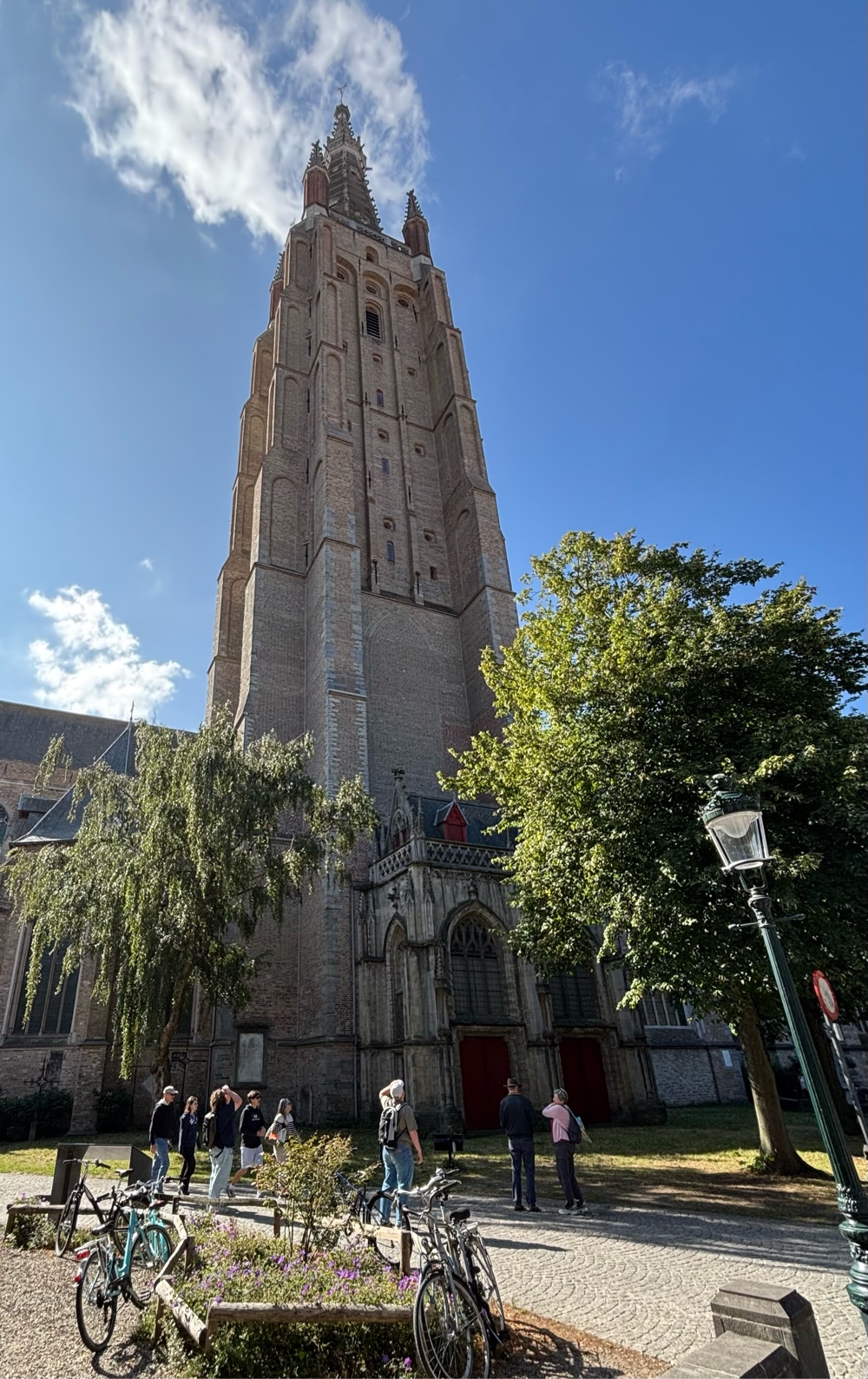 |
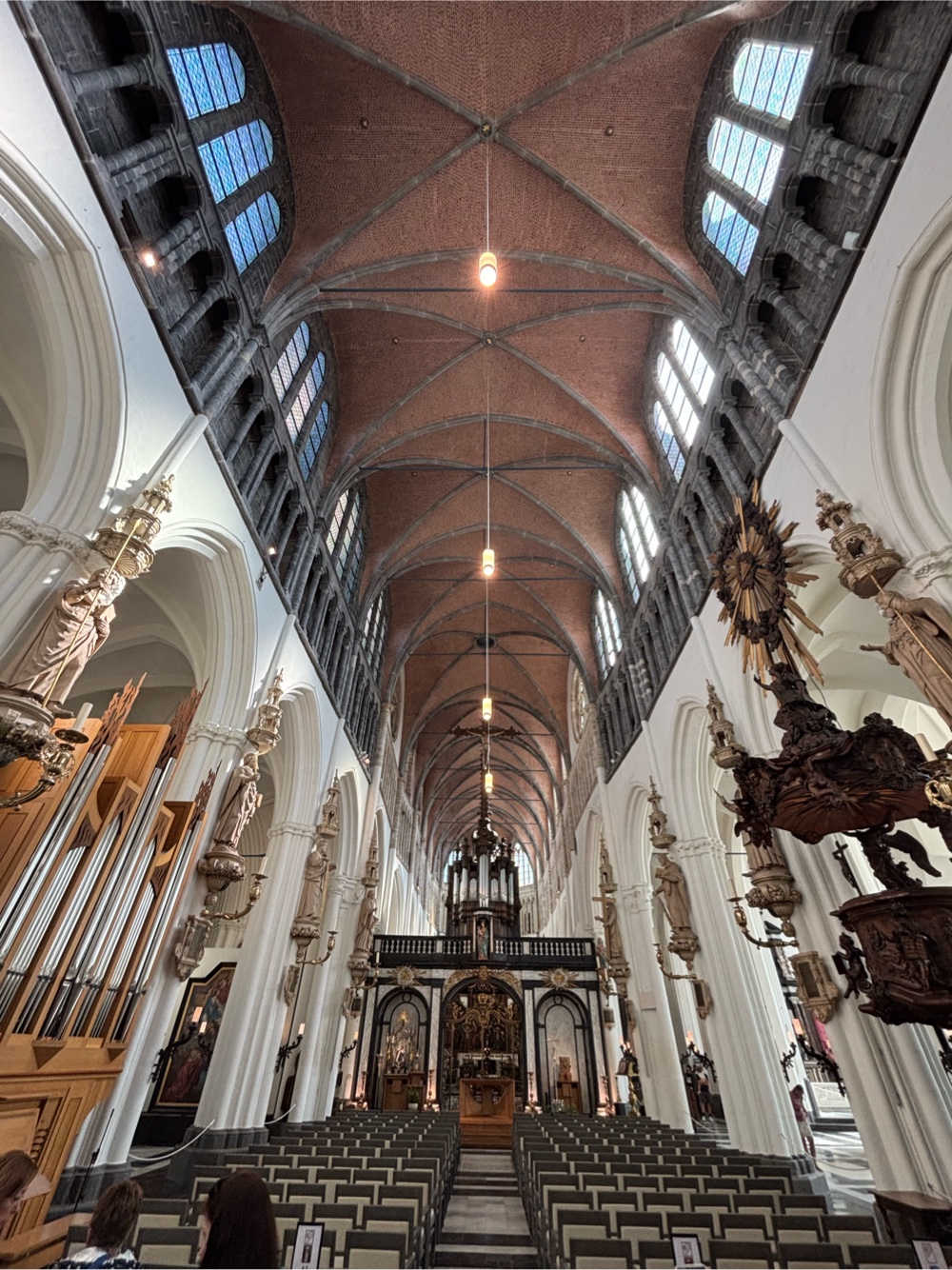
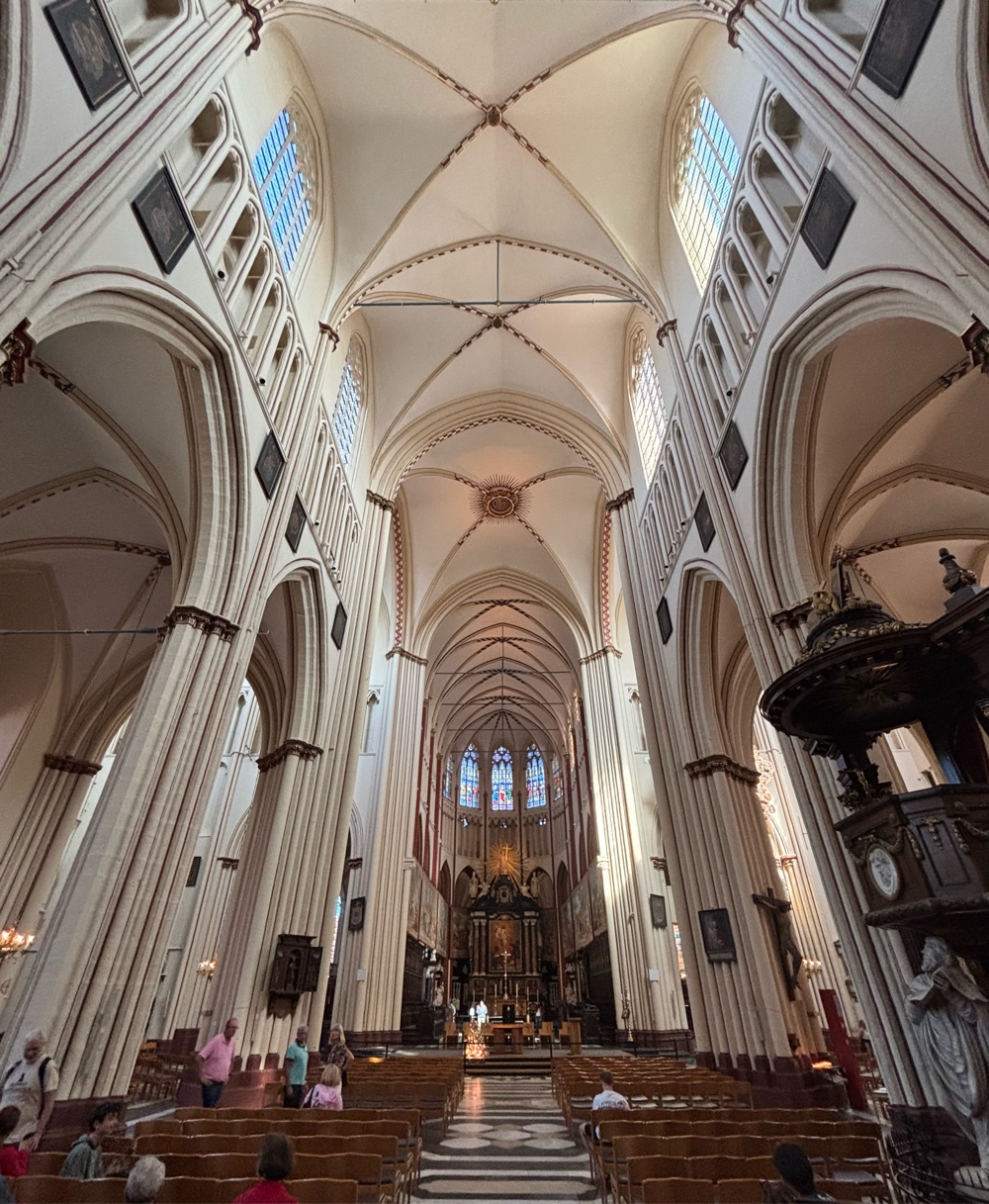
| Church of Our Lady is one of the two largest and most important cathedrals in Bruges. The church contains Michelangelo's ‘Madonna and Child’, which is the only work by Michelangelo that left Italy during his lifetime. It also contains the monumental tombs of Mary of Burgundy and Charles the Bold. As with most large cathedrals in Belgium, these treasures are kept in a separate area requiring admission. Church admission itself is free, as rule, but the parishes make sufficient funds off the admission to their important artworks to keep the lights on. |
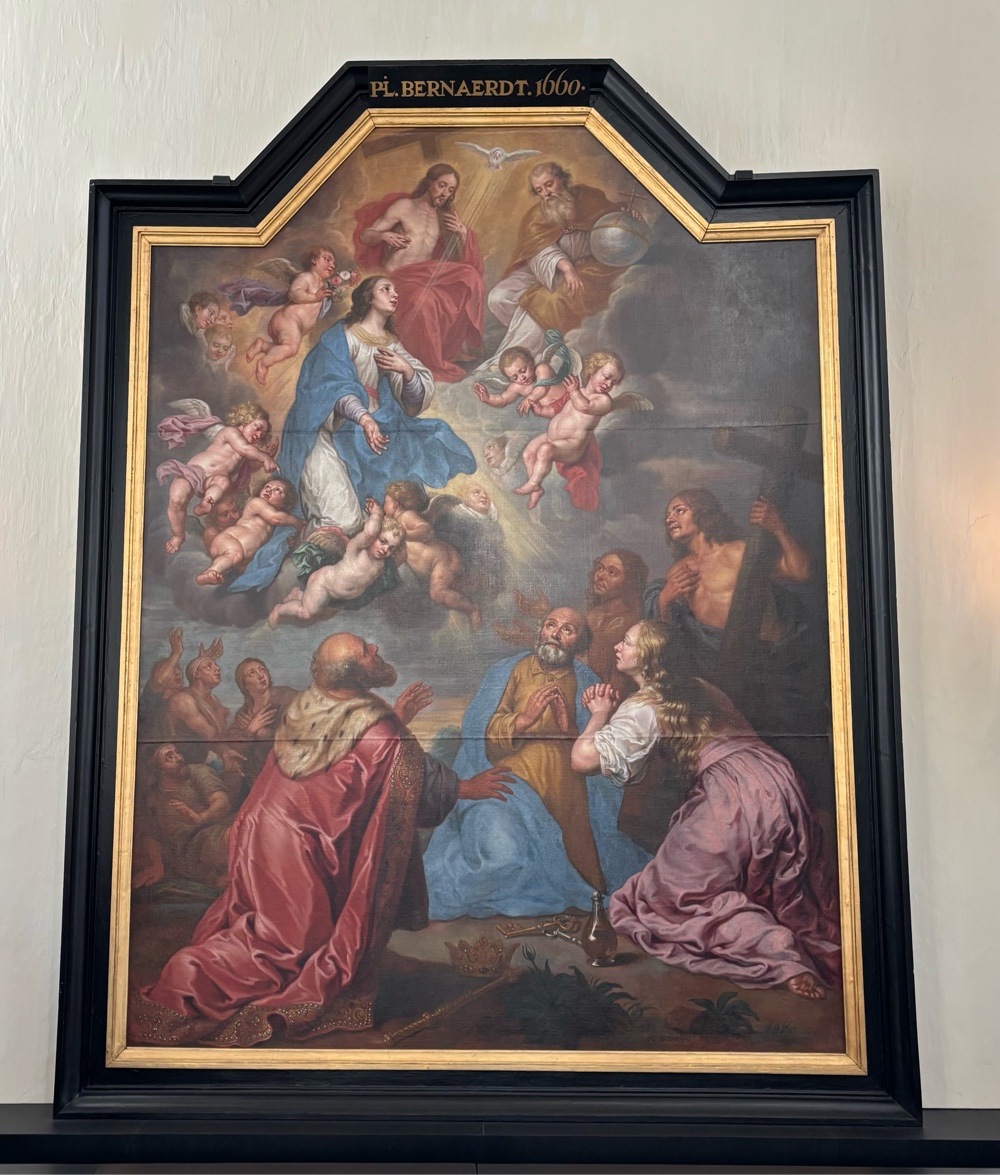 |
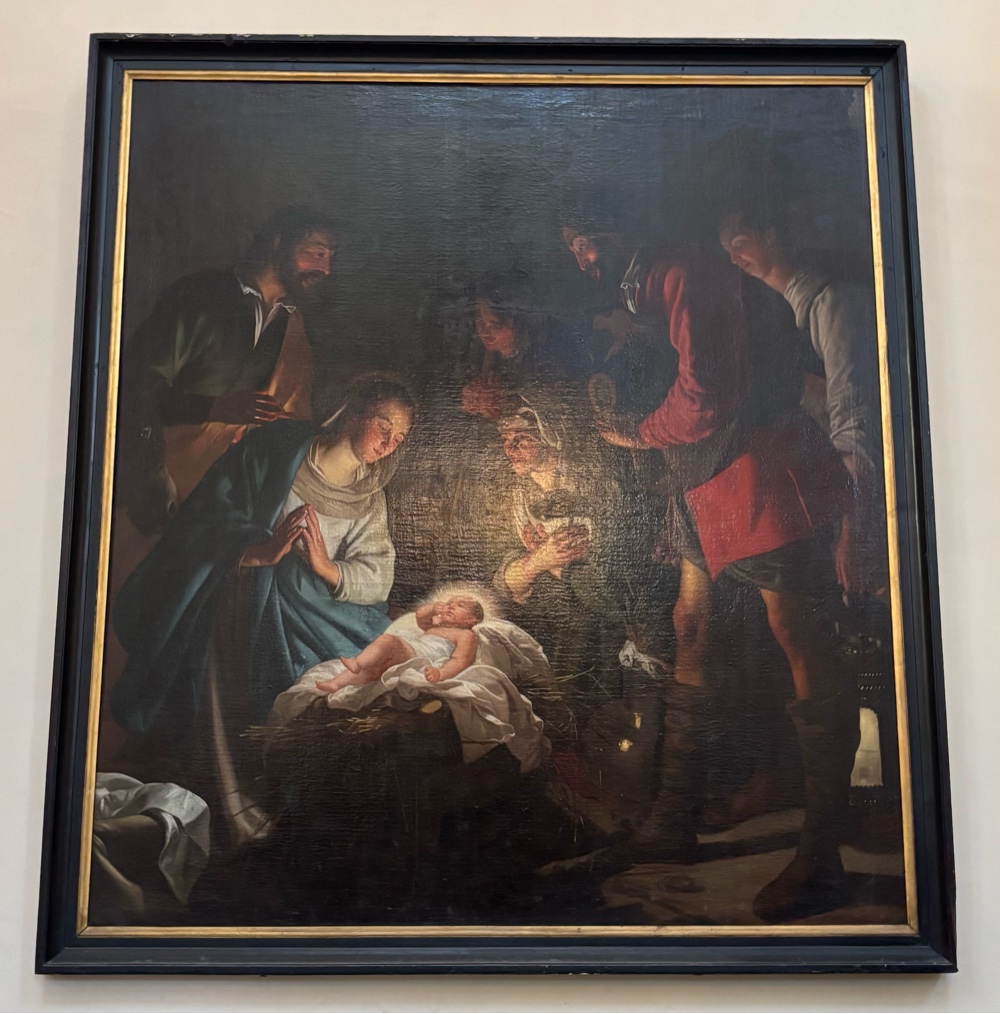
| Not all stunning artworks in the churches are kept behind the paid admission barrier. Some, like this work by P.I. Bernaerdt from 1660, are available for general viewing. |
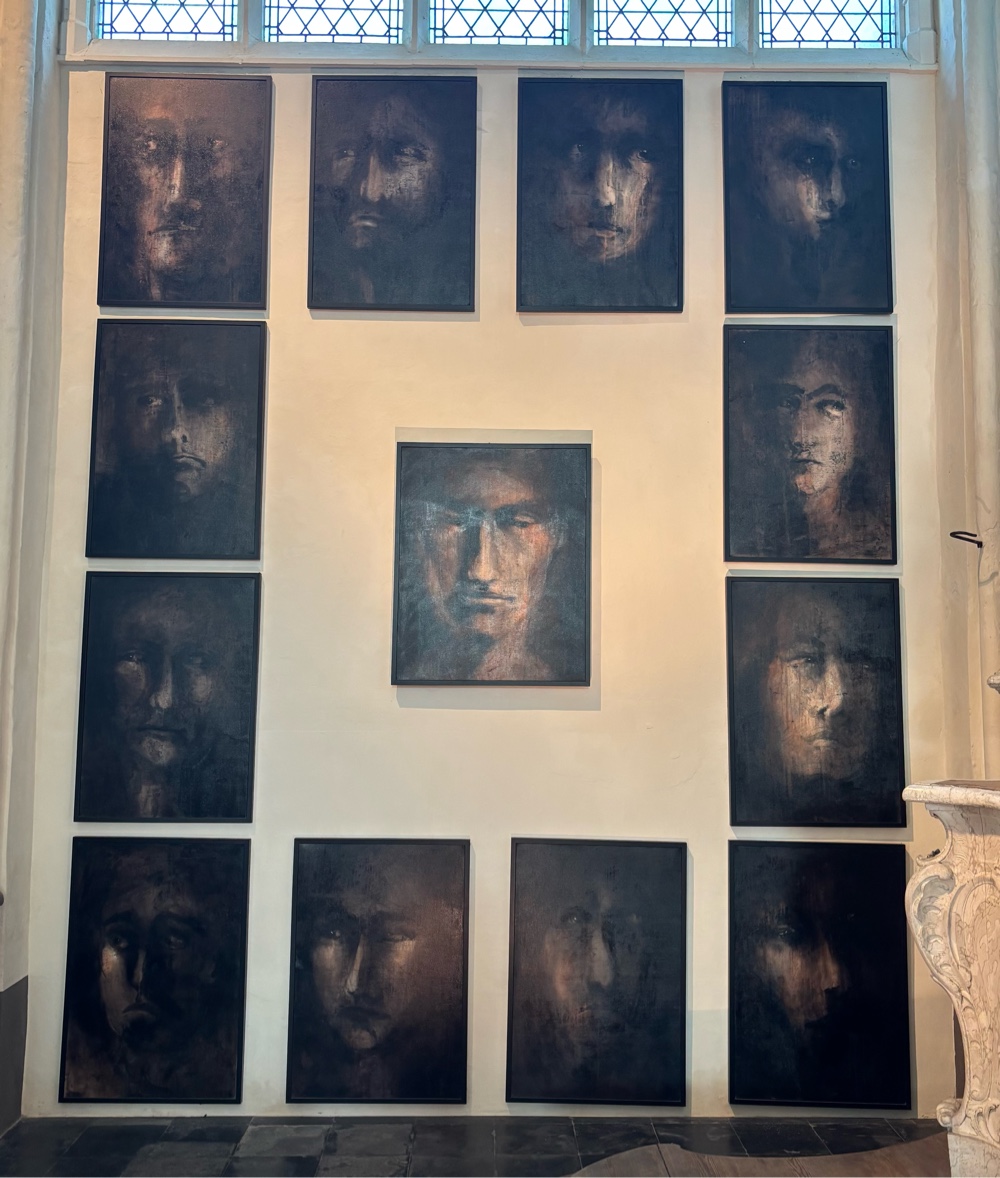 |
| As a career public servant, I loved ties. But ties reflect a very individual taste: what one likes, another dislikes. It’s the same with art. This work in Church of Our Lady, “Derniere Cene” by Brussels artists Fabienne Havaux, really spoke to me. Oil on canvas, it reflects Christ (centre) on the night of his betrayal. The 12 apostles are all presented, but the artist doesn’t identify any of them. One of them, however, is Judas. The work raises the question, why would Judas choose to betray his friend? |
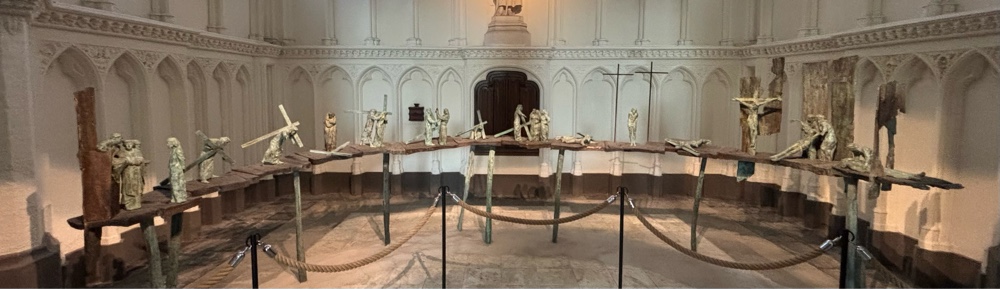 |
| All cathedrals tend to have the ‘stations of the cross’ within the sancutary, which are often depicted via paintings. Church of Our Lady, however, has presented them in a very unique manner, via these small sculpture pieces. It allows you to take in all the stations of the cross in one contiguous view. Very moving! |
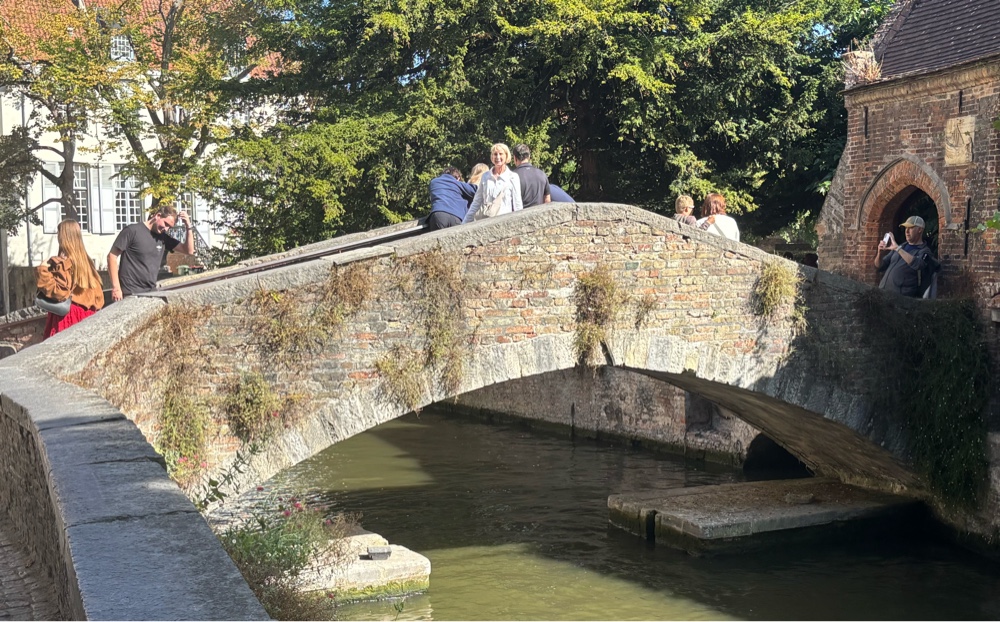 |
| The Boniface Bridge over the Dijver Canal. |
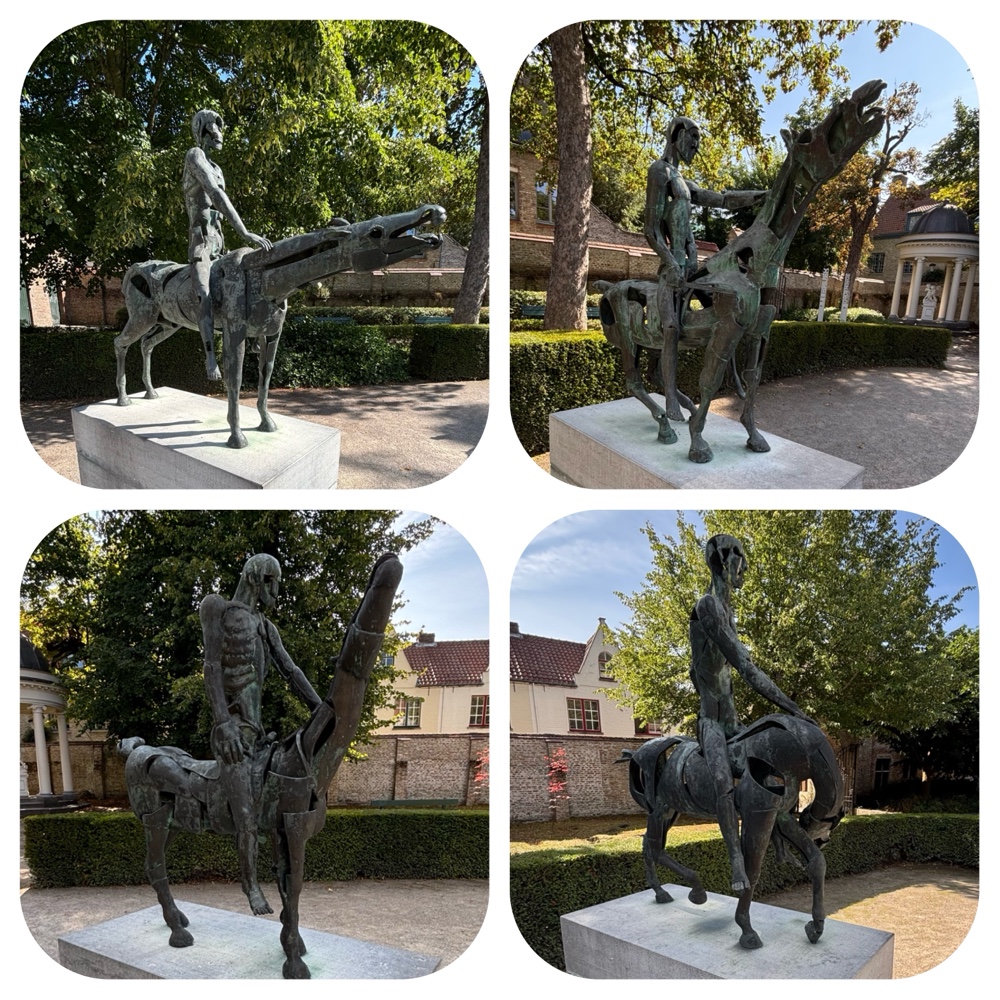 |
| Near the Boniface Bridge sits a contemporary art installation which is the complete antithesis of the scene presented by the bridge over the canal: “The Four Horsemen of the Apocalypse”. Created by sculptor, Rik Poot, from 1981-1987, it jolts a person out of the bliss of the gentle Bruges by presenting the four riders: Death, War, Revolution, and Hunger. |
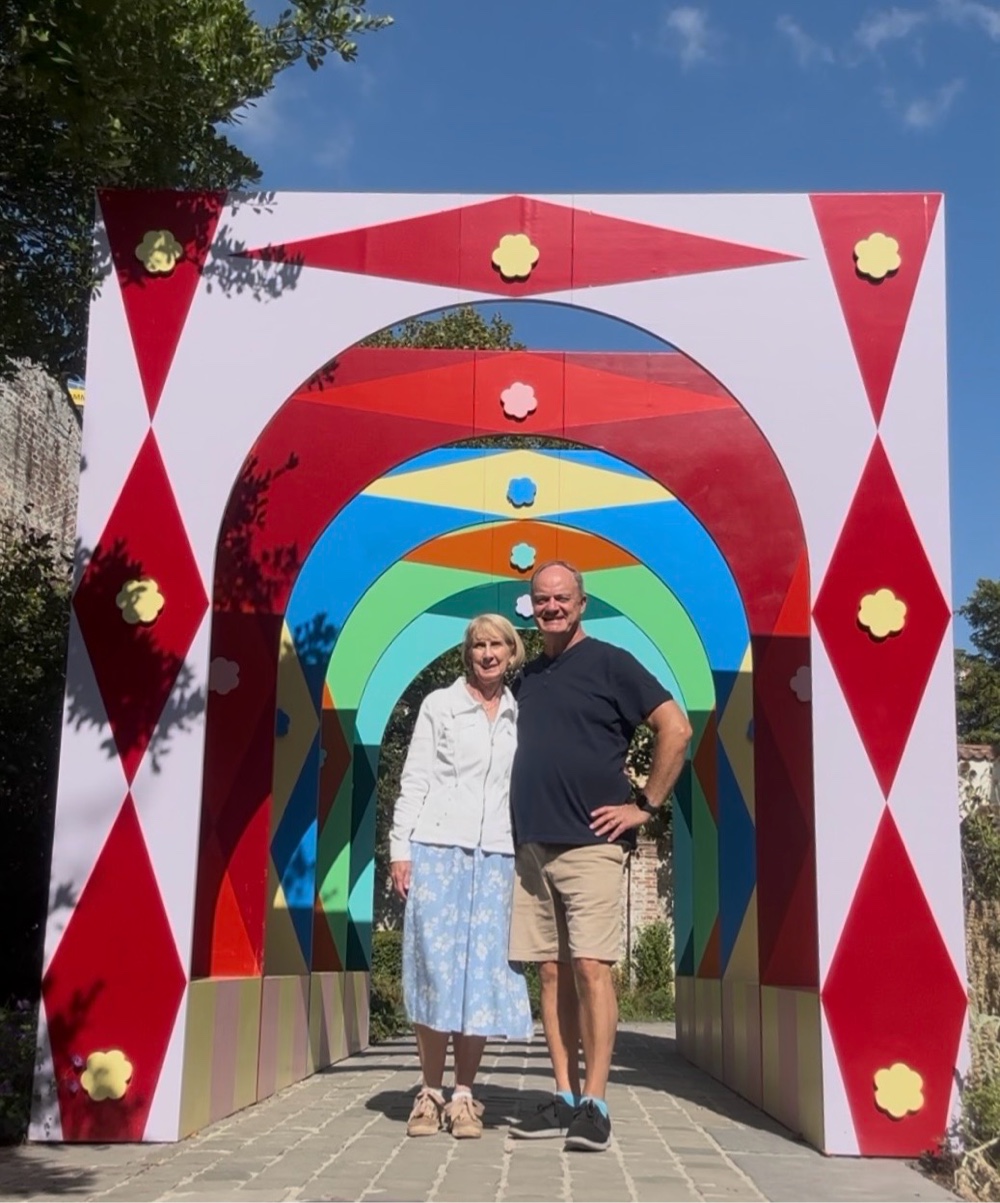 |
| Just after the Four Horsemen of the Apocalypse, this colourful photo opp appeared, as if to lift one’s spirits from the message of the sculpture. |
Canal Cruise
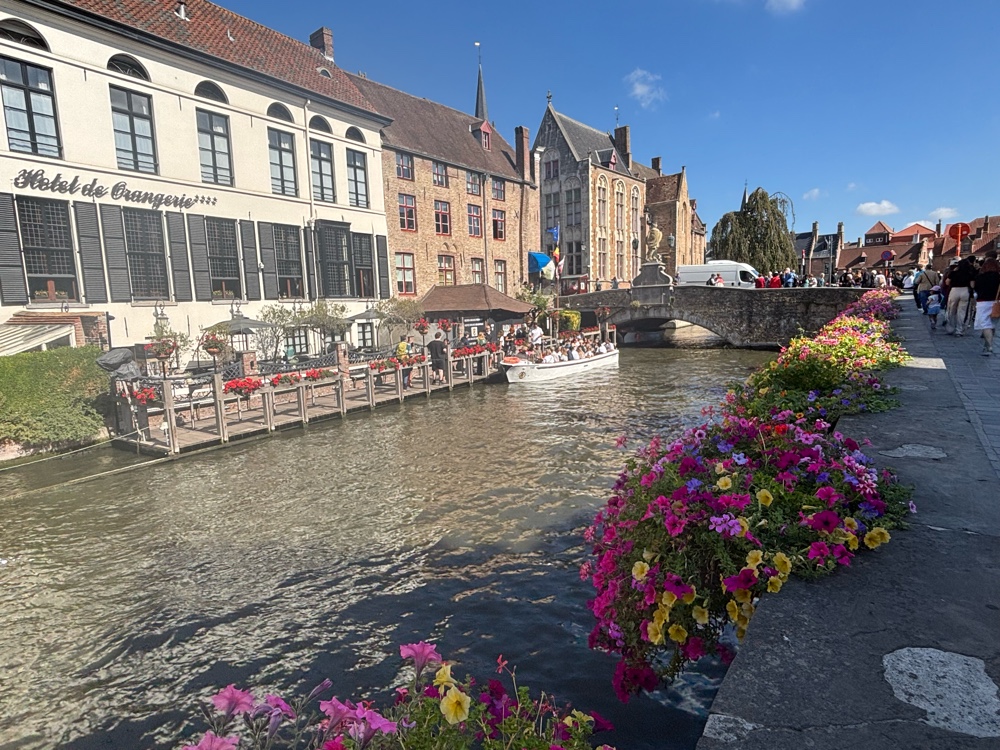
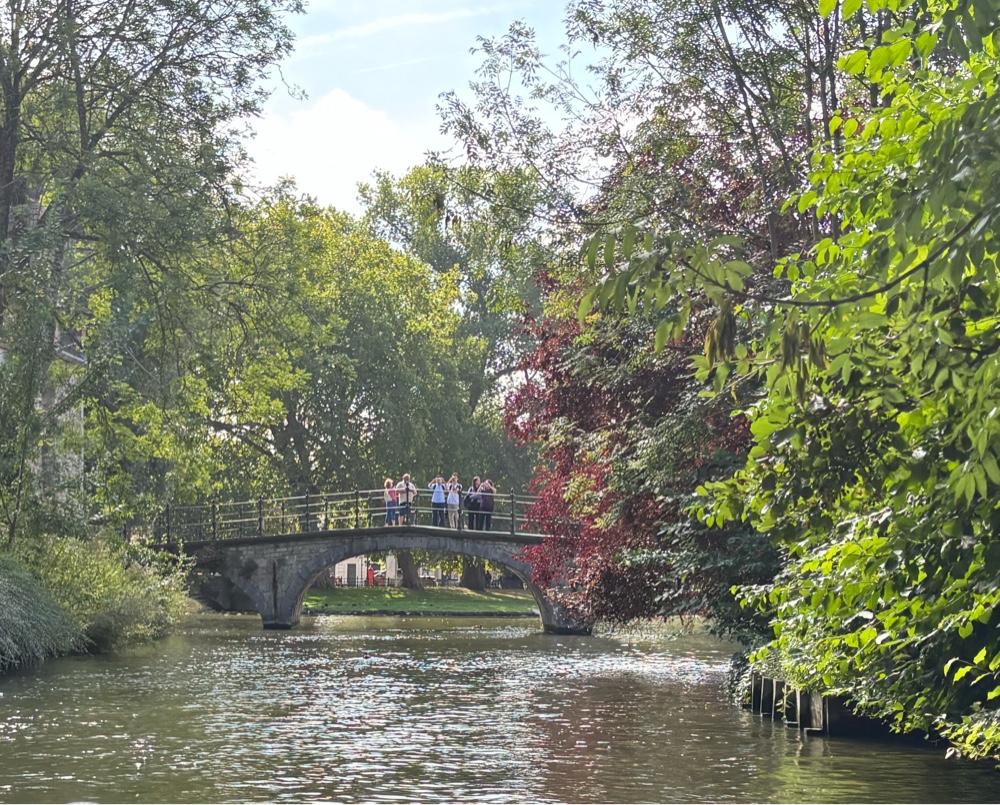
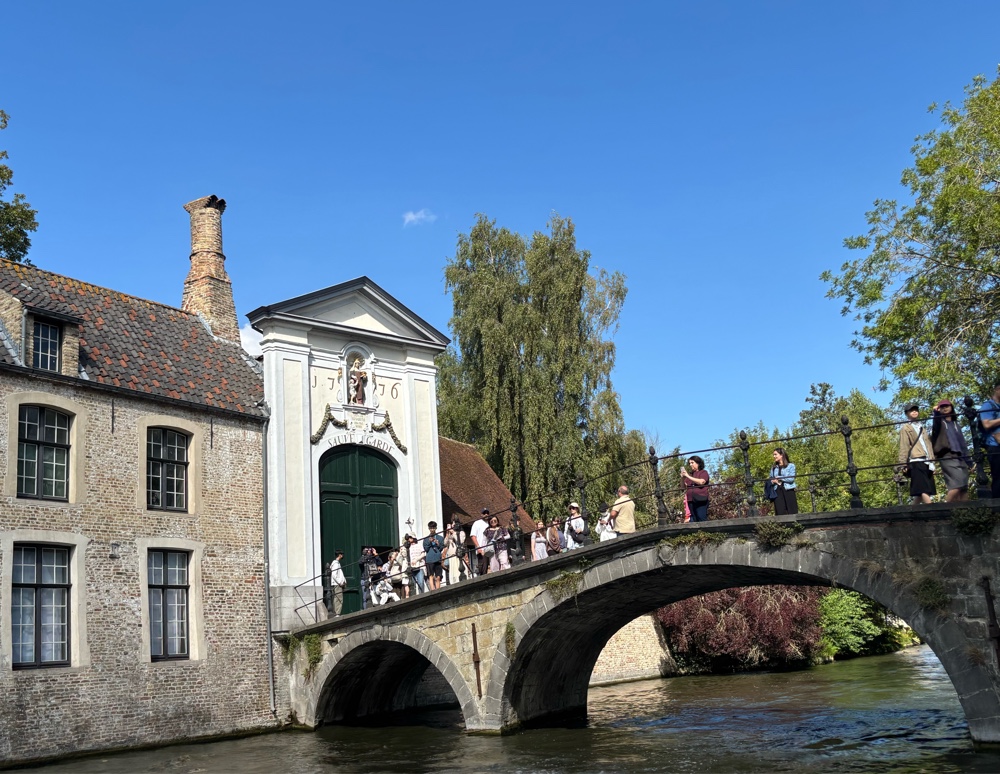
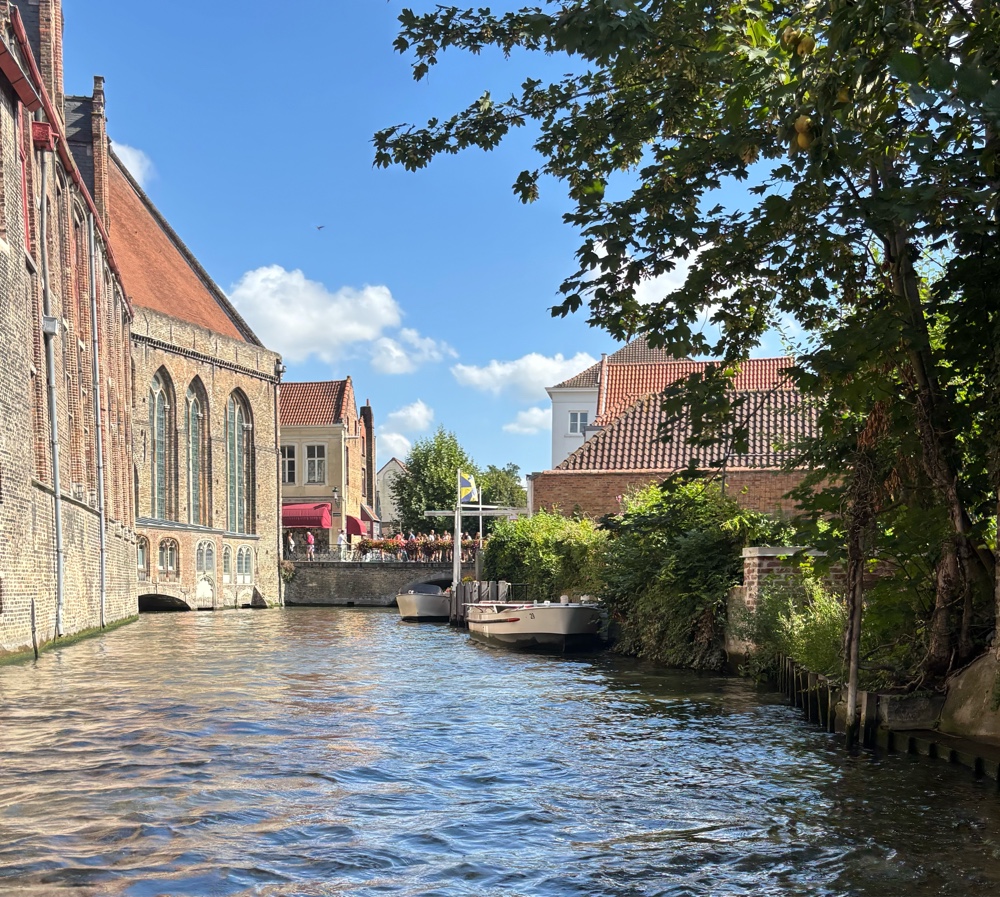
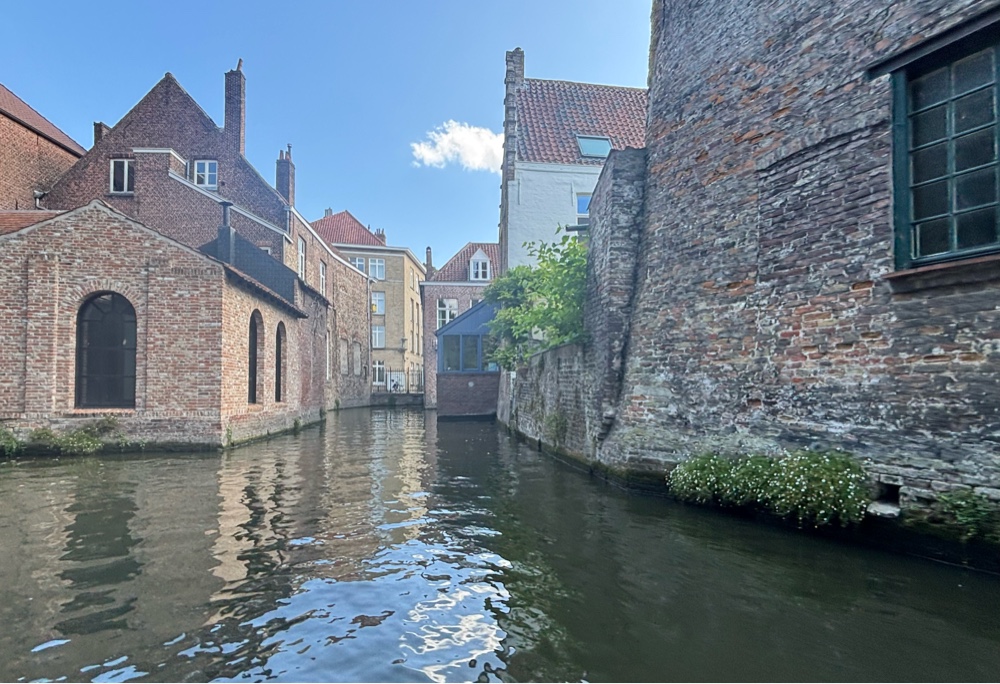
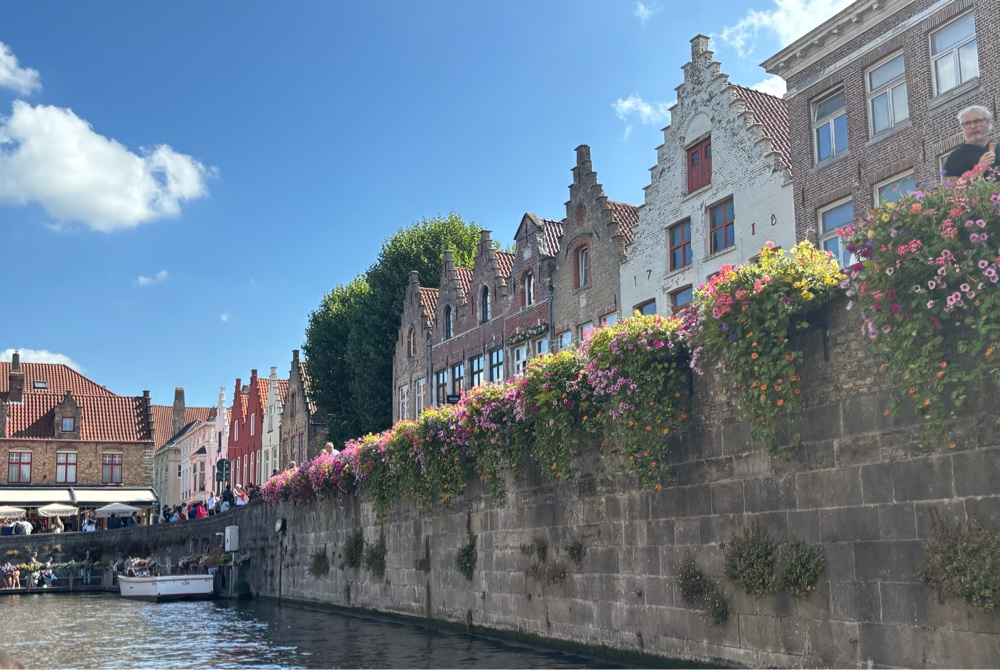
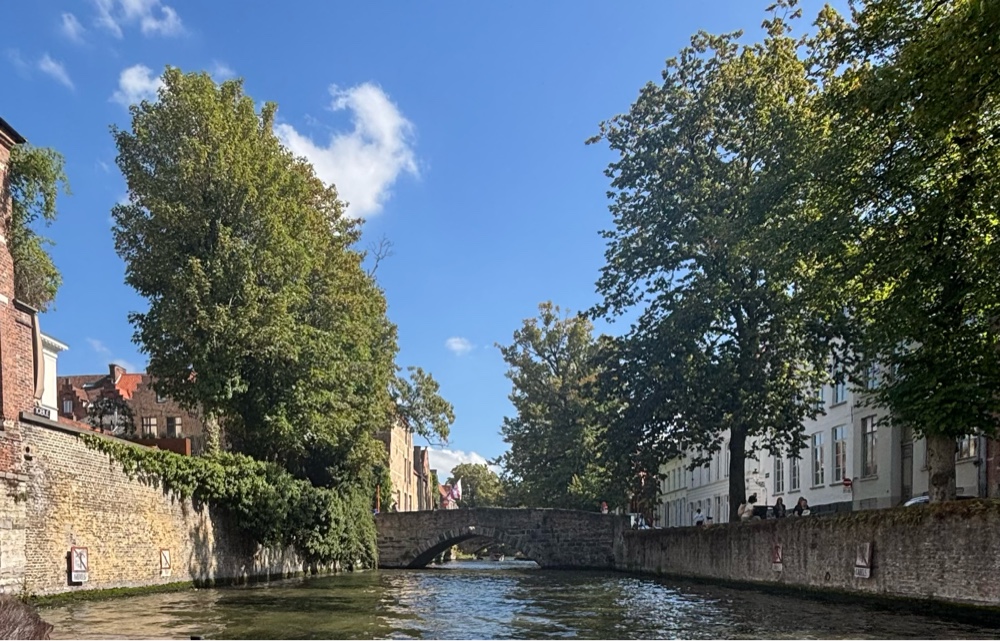
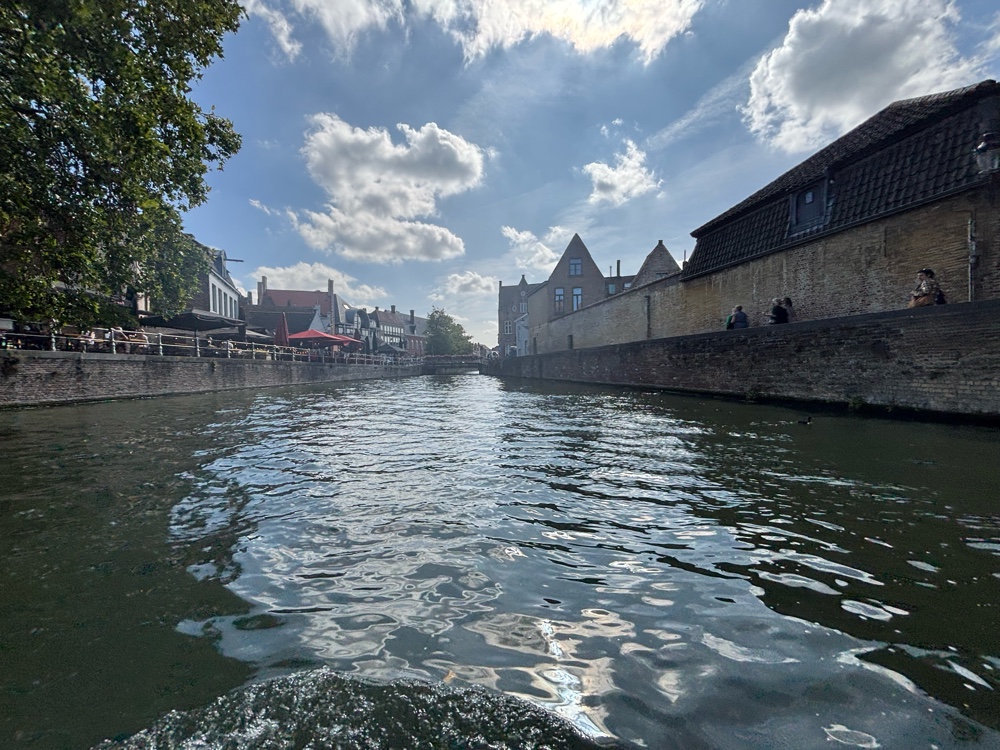
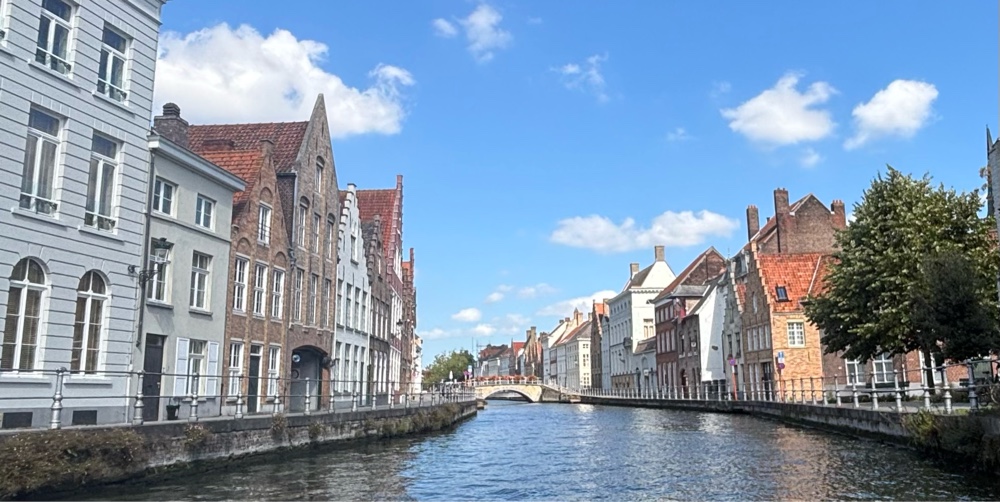
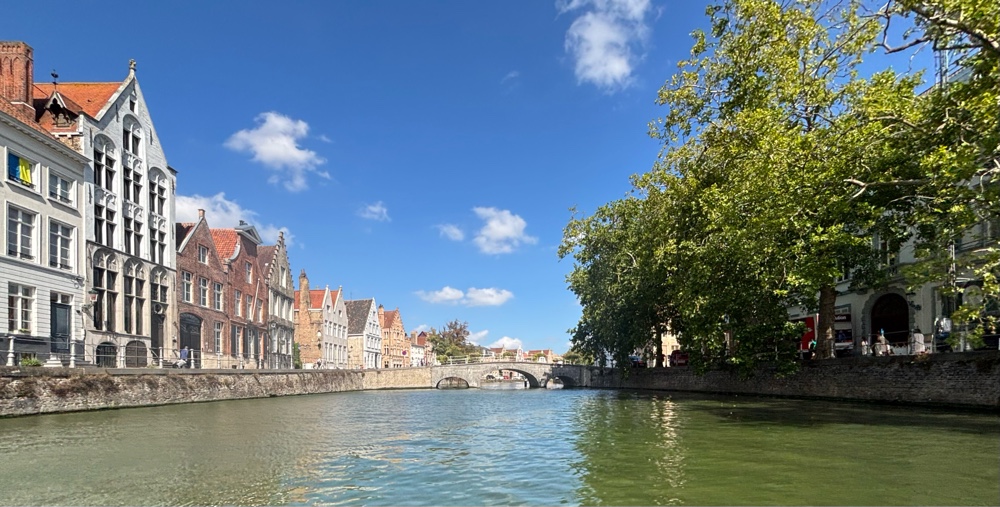
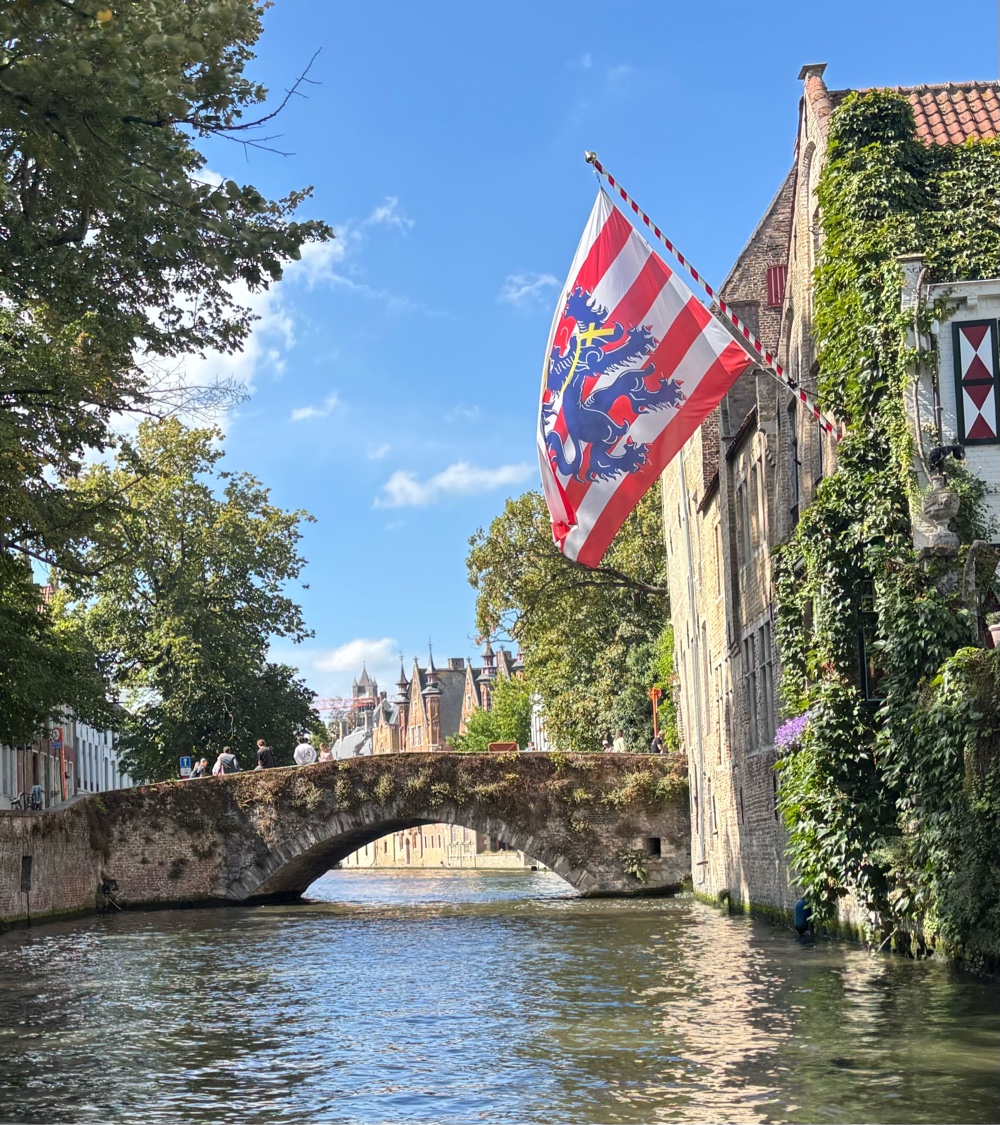
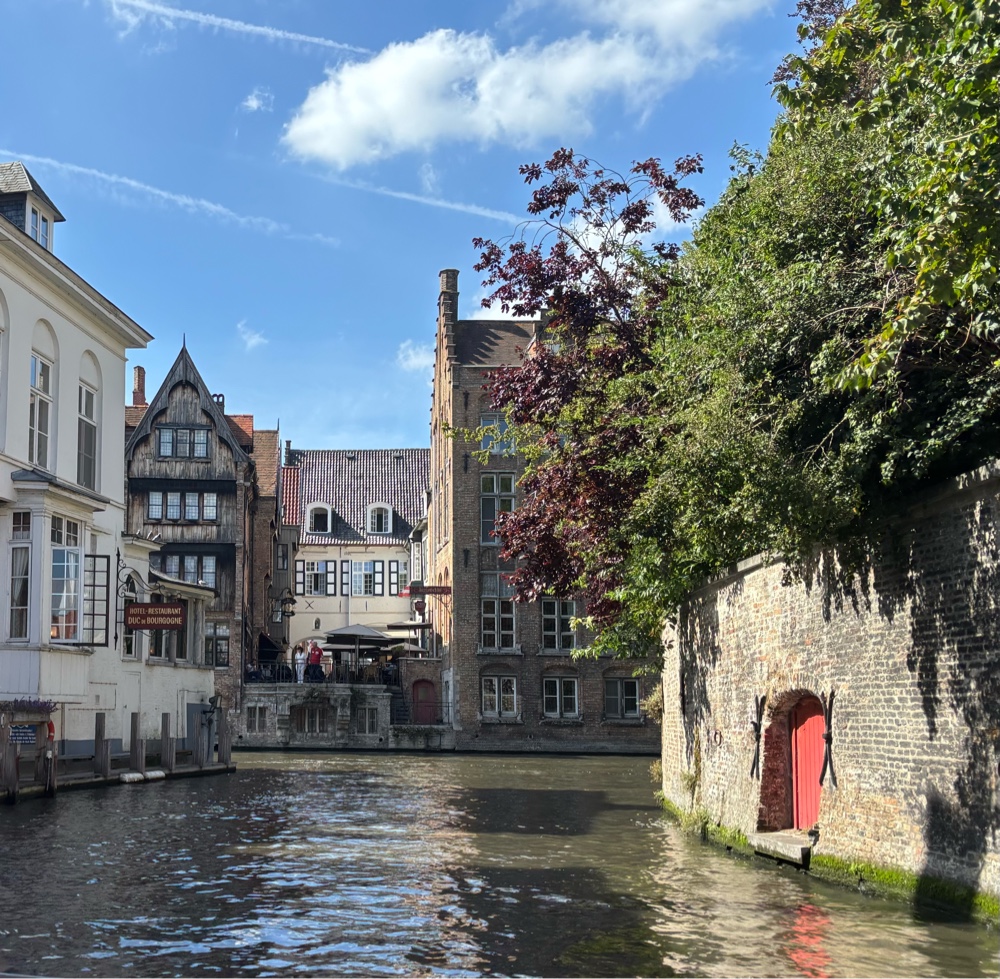
A Bruges visit without seeing the city from the water is incomplete. And those canals are so gosh-darn incredible! We had heard there can be a long wait for a canal cruise, despite the fact that boats are constantly departing. Fortunately, we only had a 10-minute wait. At 11:45AM, we set off on our tour from the lower-lined Rozenhoedkaai. Our captain was was incredibly knowledgeable about Bruges but definitely ran a tight ship! We passed under countless bridges (apparently, Bruges has over 80 of them) and no end of the most picture-perfect houses and buildings that are centuries old.
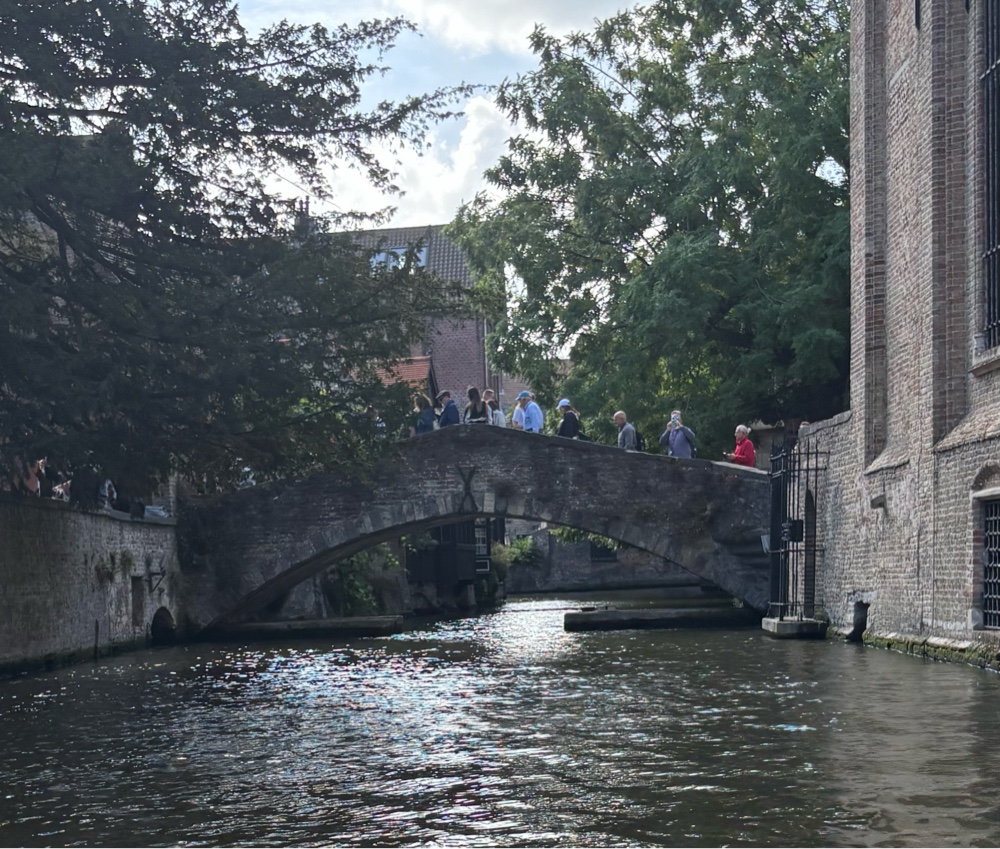 |
| The Boniface Bridge is Bruges’ most photographed bridge. It’s looks Medieval, but it was actually built in the early 20th century. |
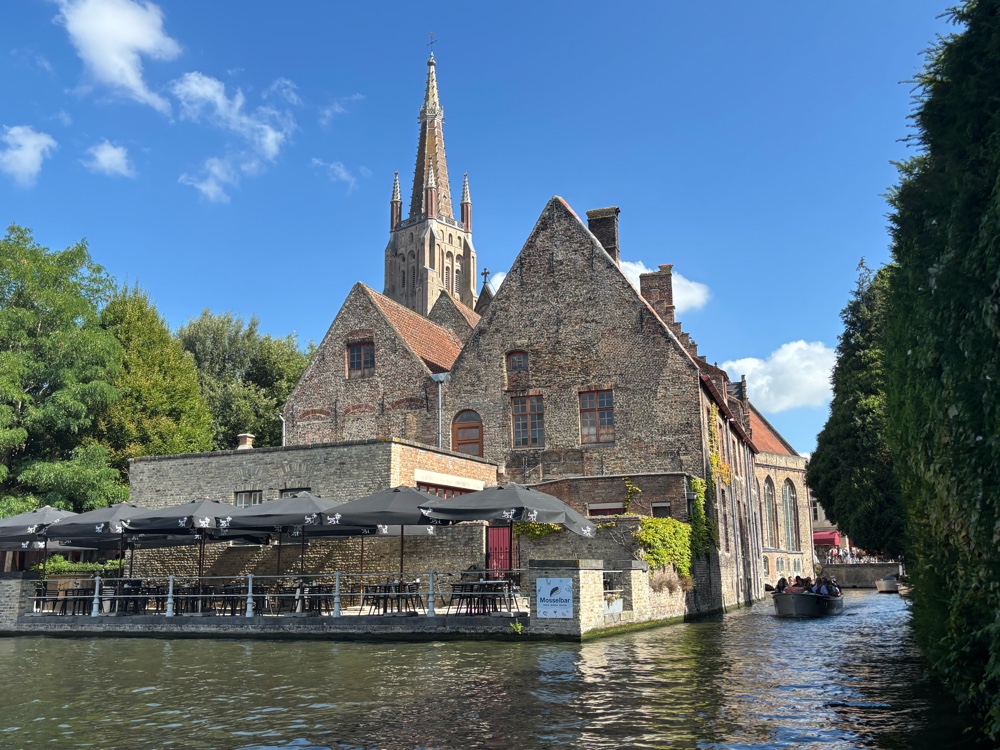 |
| Another view of St. John’s Hospital. Our tour boat captain told us she was born in the hospital in 1976. |
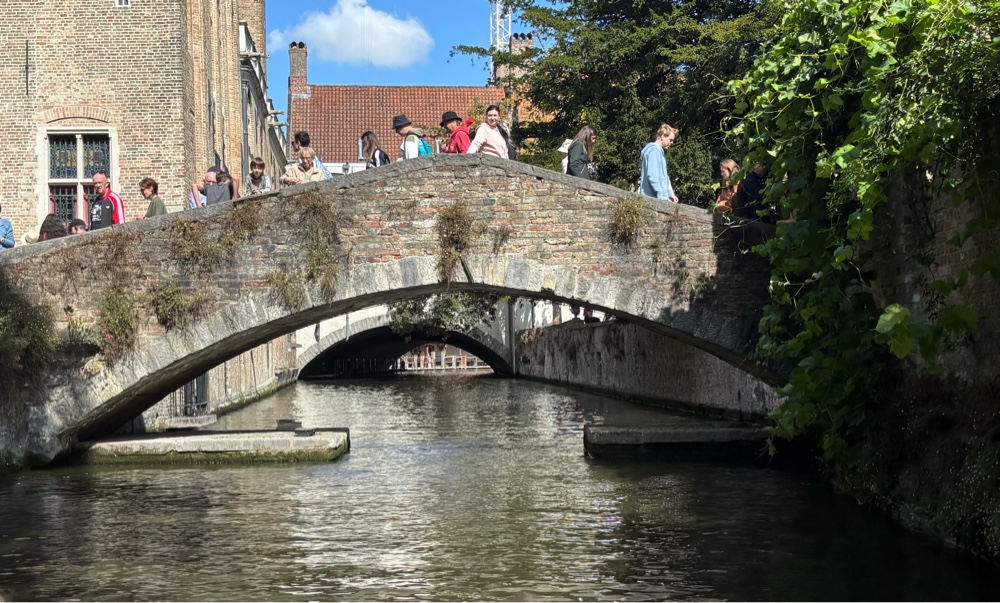 |
| Another view of Boniface Bridge. |
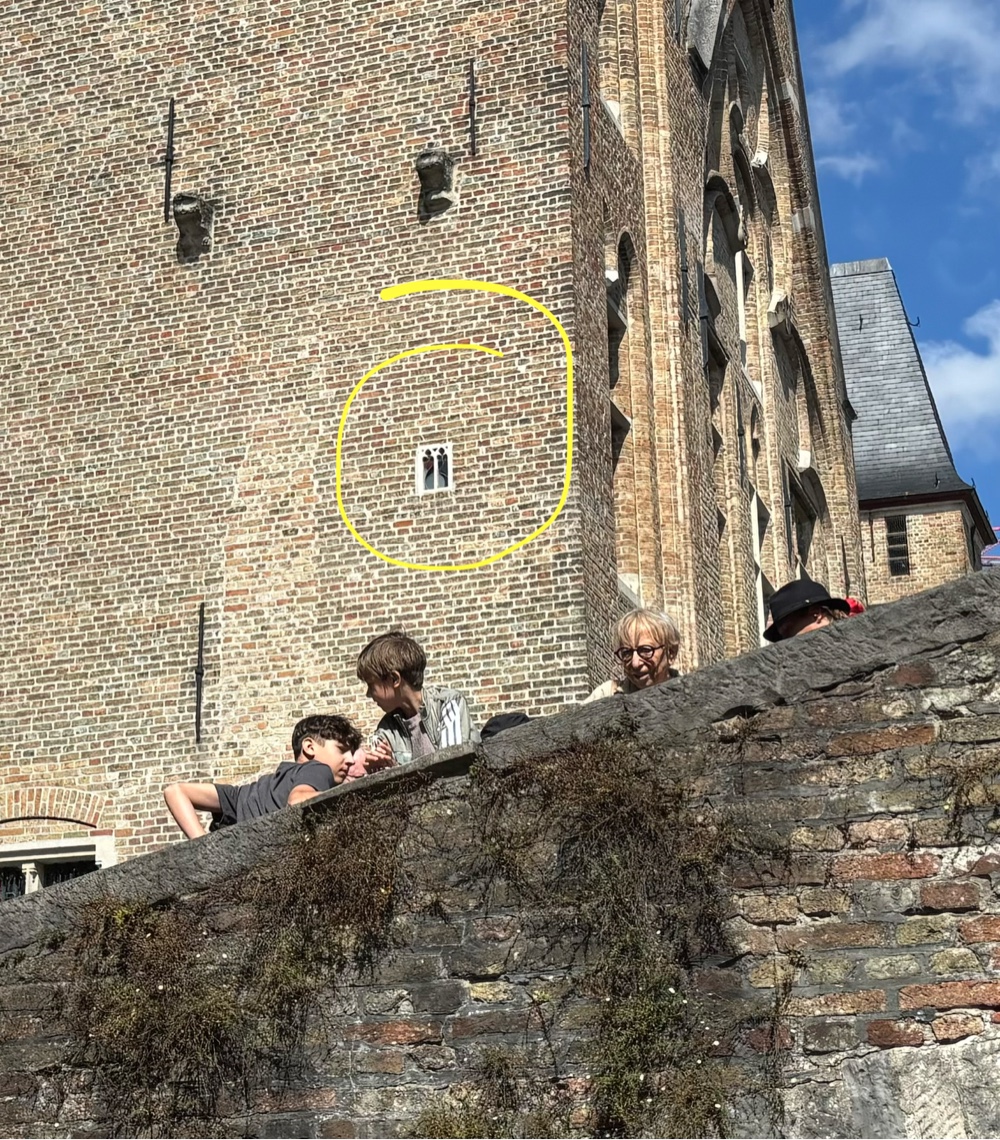 |
| This tiny window in Gruuthuse Palace, adjacent to Boniface Bridge, is the smallest window in Bruges, according to our boat captain. |
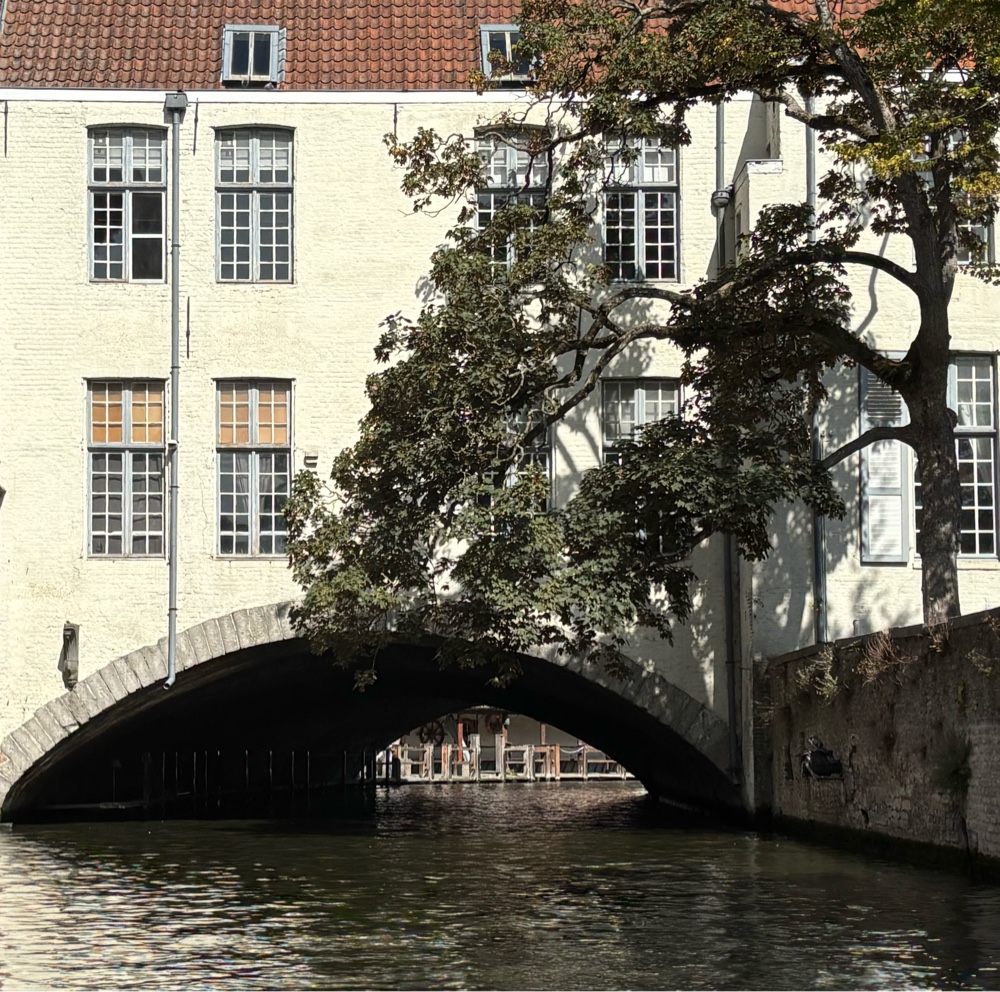 |
| This building and the bridge beneath it was constructed in sections, over the course of three centuries. |
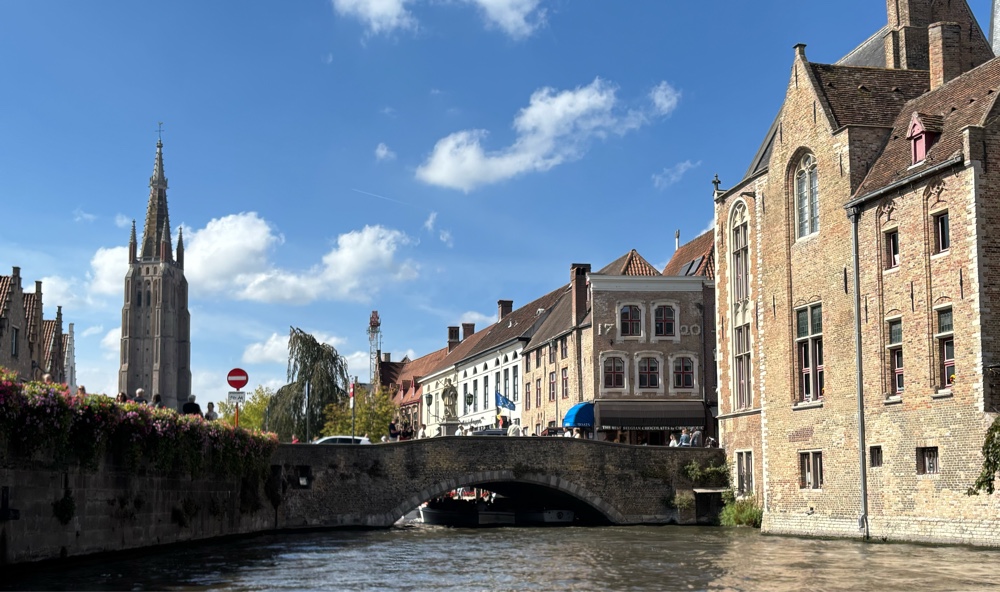 |
| Rosary Quay, in the heart of historic Bruges. |
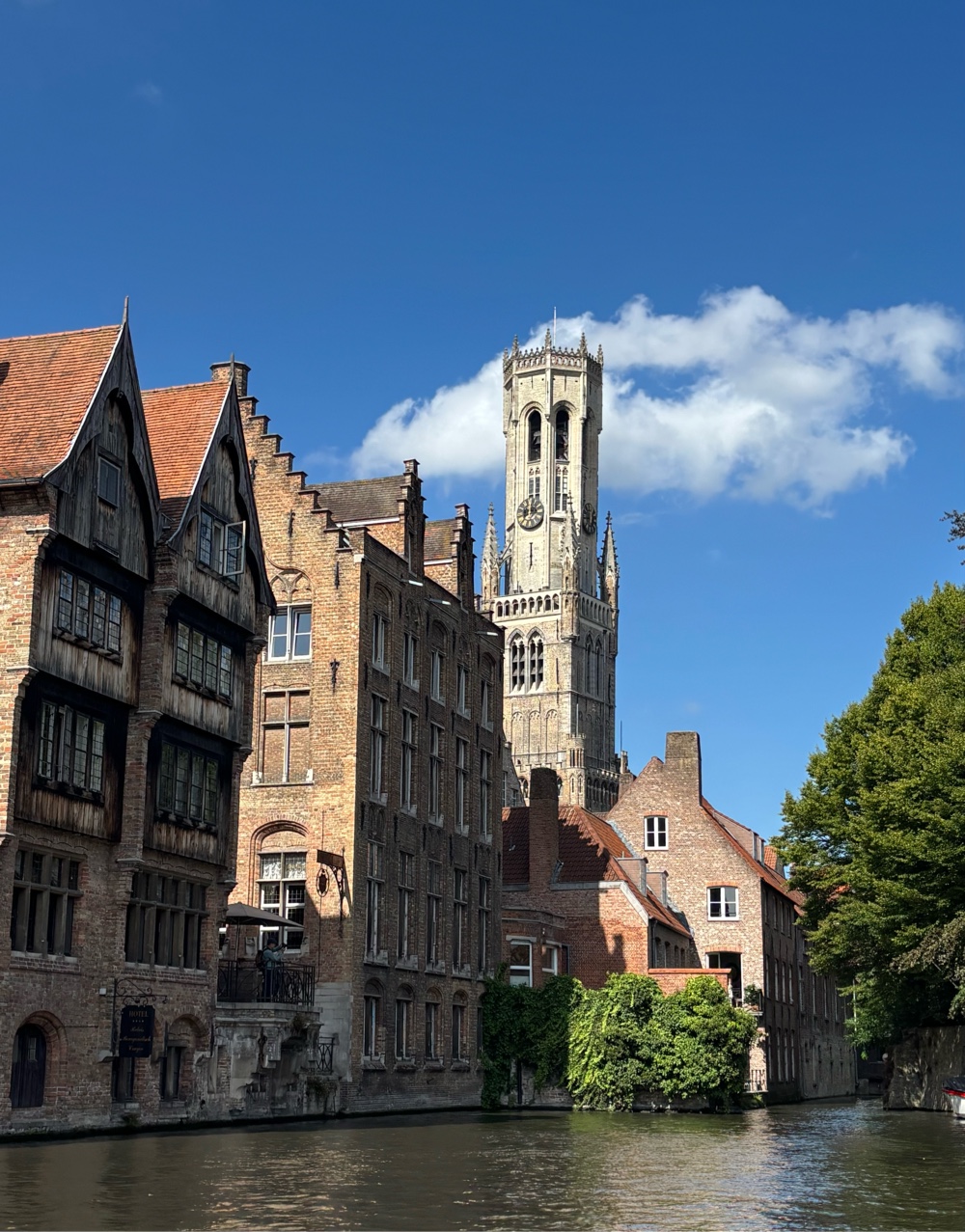 |
| Rosary Quay provides a view of the back of the city hall, as well as the city’s bellfry, which we climbed later in the day. |
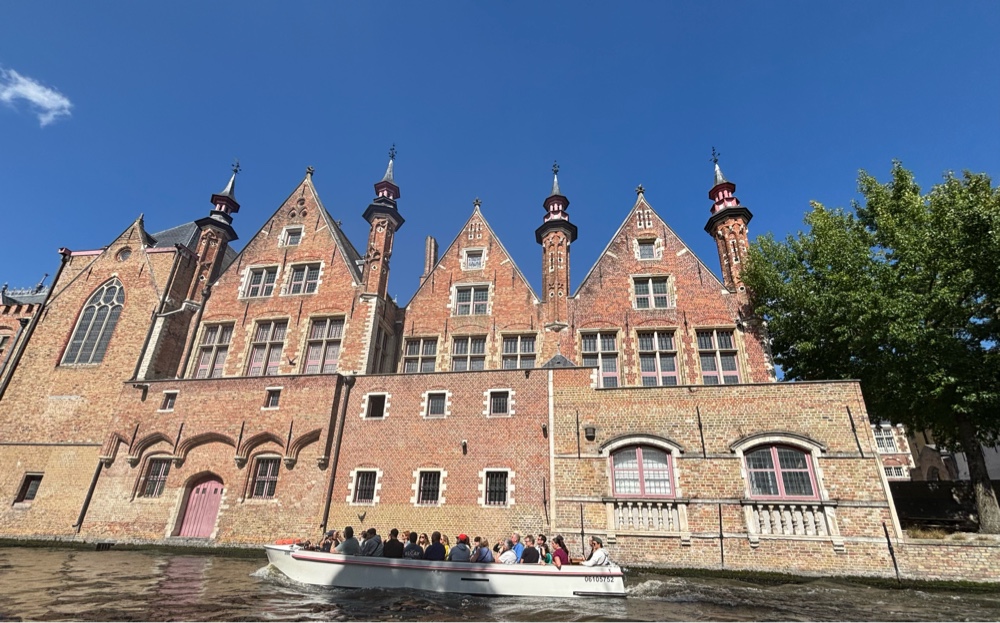 |
| The canal view of city hall (the back side). |
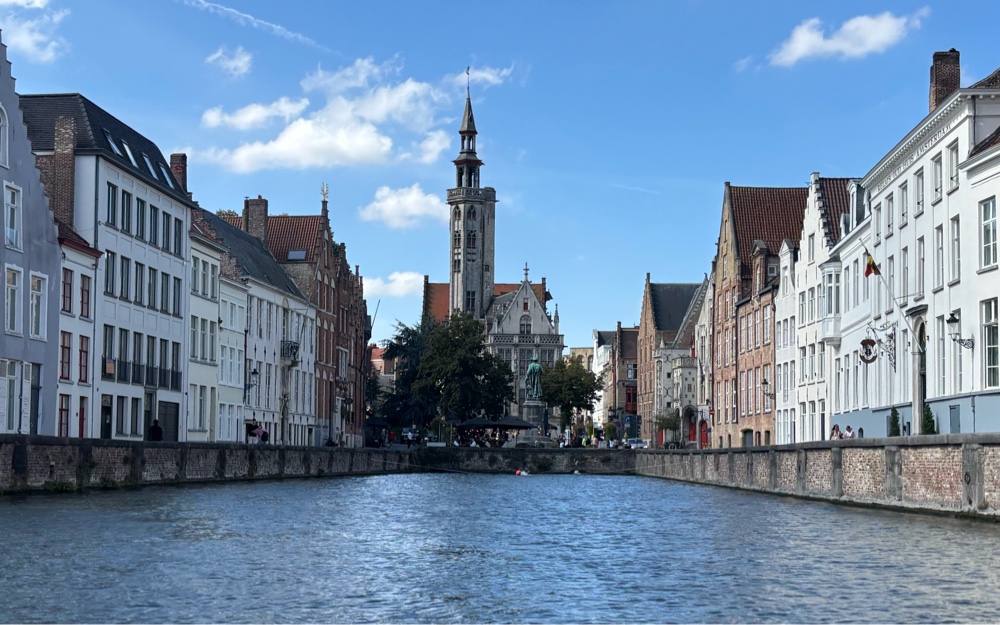 |
| The view of Jan van Eyck Square from the canal. |
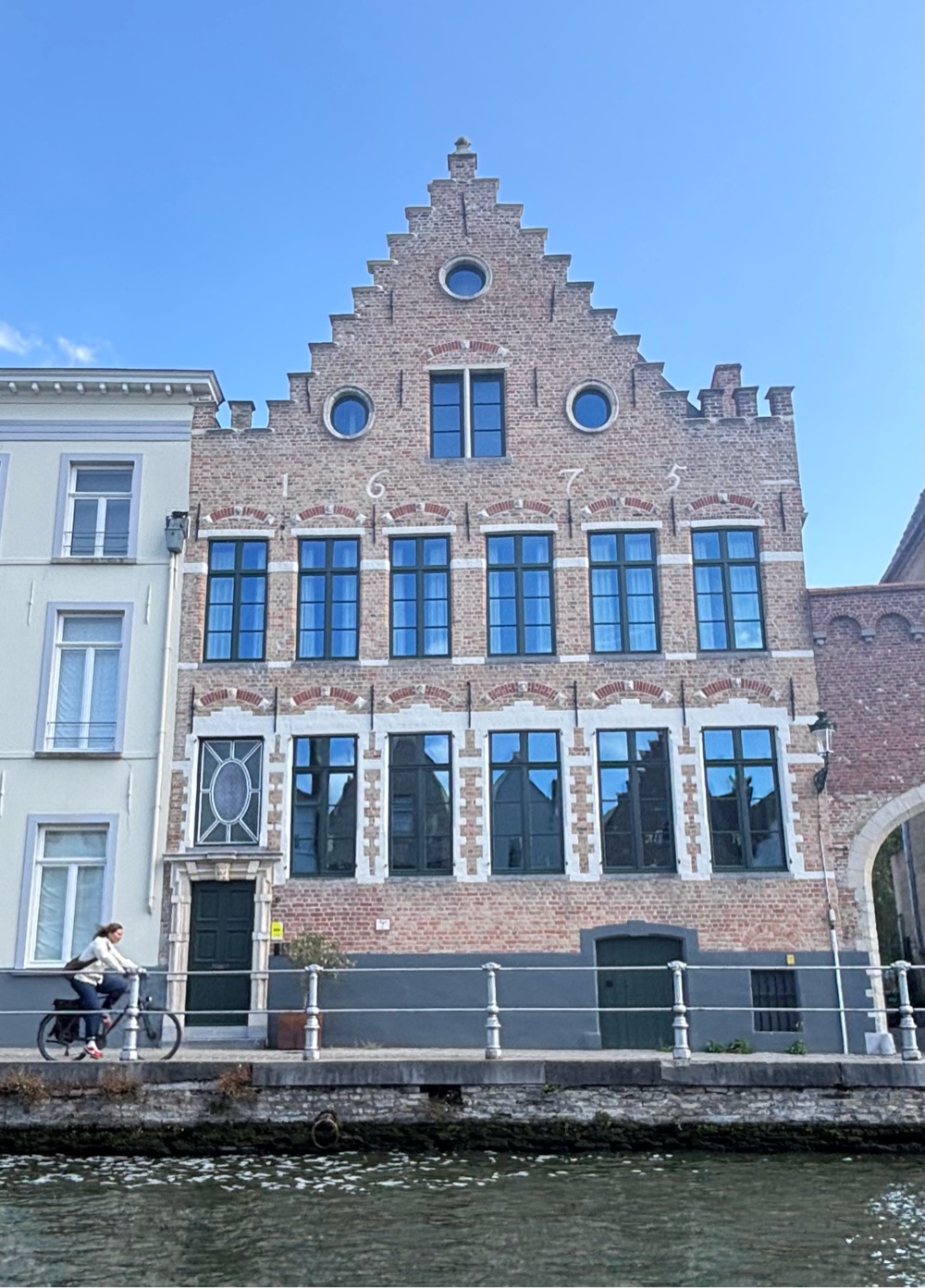 |
| Our tour boat captain told us that rents in Bruges have skyrocketed in the last few years. She said that rents are now beyond what an average person can afford, and home ownership is just a wild dream. This house, she told us, has just completed a multi-year renovation. It is worth millions of Euros. |
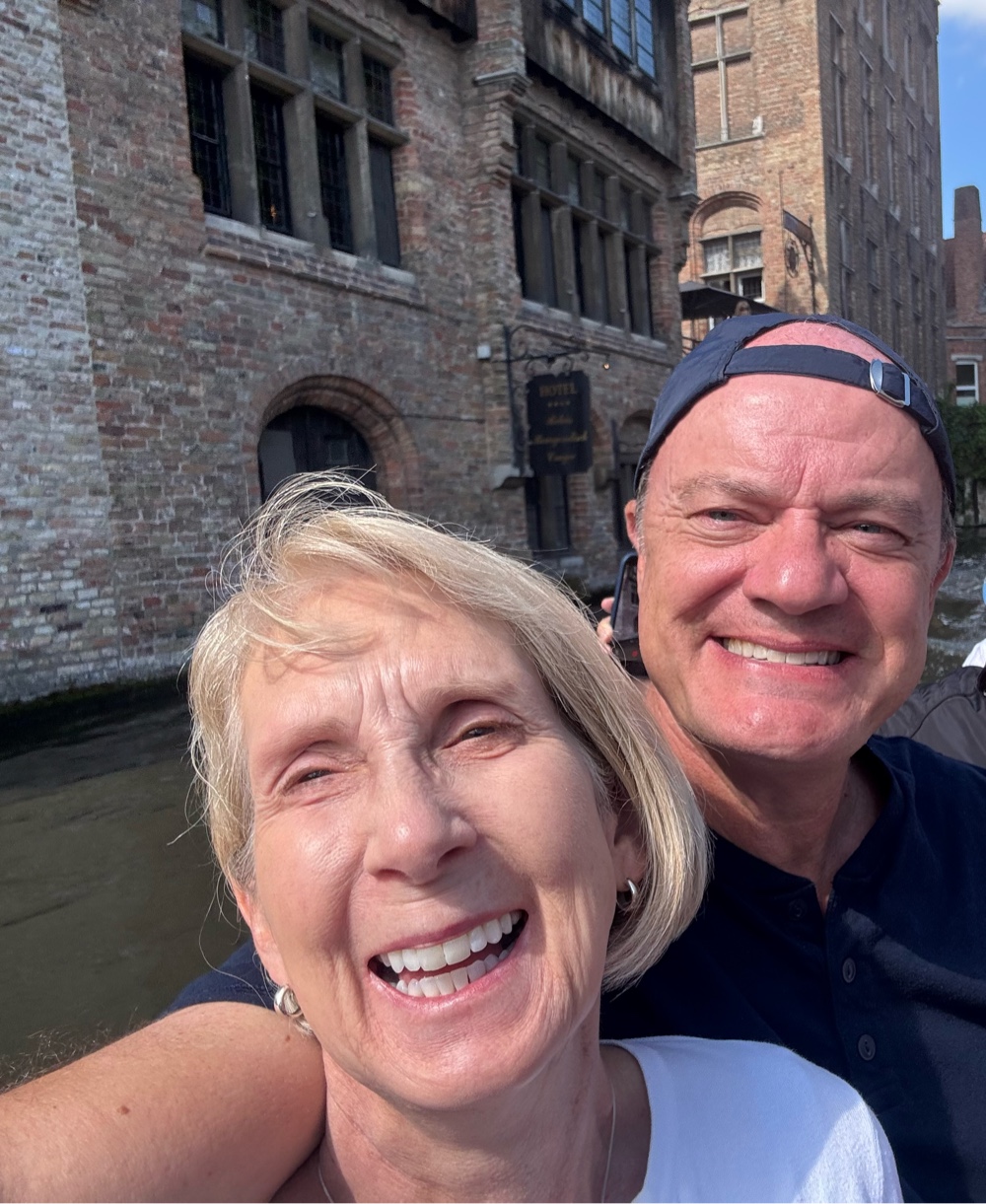 |
| All of the cities we visited in Belgium have been exceptional. But there is something over-the-top about Bruges. Truly unforgettable. |
Burg Square
Burg Square is of great administrative and religious significance to Bruges.
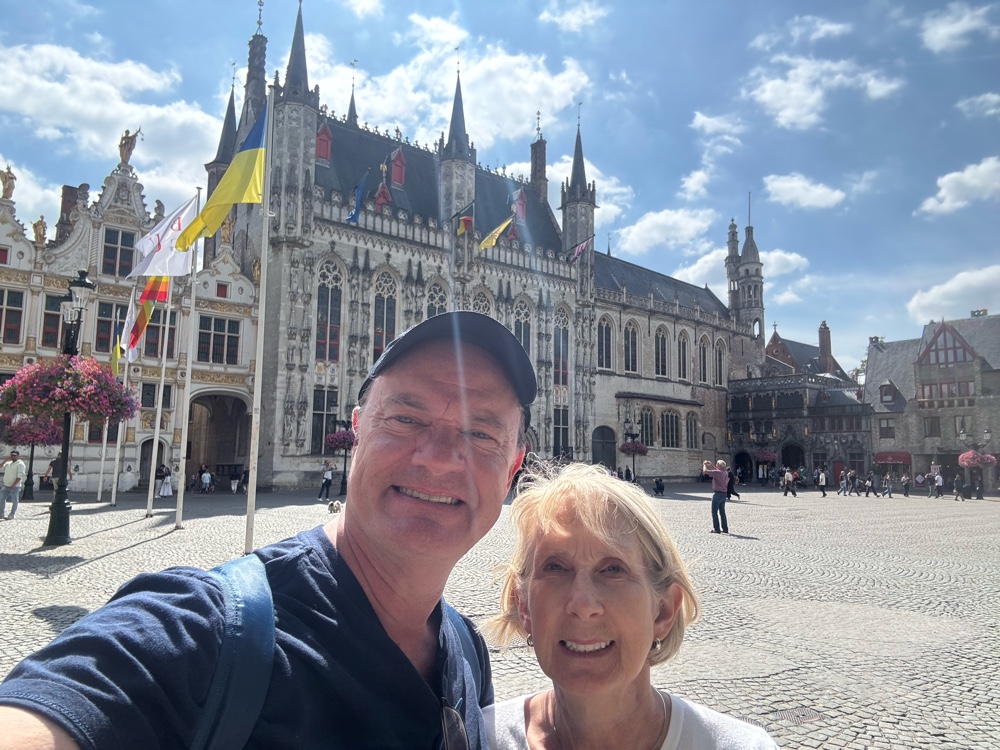 |
| City Hall |
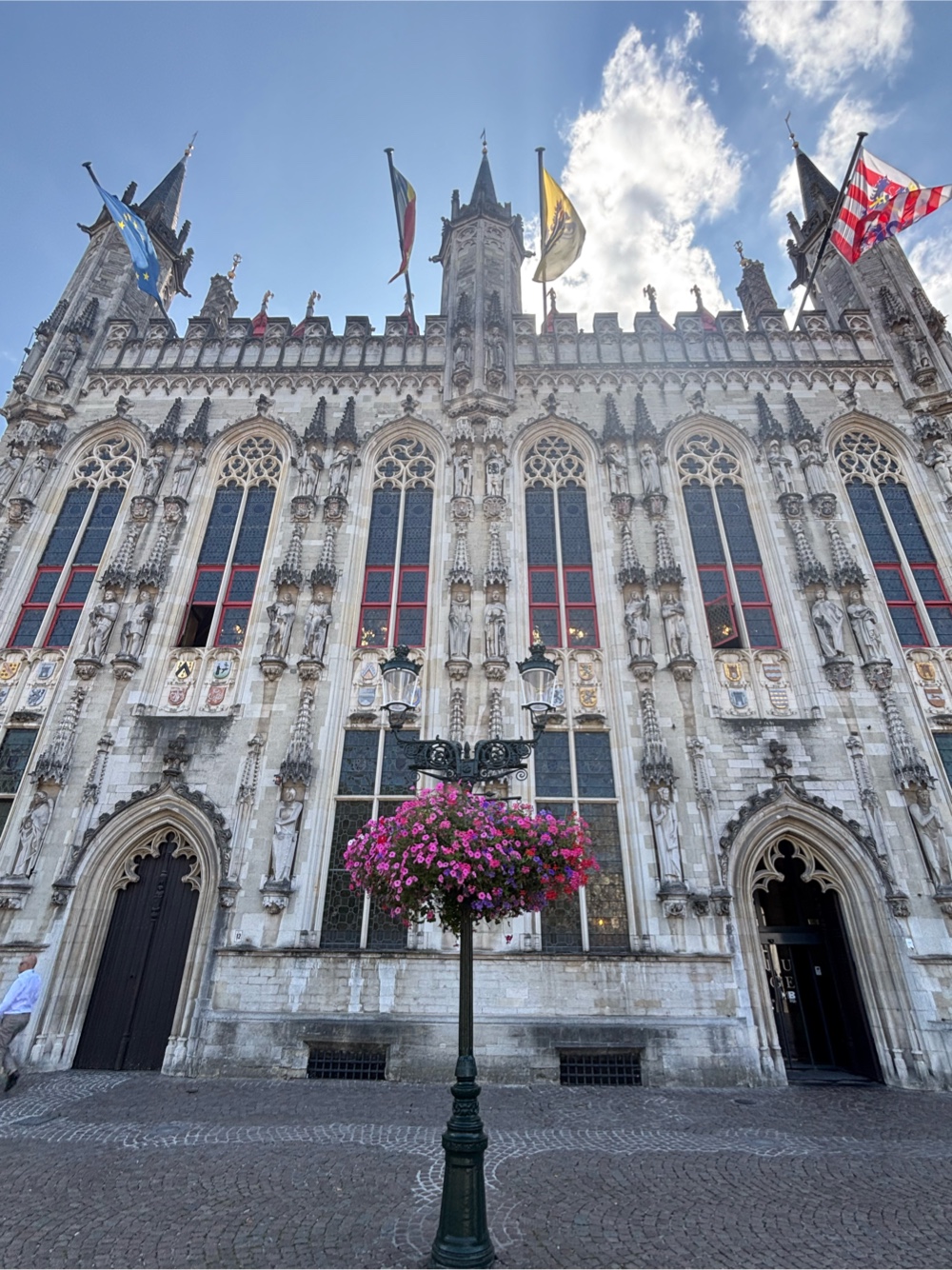 |
| Look at that close-up detail! |
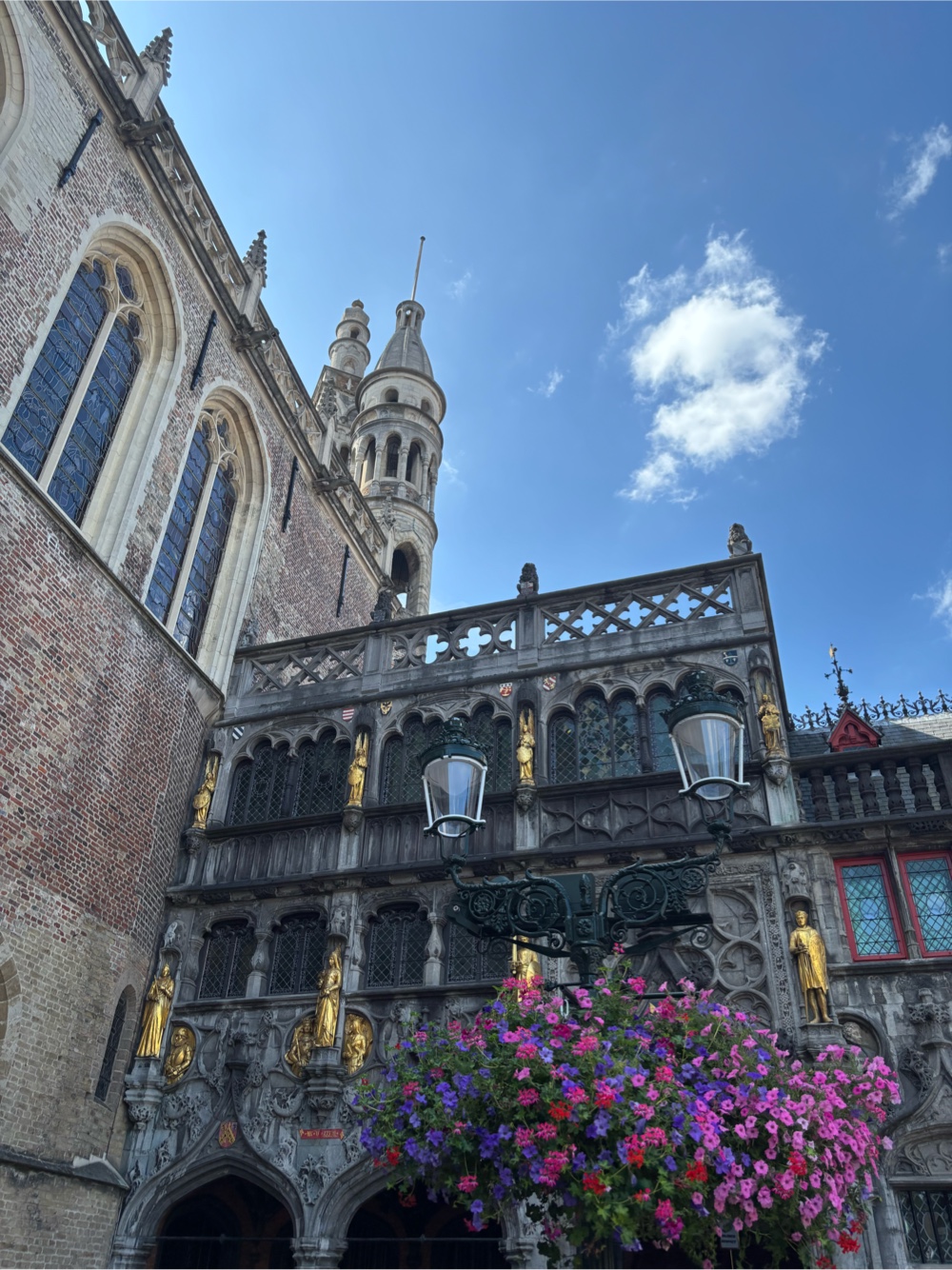 |
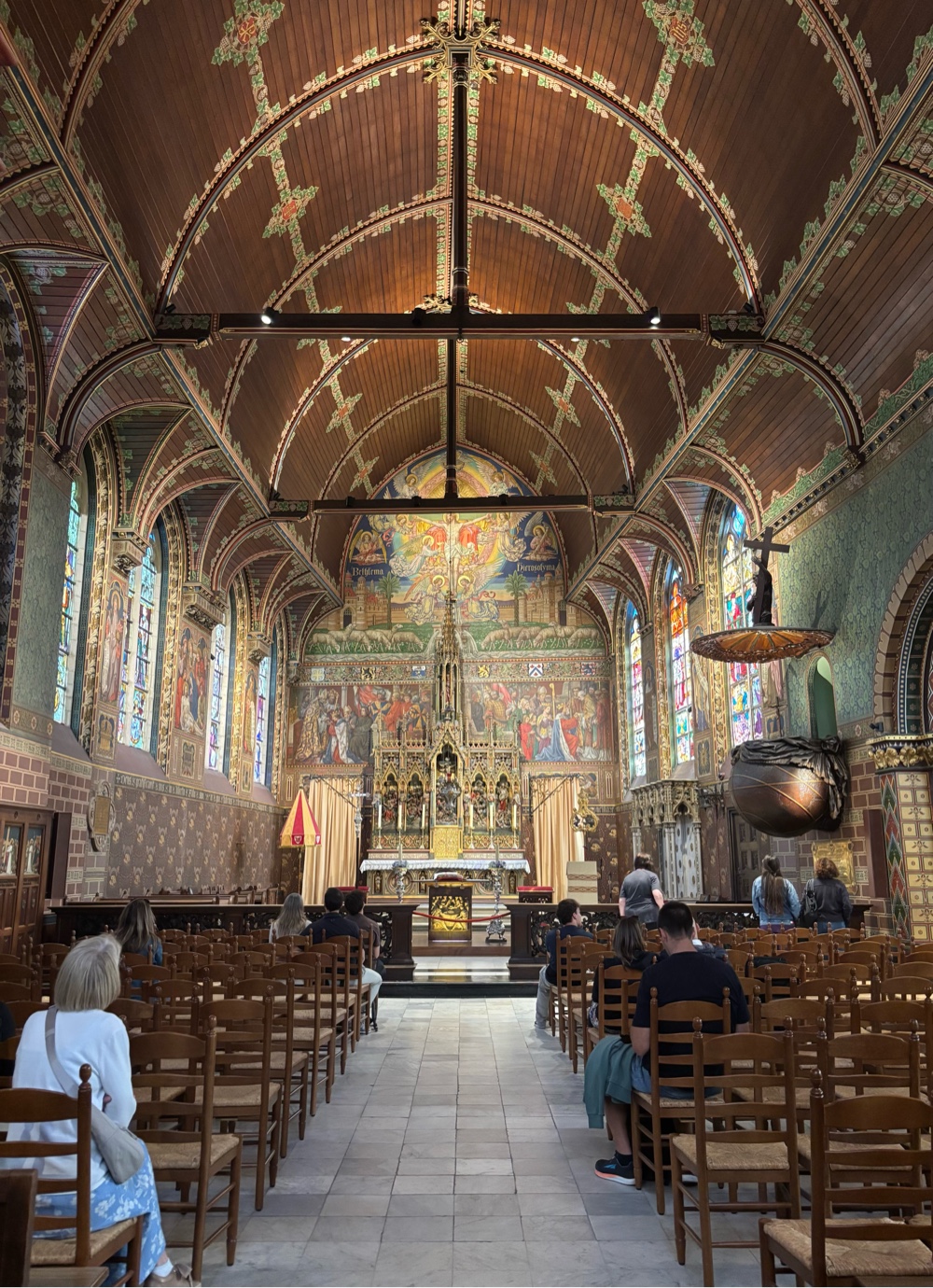
| Basilica of the Holy Blood has an unusual two-level structure: a Romanesque lower chapel and an ornate Gothic upper chapel. |
Market Square:
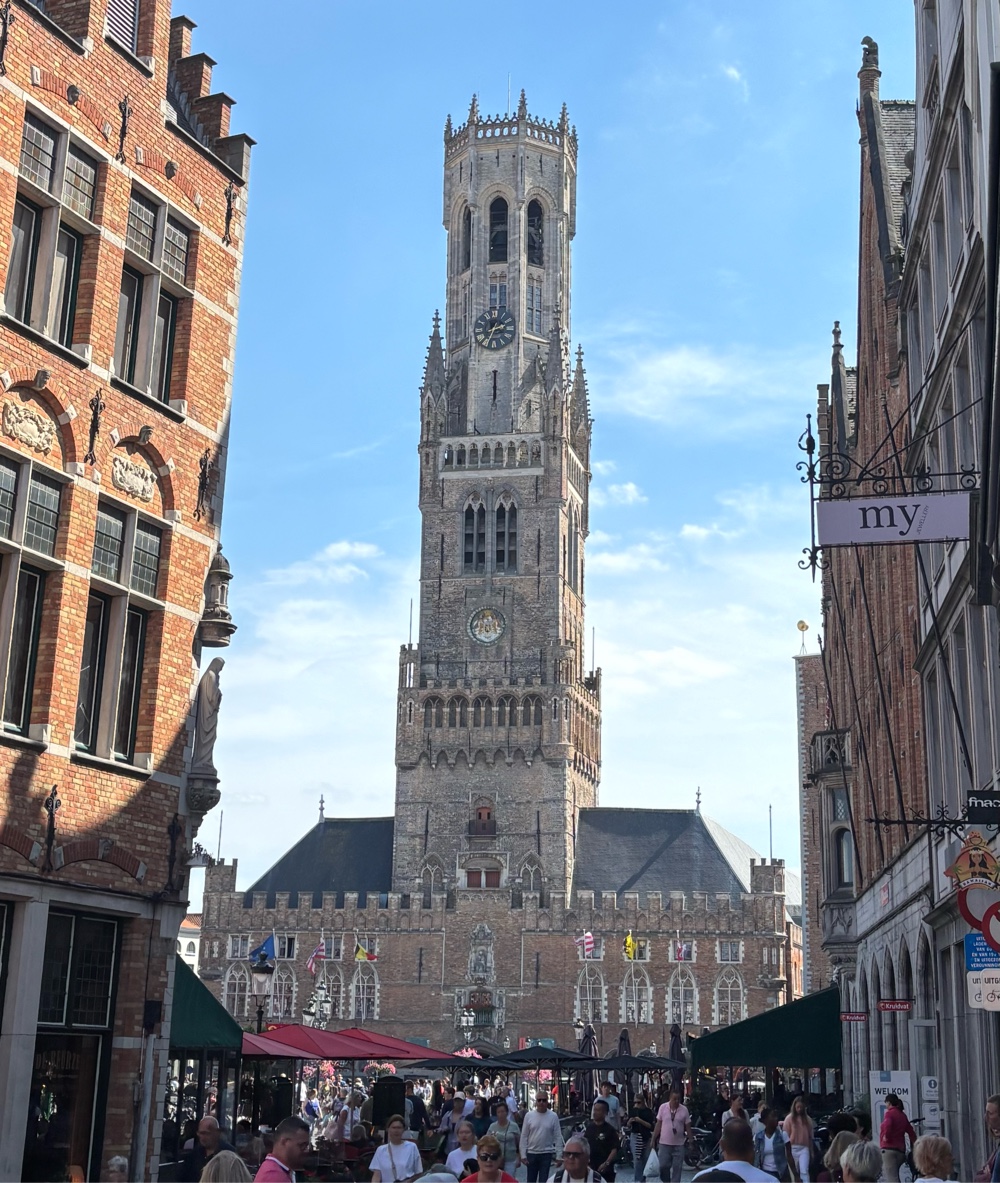
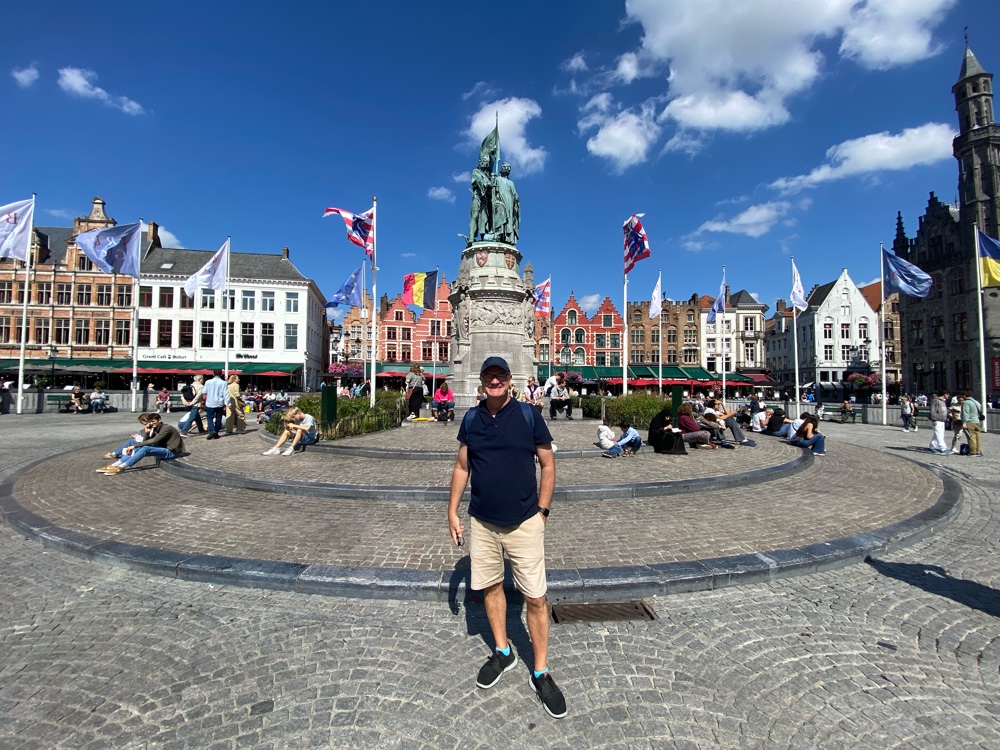
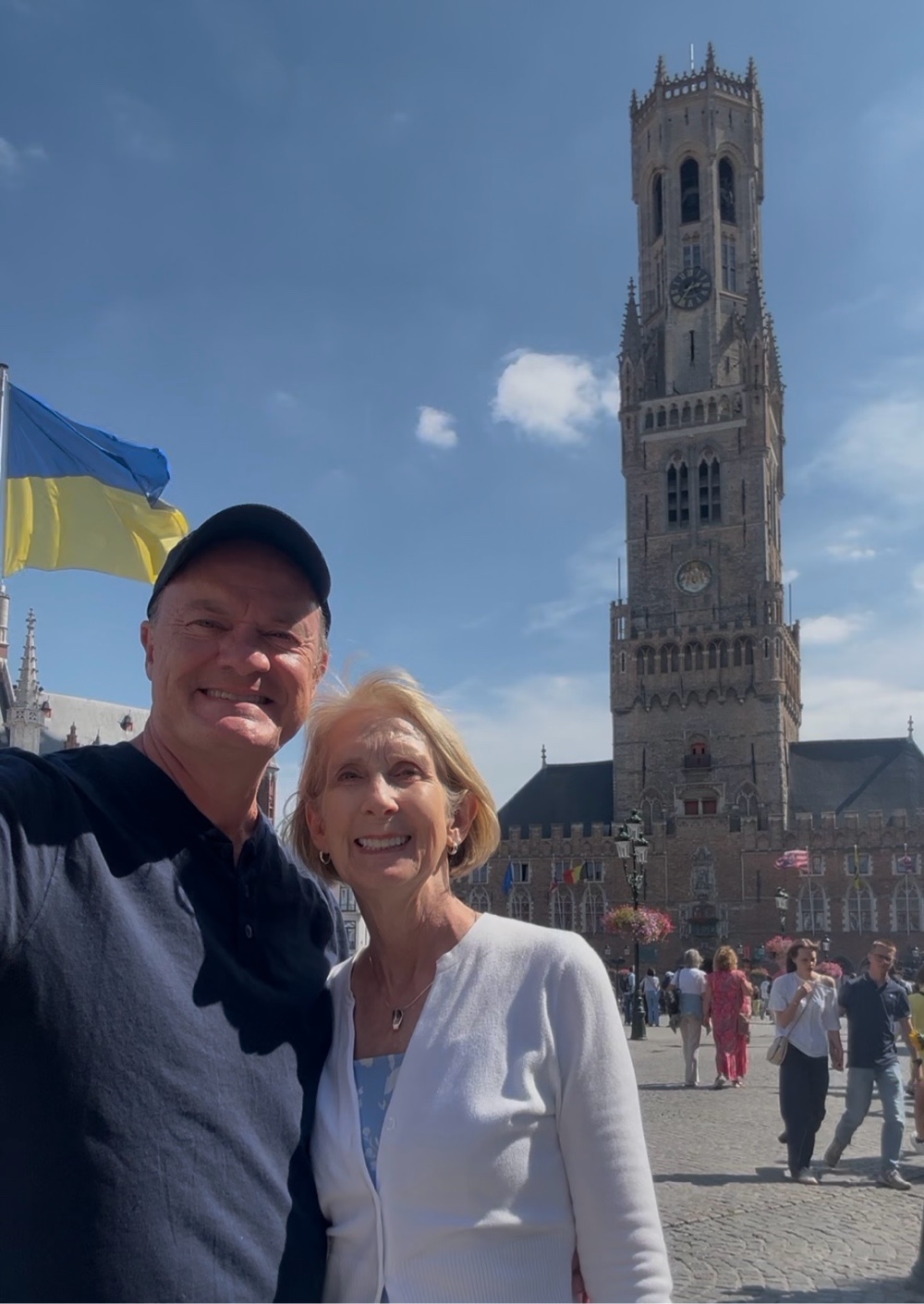
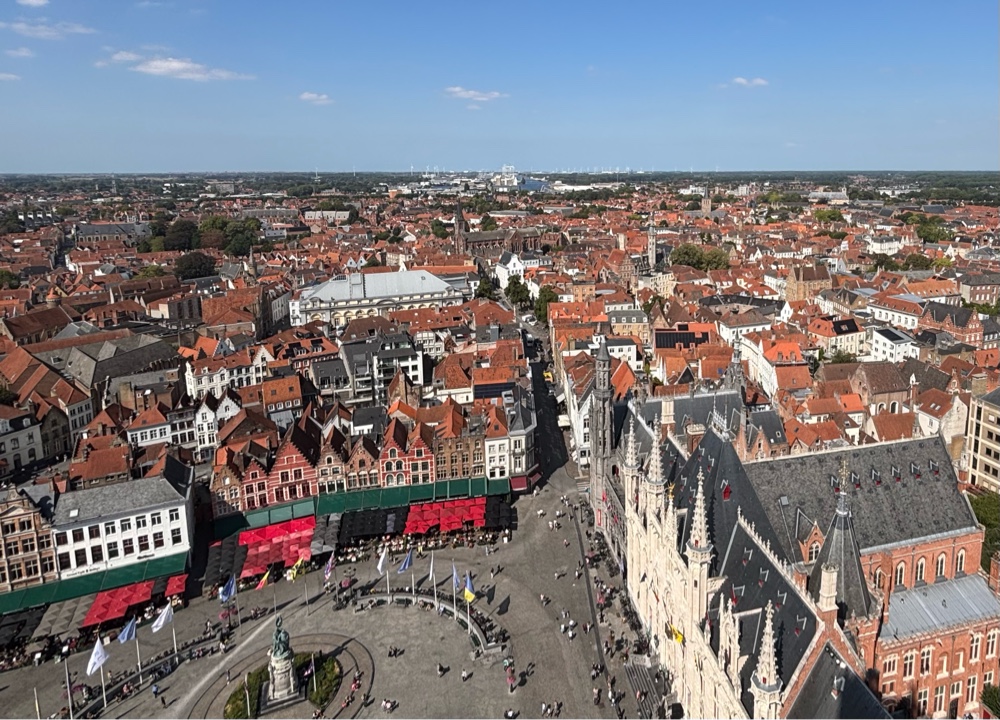
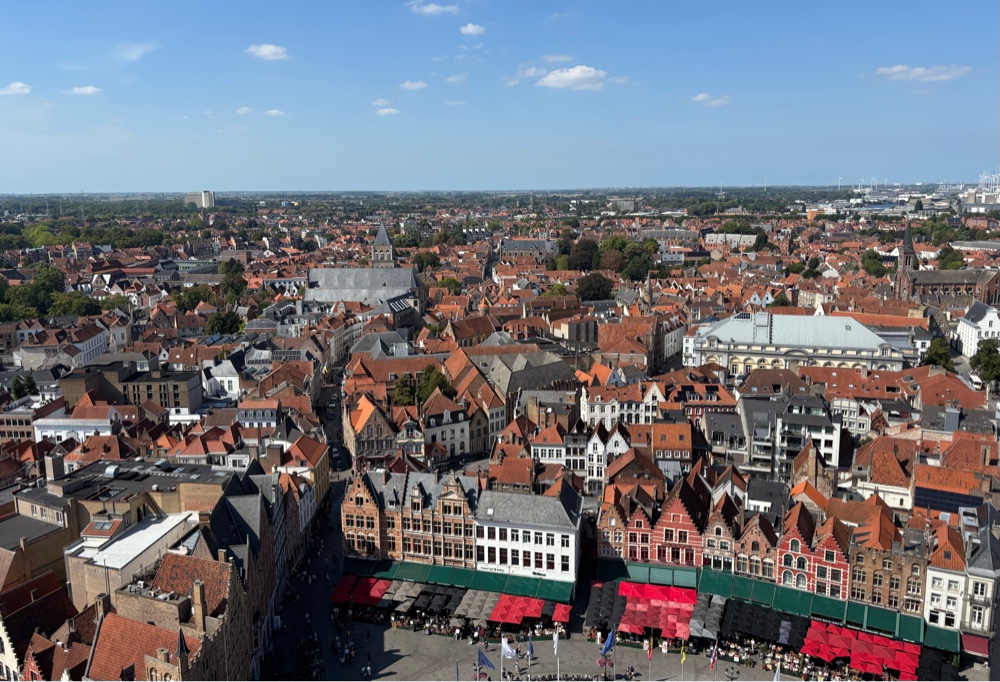
Market Square is Bruges' great postcard square, dominated by the city’s bellfry. As we are learning, it wasn’t only cathedrals that brought a city prestige - you simply had to have a tall bellfry in the square to truly show you had ‘arrived’ as a city. In addition to the bellfry, Market Square also contains the Provincial Court and many stepped-gabled guild houses The historic centre is UNESCO-listed, and. Market Square is its natural focal point.
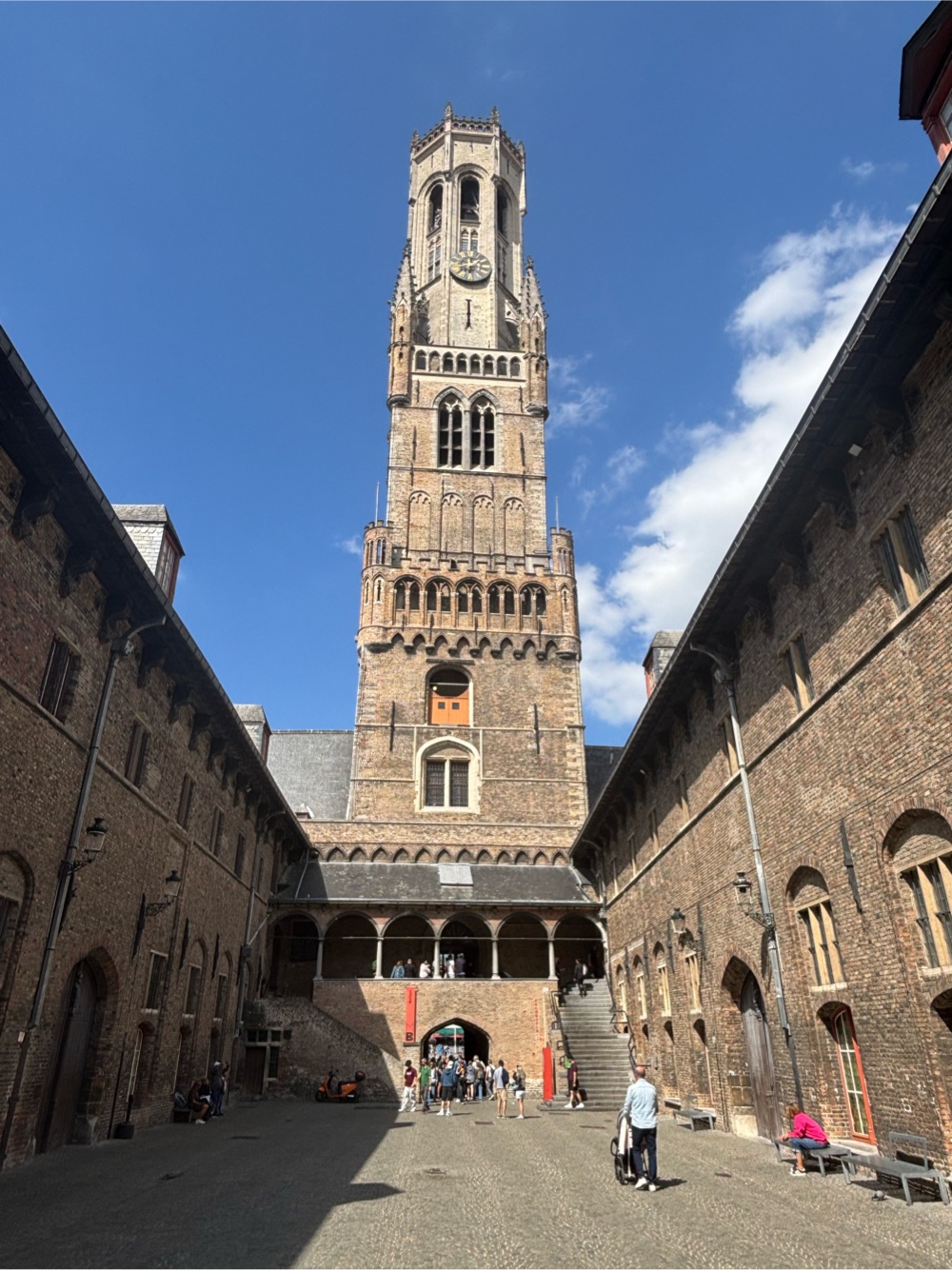 |
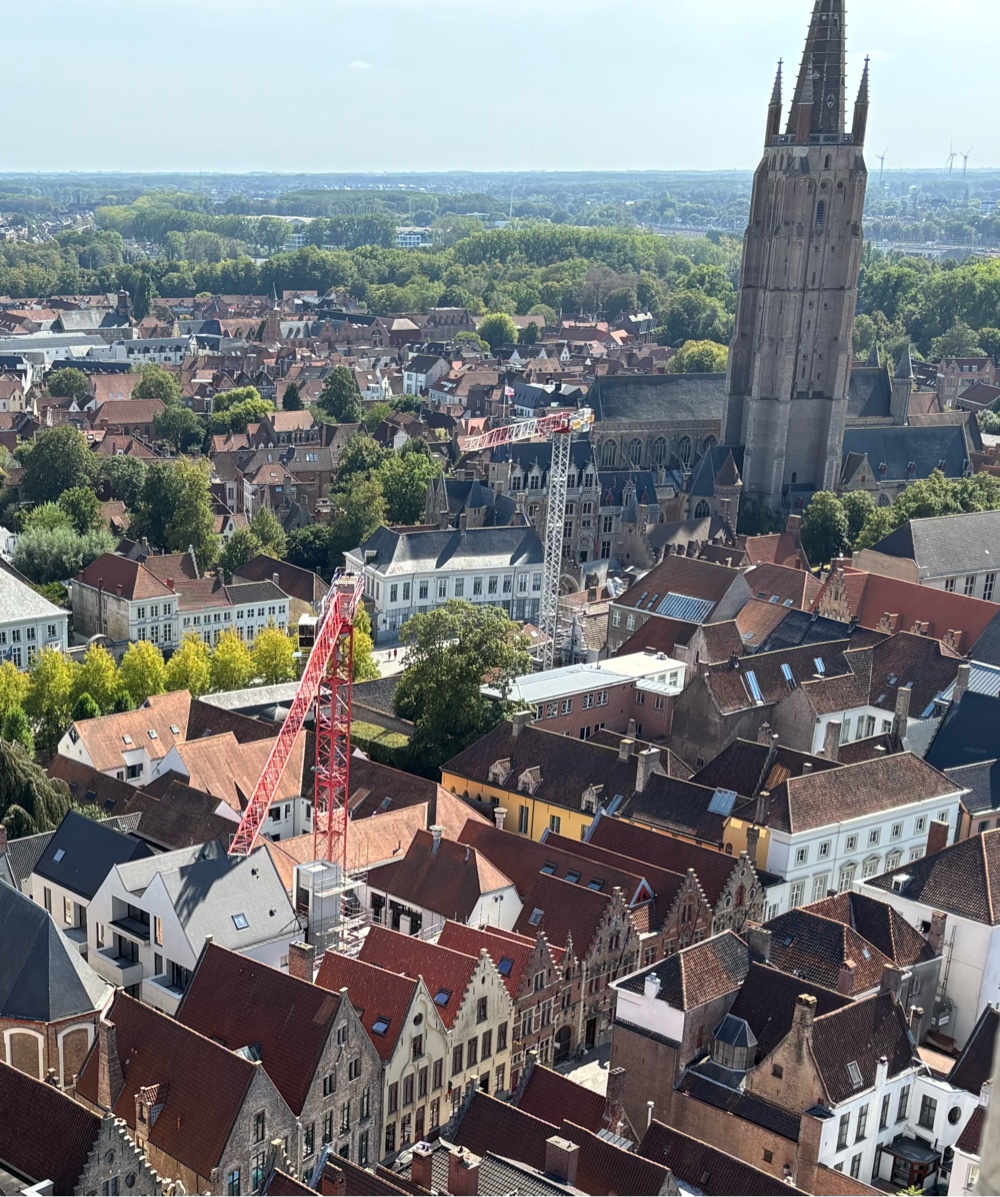
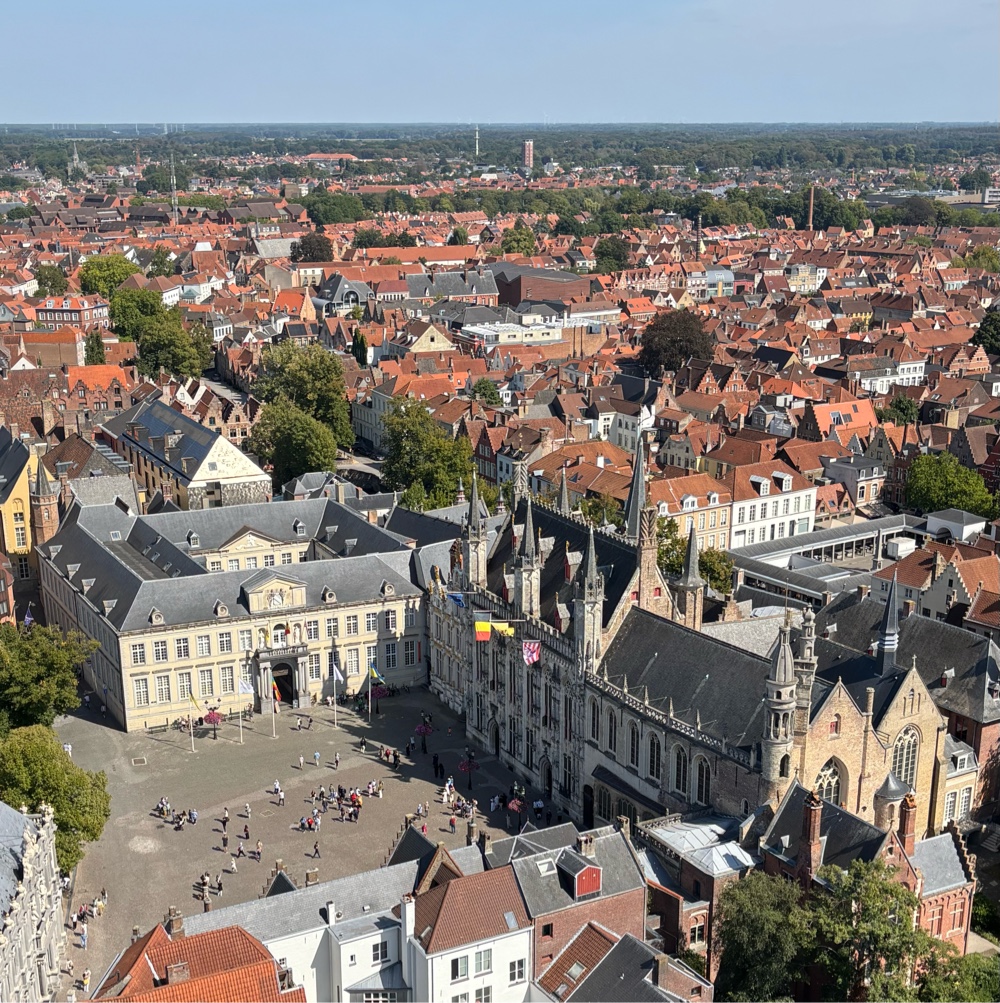
| The bellfry is 83 metres high, and the climb involves 366 steps. The vistas over Bruges are unbeatable. |
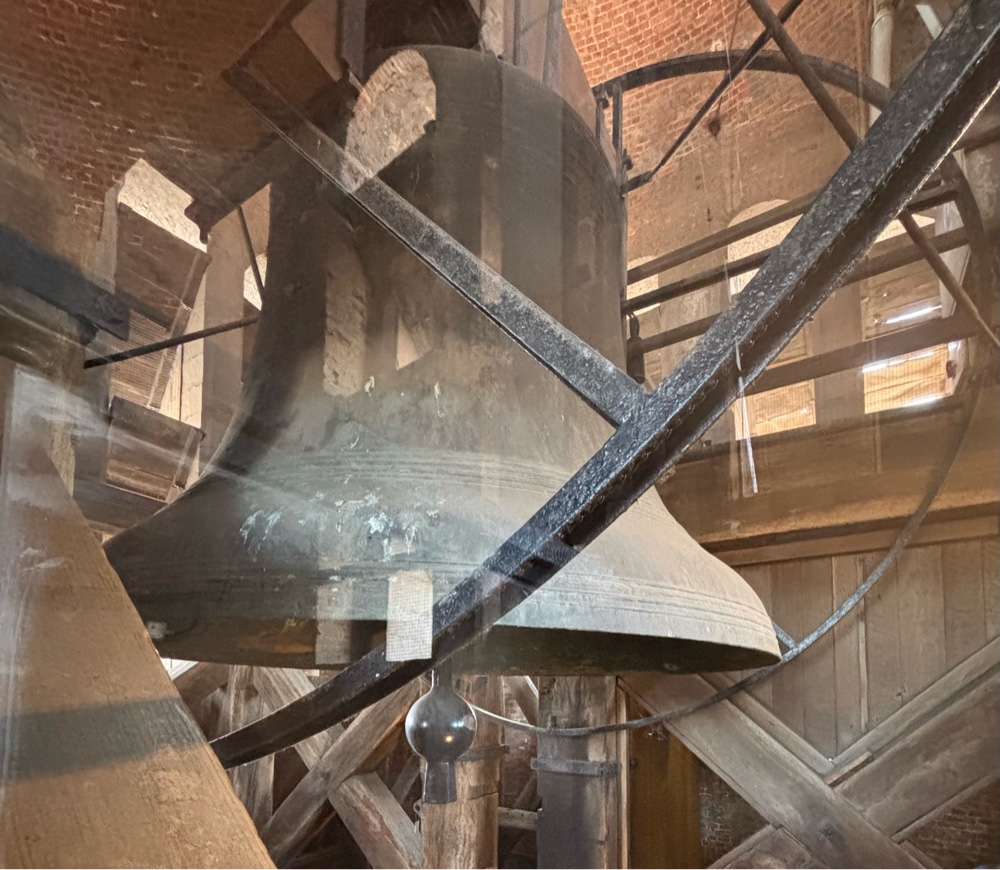 |
| One of the bells in Belfort’s carillon. |
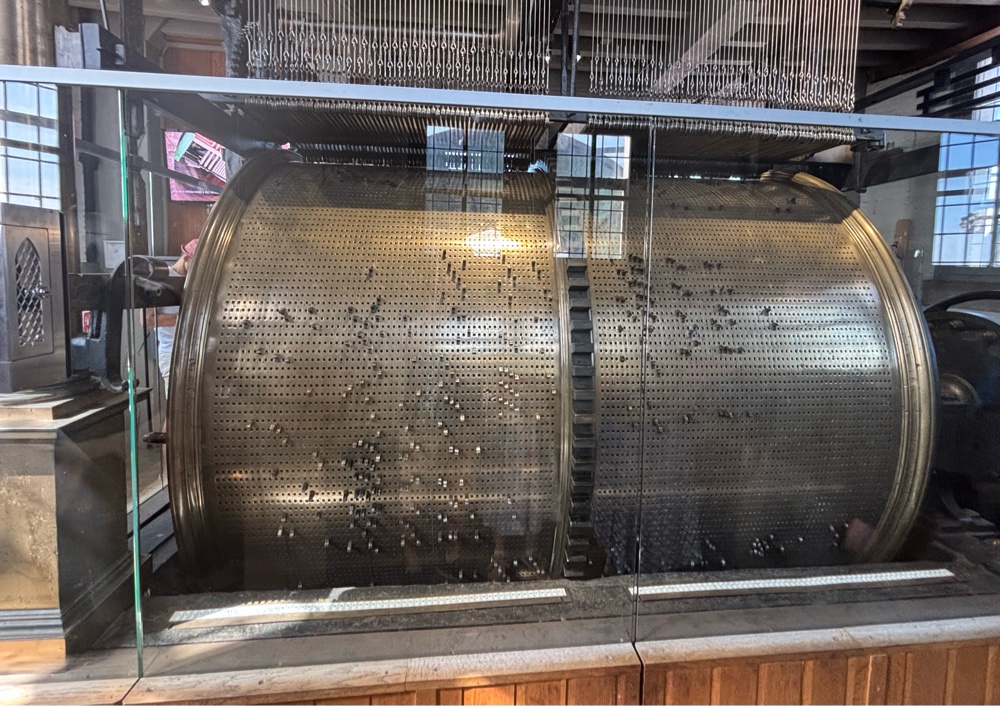 |
| This drum is the ‘track’ that plays the carillon. The pins in the drum are changed every two years to play new tunes. |
Jan van Eyck Square:
Jan van Eyck Square was associated with the city's medieval commercial and port activity
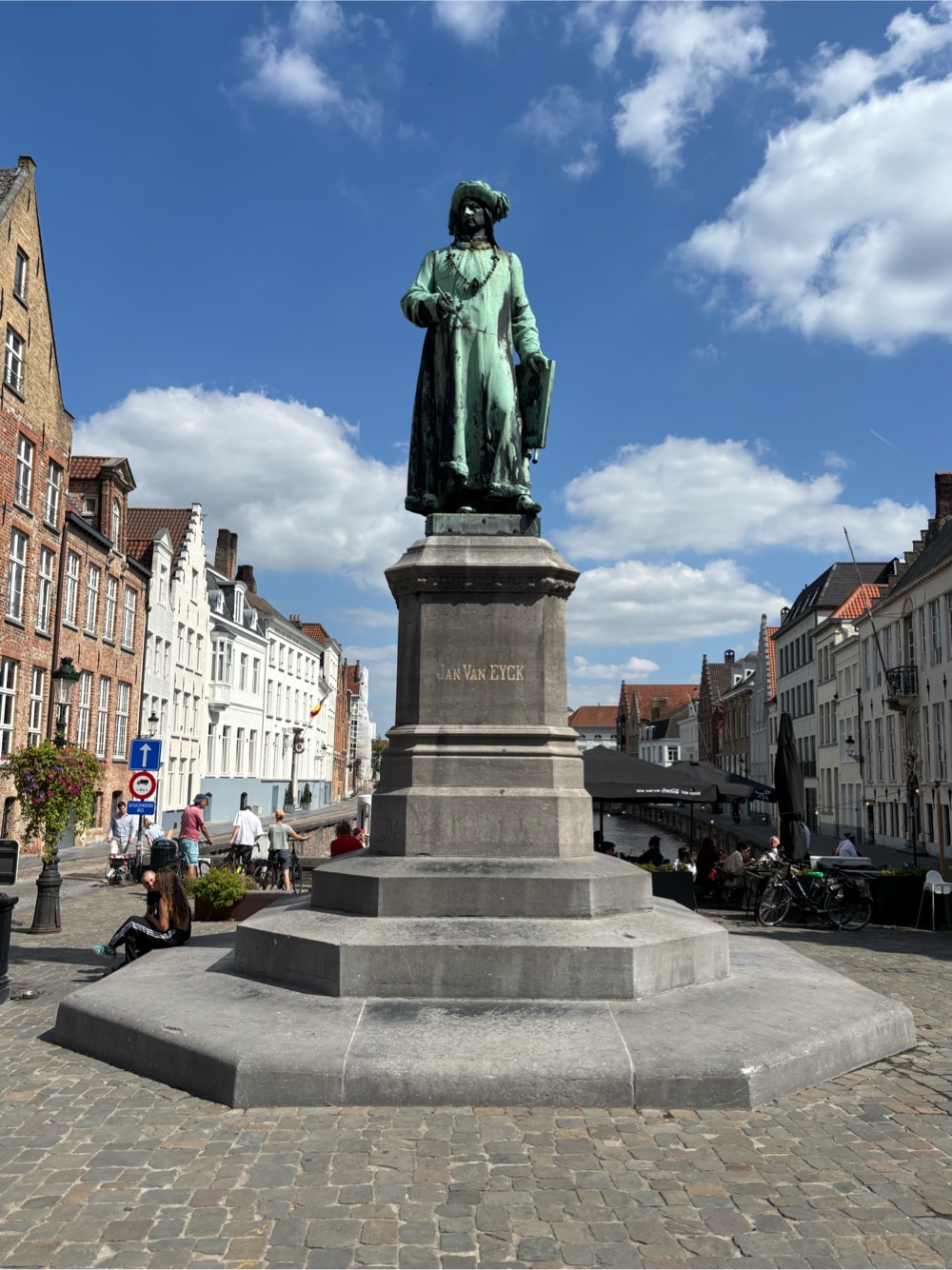 |
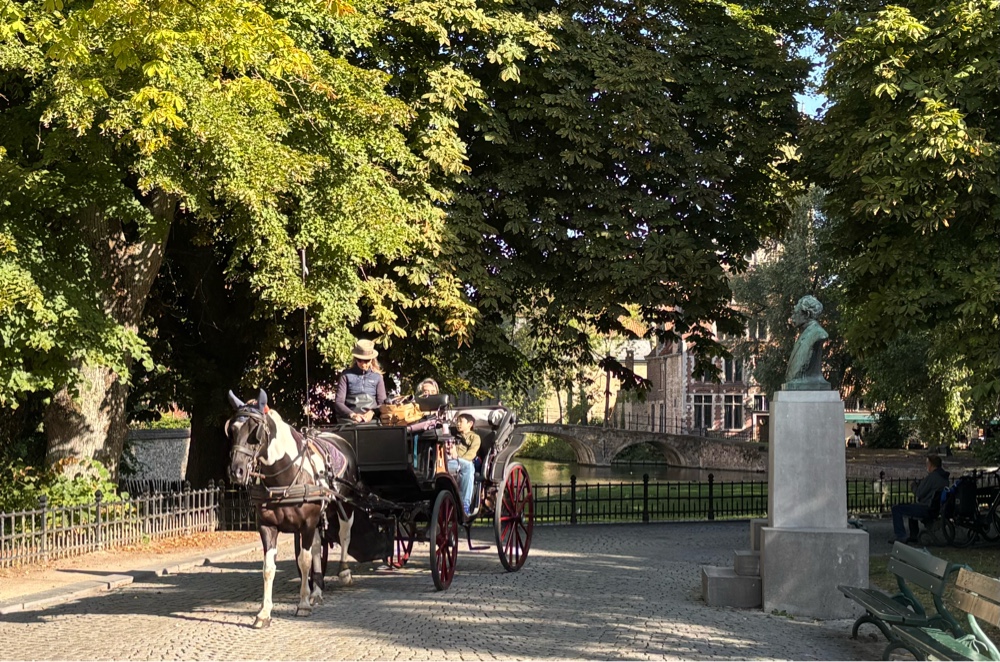
| Monument to the artist, Jan van Eyck, in Jan van Eyck Square. |
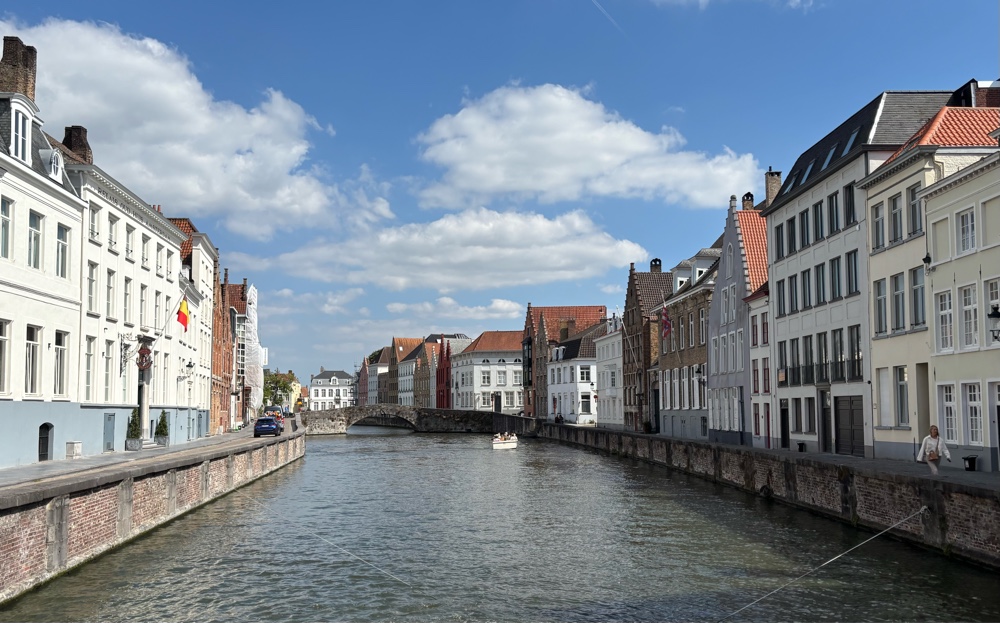 |
| The canal ends at Jan van Eyck Square. This is the canal view from the dry land. |
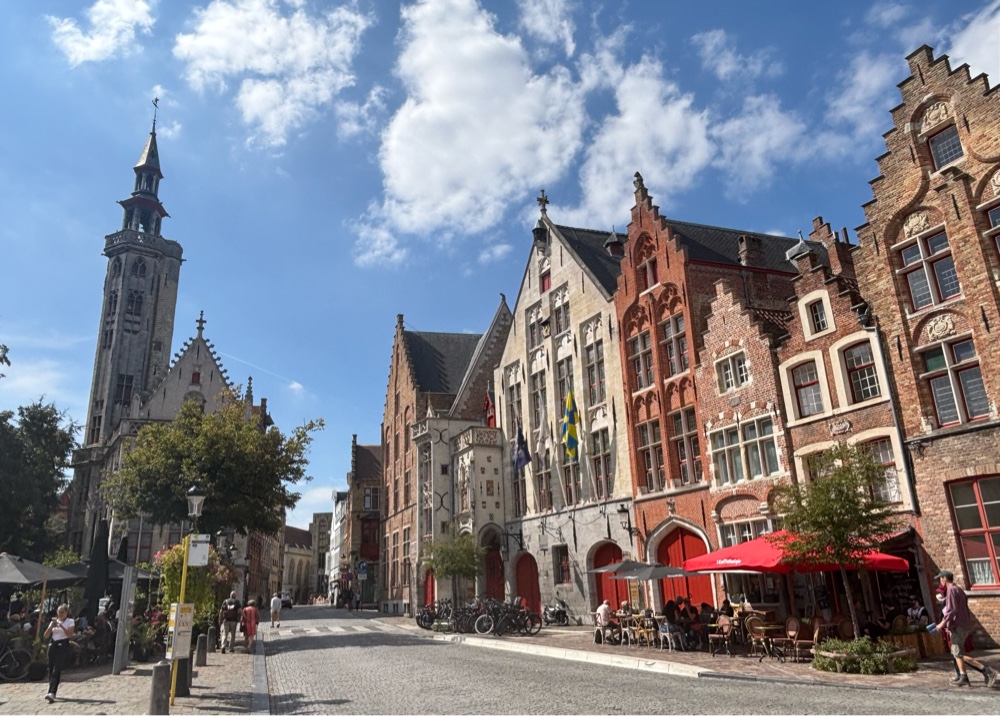 |
| Jan van Eyck Square is one of the quieter squares in Bruges. |
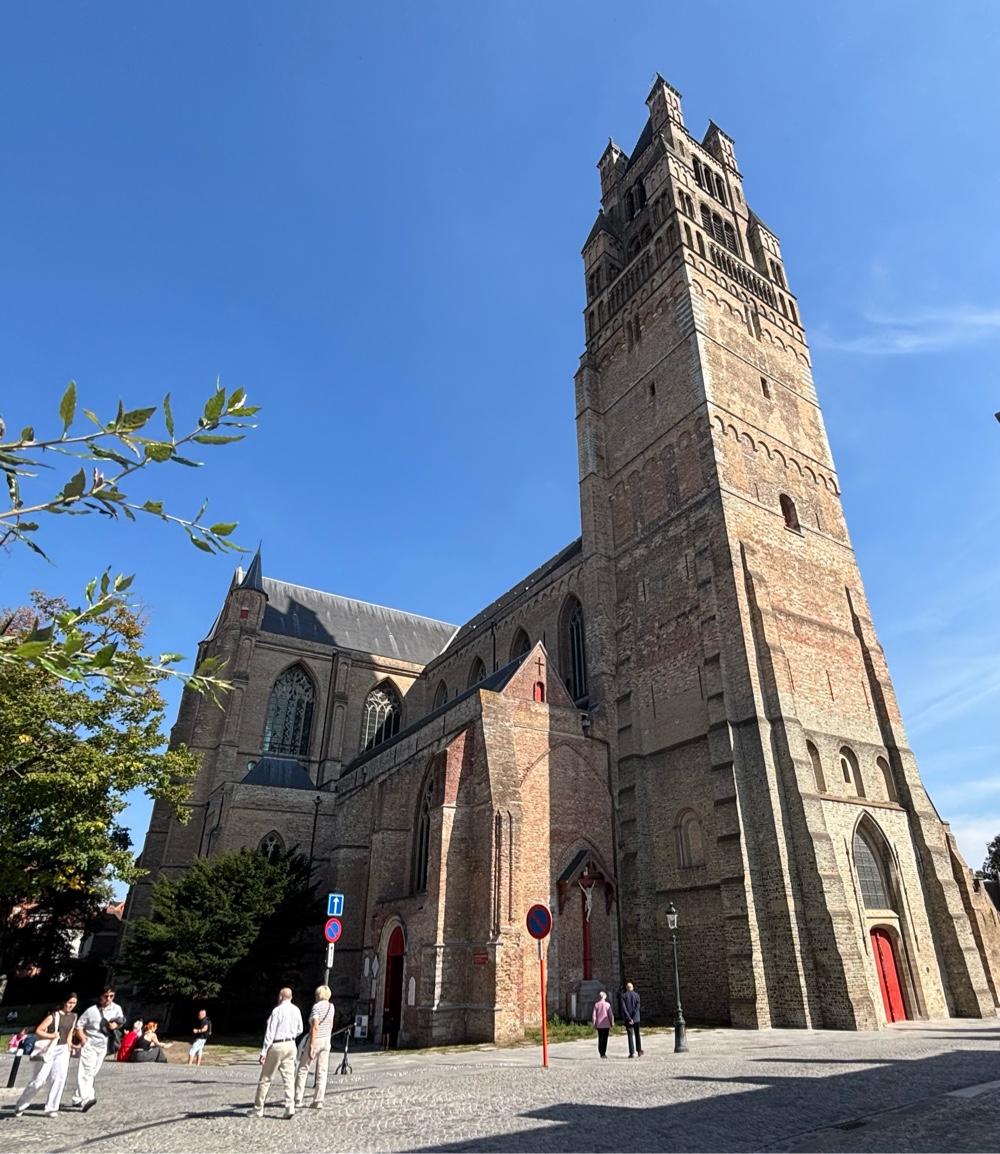
Saint Salvator’s Cathedral:
The end of our Bruges day and the walk back to the station:
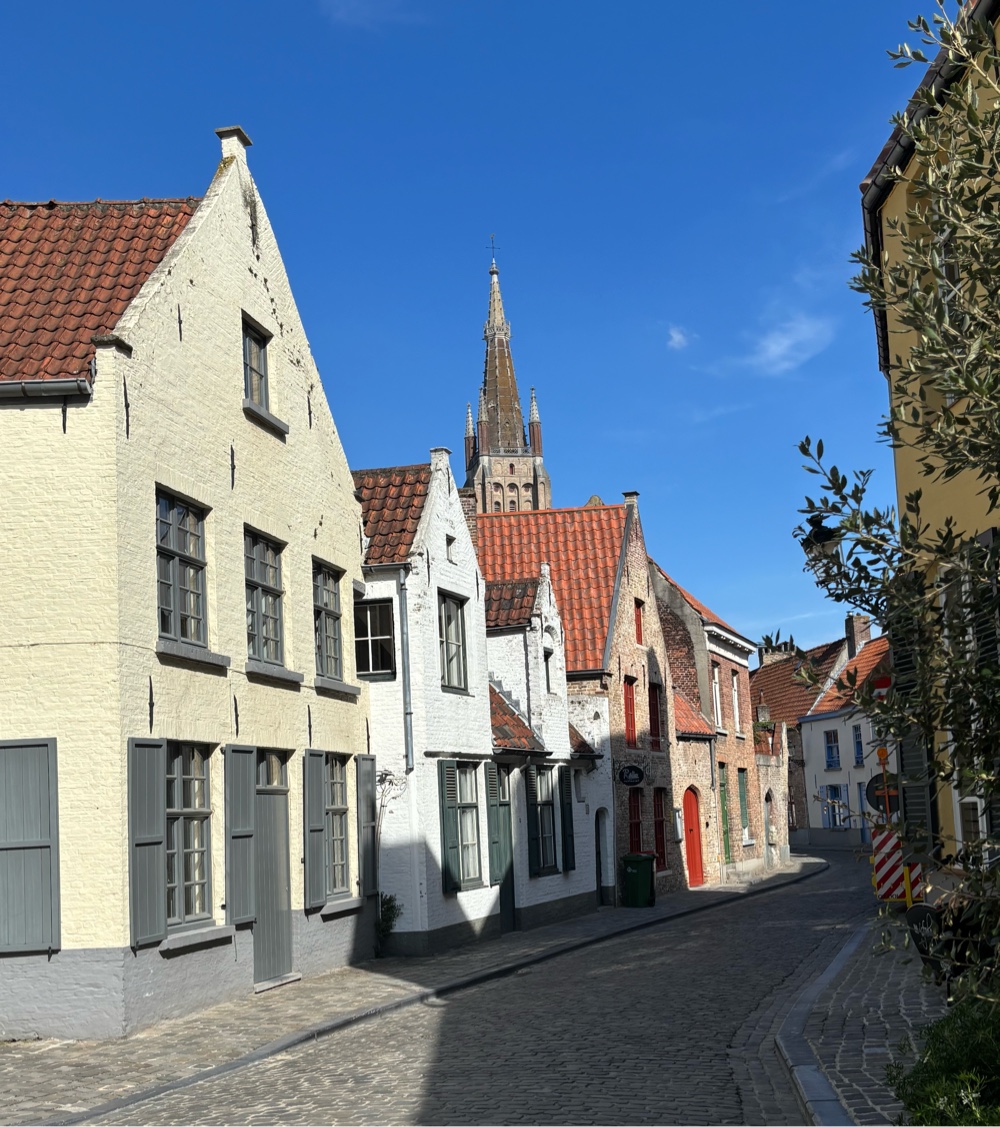 |
| Not that we haven’t photographed enough houses and buildings today, but here are a couple more. They’re all so picture-perfect! |
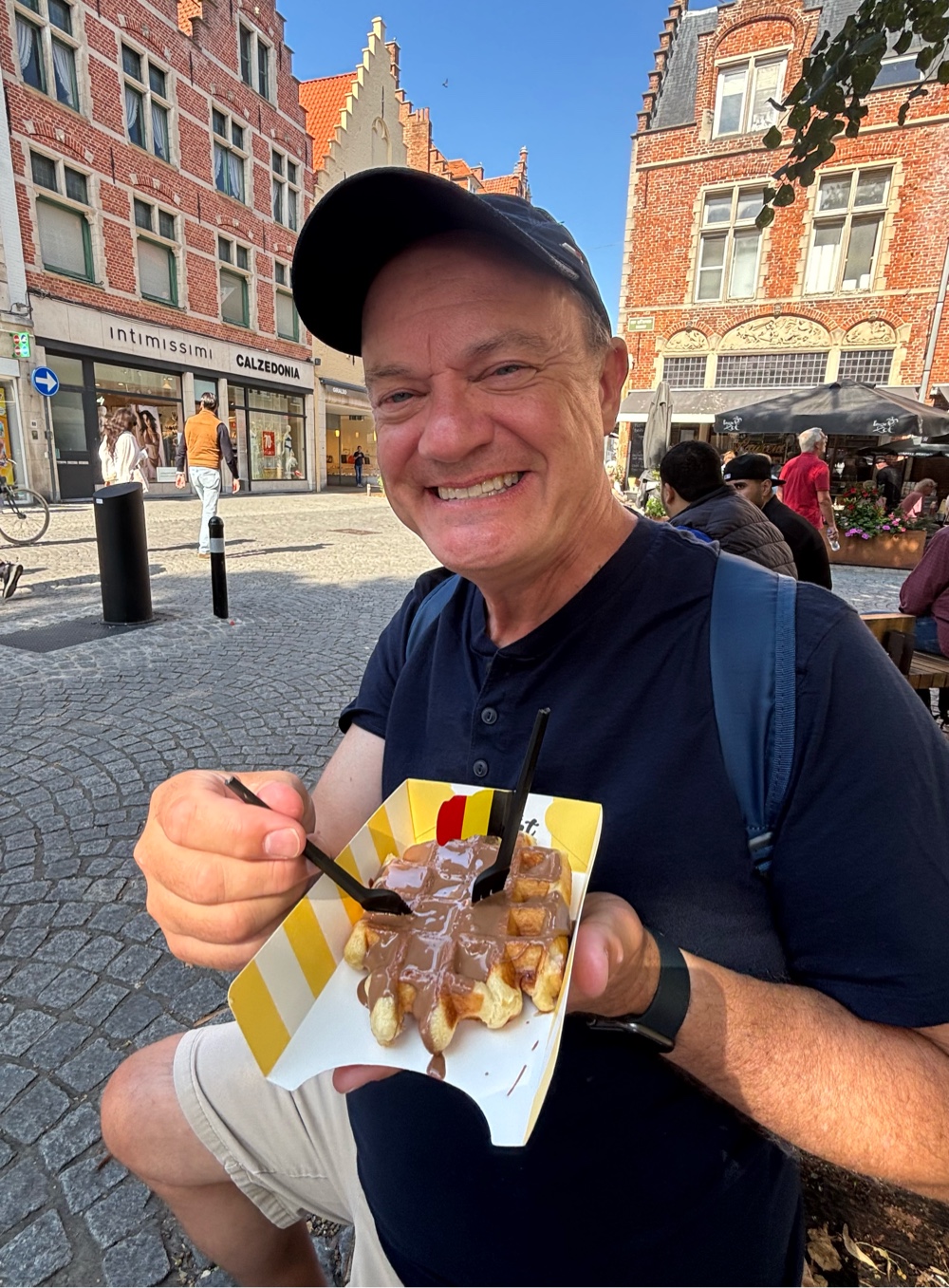 |
| The Belfort climb and 11KM of walking today merits a chocolate-covered waffle, I do believe! |
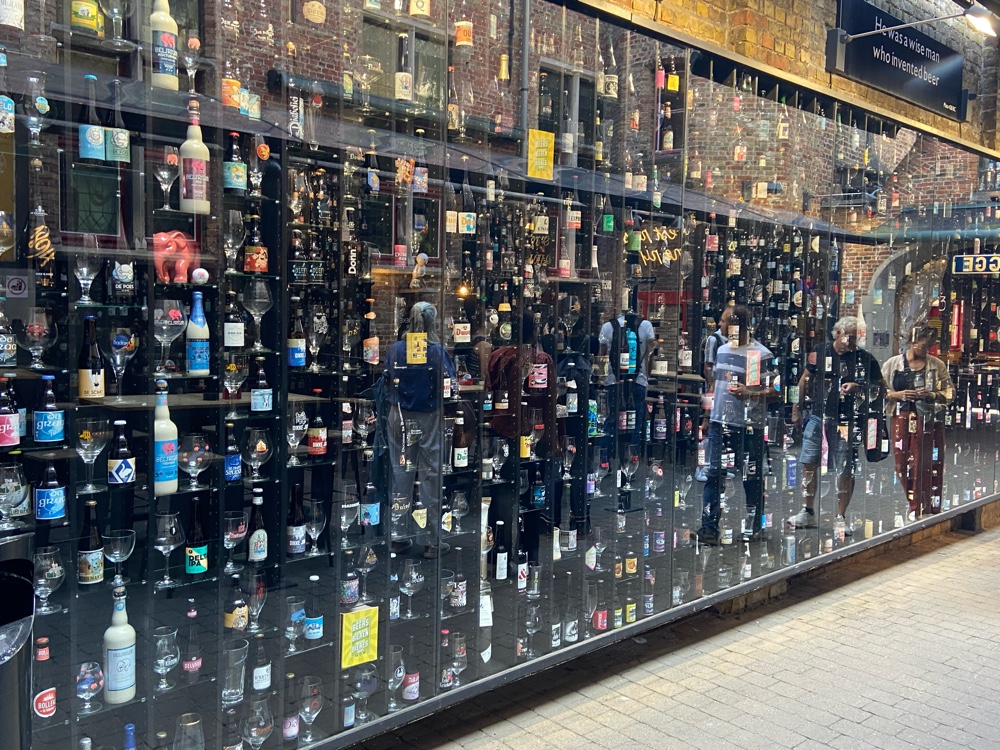 |
| We don’t drink beer. But, if one was a beer drinker, you’d be driven crazy by the options! |
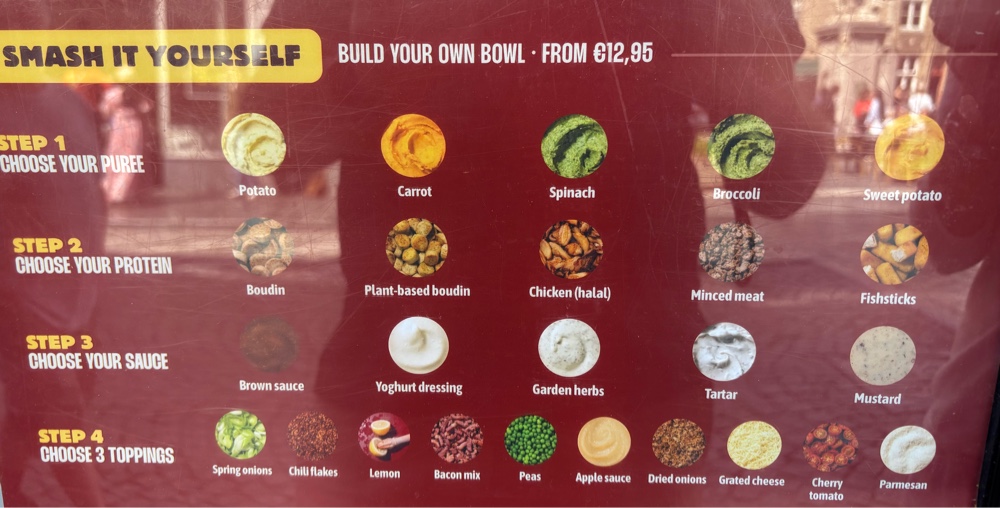 |
| We passed this place offering puréed dishes. Basically, you choose your purée base, then add toppings. I’m sorry, but that would never catch on back in Canada. Mush plus toppings?? Maybe if one has had jaw surgery and is in recovery, but otherwise, what market are they serving? |
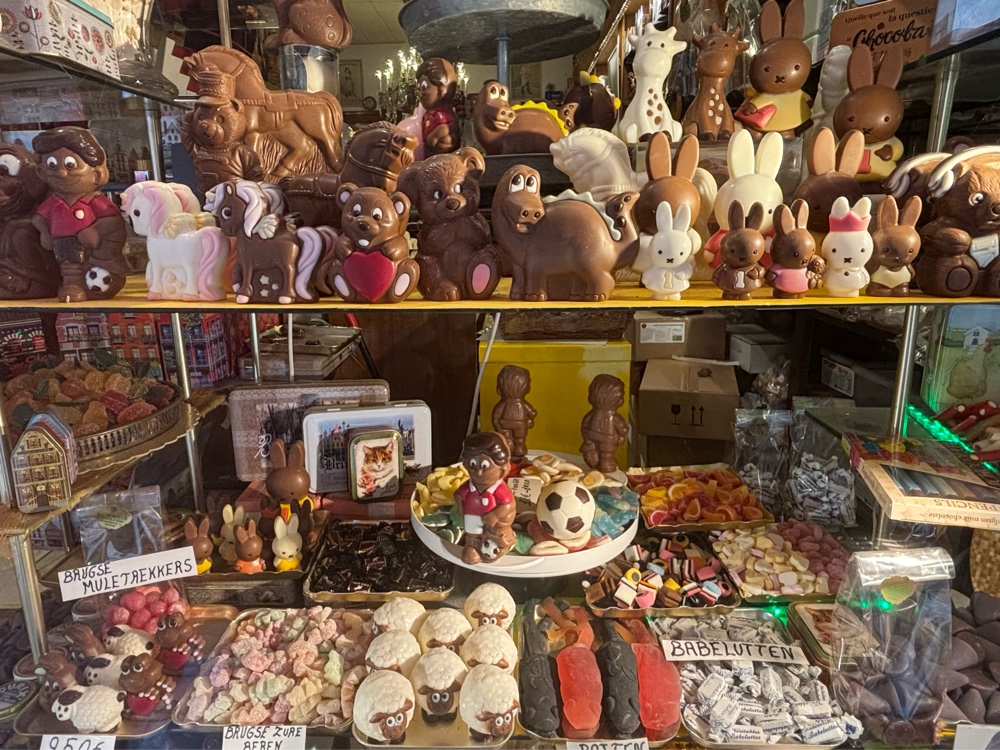 |
| Belgium has no end of chocolate stores. This one offers up lots of chocolate animals. |
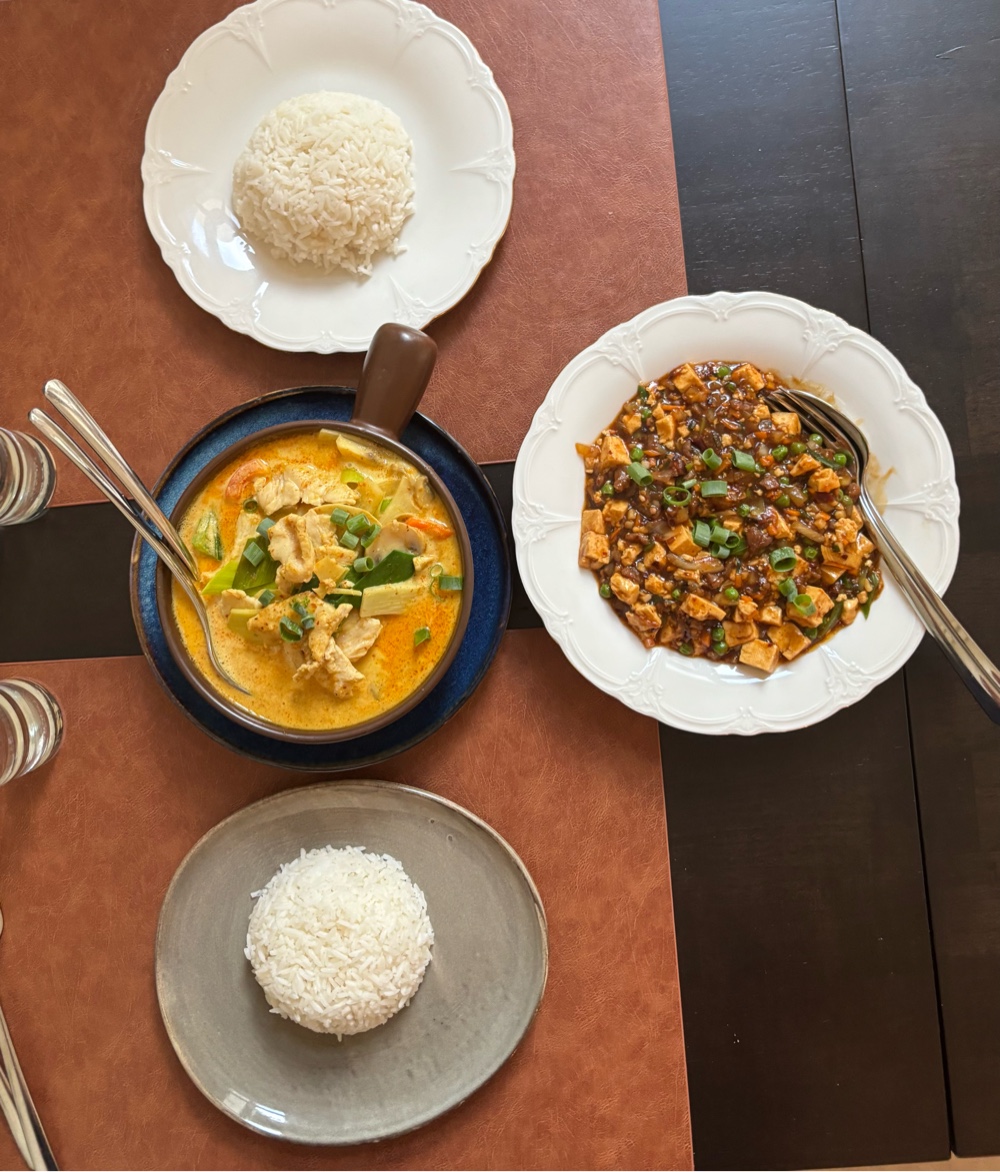 |
| Would train got us back to Brussels just after 6PM. A well-rated Asian restaurant in the European Quarter where we are staying has been closed while we’ve been here, as the owners have been on vacation. But they are back, and tonight was their opening night! We were their first post-vacation customers. Delicious food! |
Comments
Post a Comment