Did we need another Summer 2026 vacation? Absolutely not. But hey, we are partially retired, and this week-long trip to Belgium is exactly the sort of thing we envisioned for retirement. Plus, who can resist a new Air Canada nonstop route from Halifax to Brussels?
Pam has never visited Belgium, and I only visited the country once, as part of a one-day pilgrimage in 1998, when I worked at Veterans Affairs Canada. A Canadian Lancaster Bomber was found in a bog in Gerardsbergen in southern Belgium in the 1990s, with its five deceased service-men still in the wreckage. The pilgrimage was to carry out a state funeral for these men.
Belgium is known for its chocolate, waffles, and Brussels sprouts, among many other things. As the seat of the European Parliament and having such cultural gems as Brugge, it is a country we have wanted to explore for a long time.
We will be based in Brussels for the week, doing a “hub-and-spoke” approach to getting around, as we will train to a new city each day and then return to our base at day’s end. Please join us as we explore Belgium!
Getting from Halifax to Brussels:
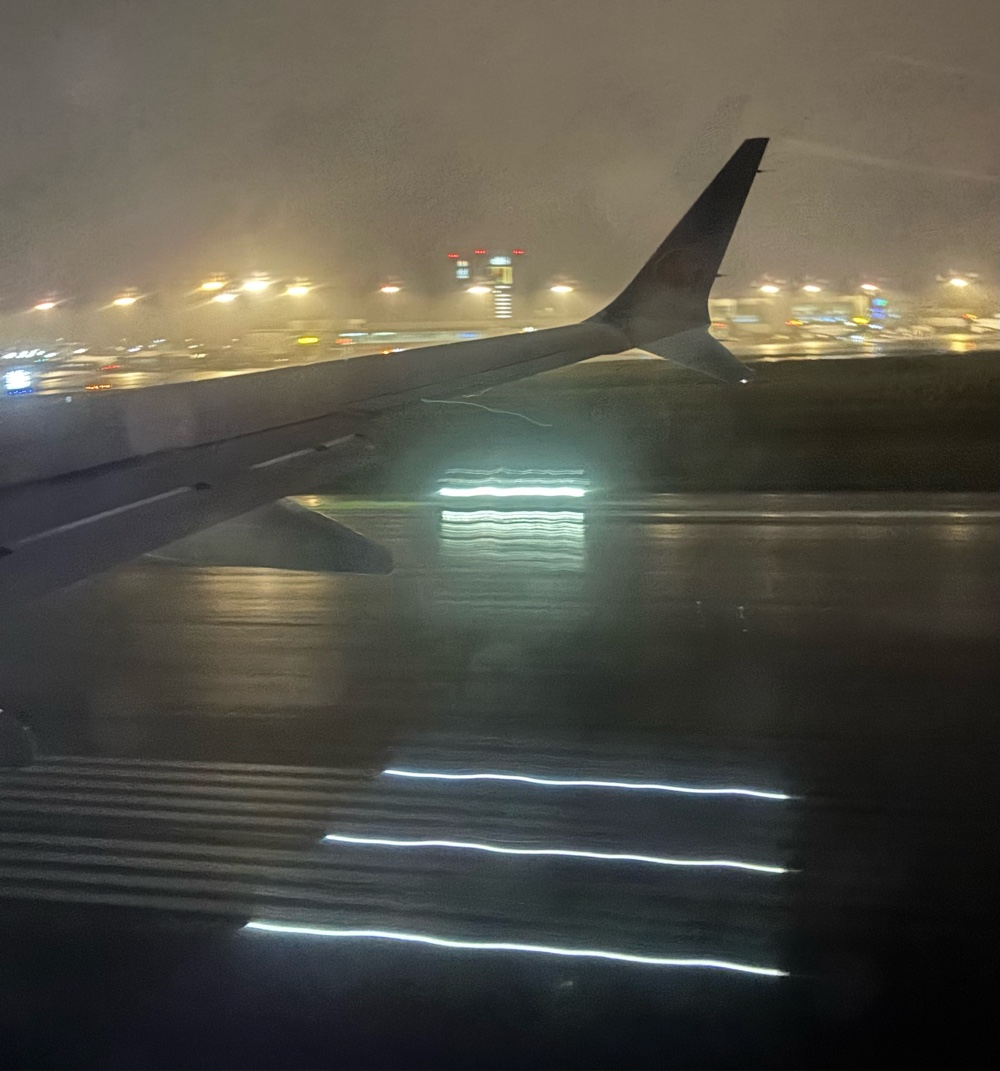 |
| It was a rainy evening when we lifted off at 9PM from Halifax. Two months past the summer solstice, and darkness is really setting in earlier now. |
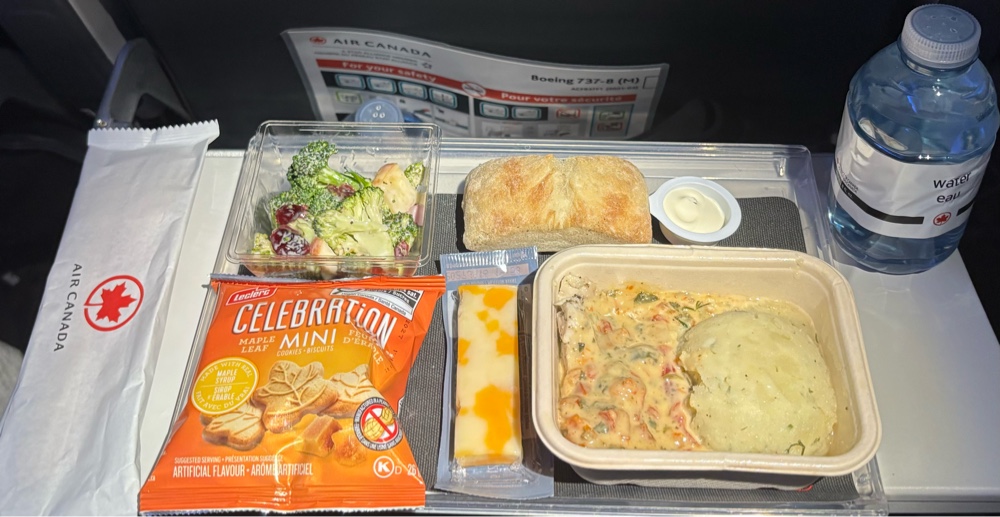 |
| Dinner was served 90 minutes into the flight. A tasty chicken dish with mashed potatoes, accompanied by a broccoli salad. |
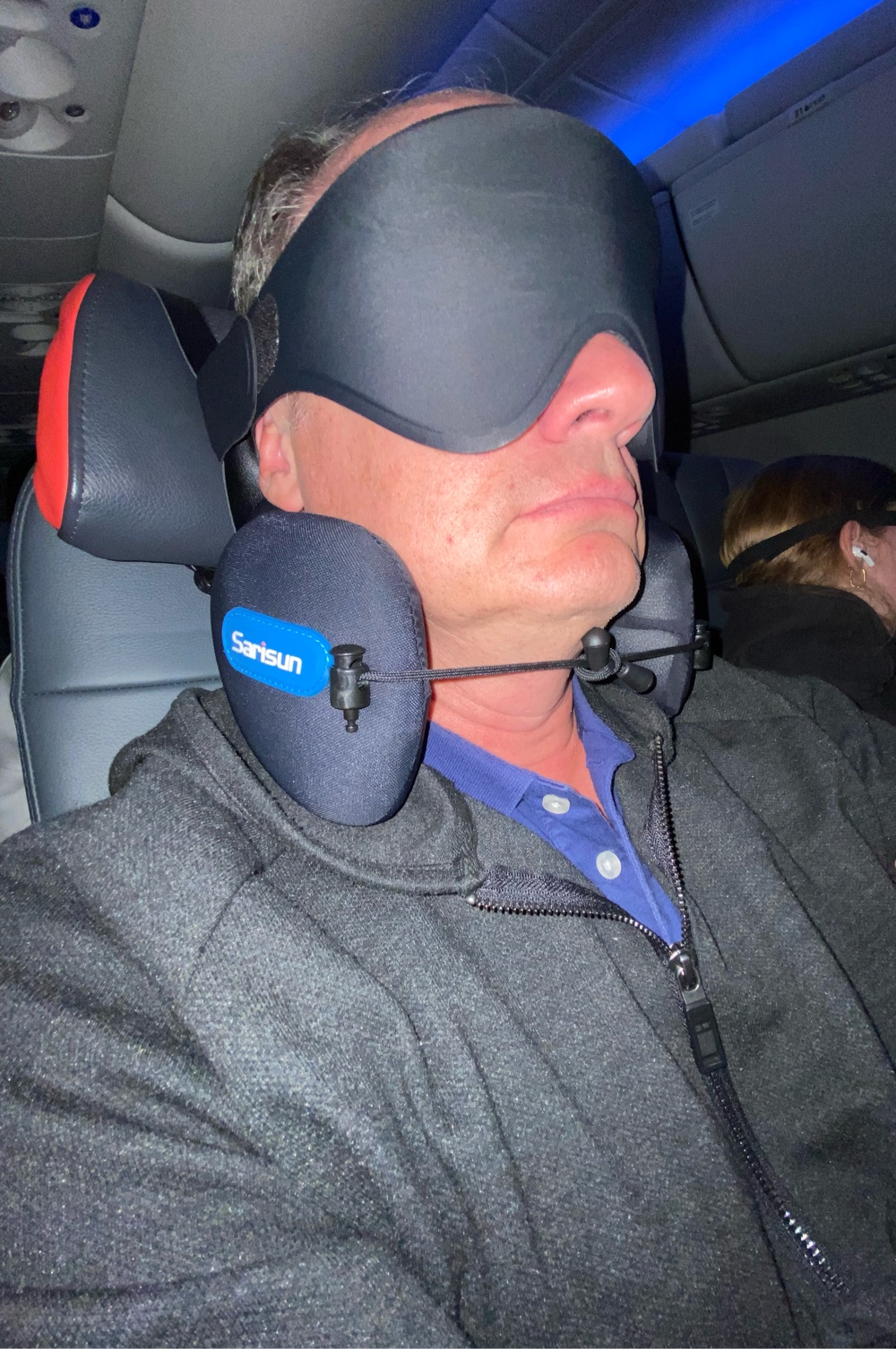 |
| In hopes of getting a solid sleep on the flight, I made a $50 investment in a new-fangled neck pillow and eye mask at which, essentially, links one’s head to the seat’s headrest. Unfortunately, it didn’t quite turn out as ideal as the hype around suggested. I hardly got a wink of sleep. |
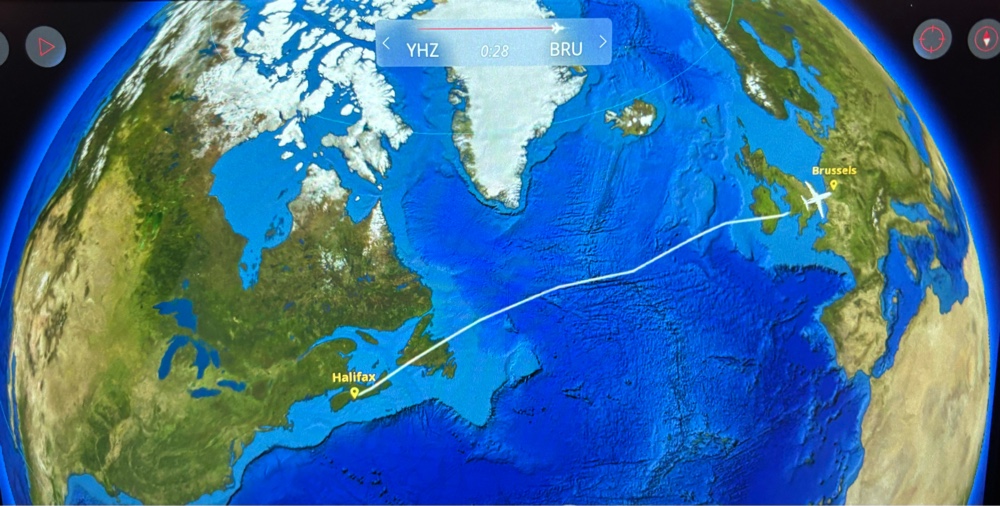 |
| The flight route took us right over my childhood home of Twillingate, NL and on across the Atlantic. We pushed back 15 minutes late but landed 10 minutes early! |
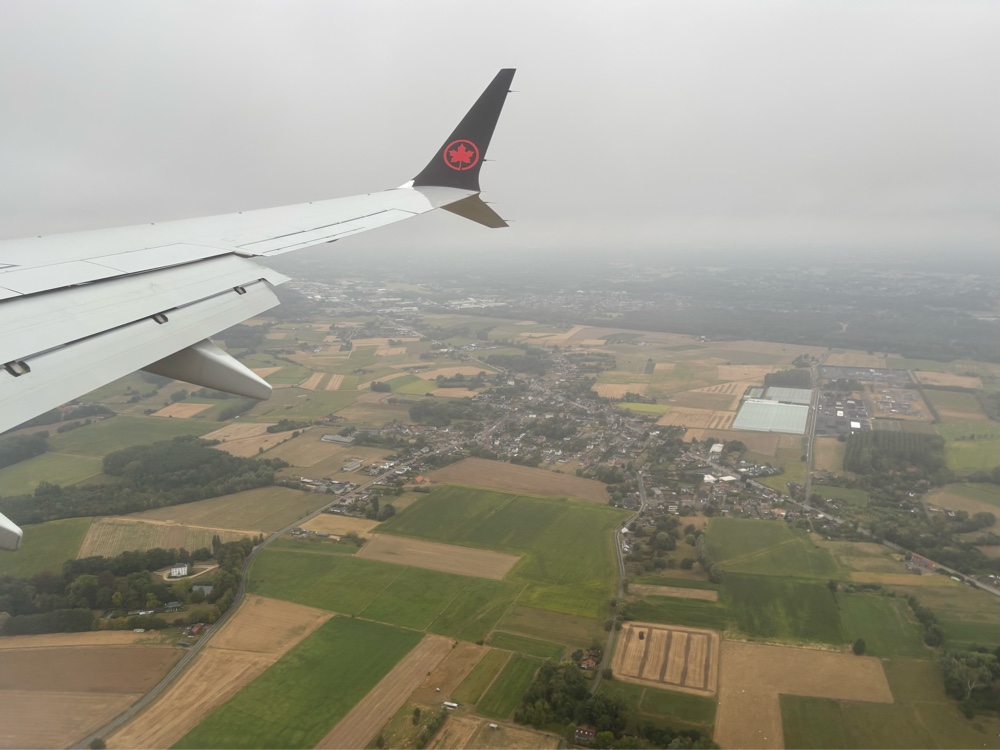 |
| It was a cloudy morning as we descended into Brussels. The forecast for the coming week is looking grey, rainy, and in the 20-22C range. |
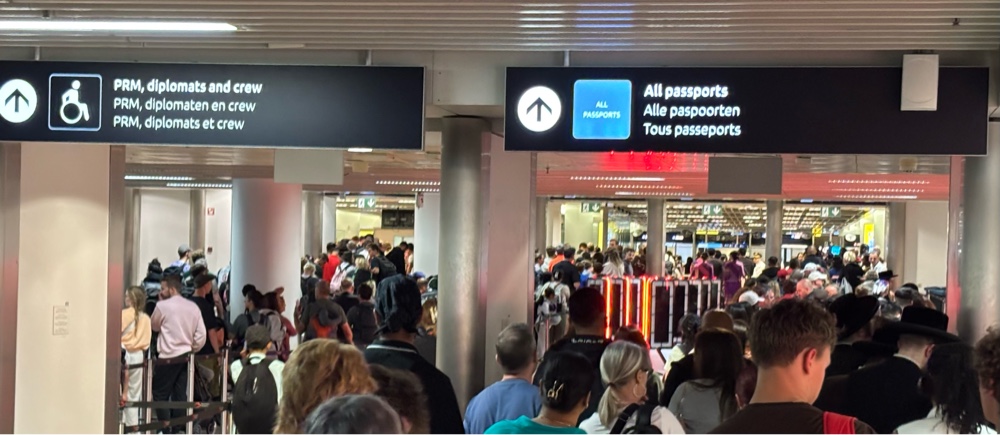
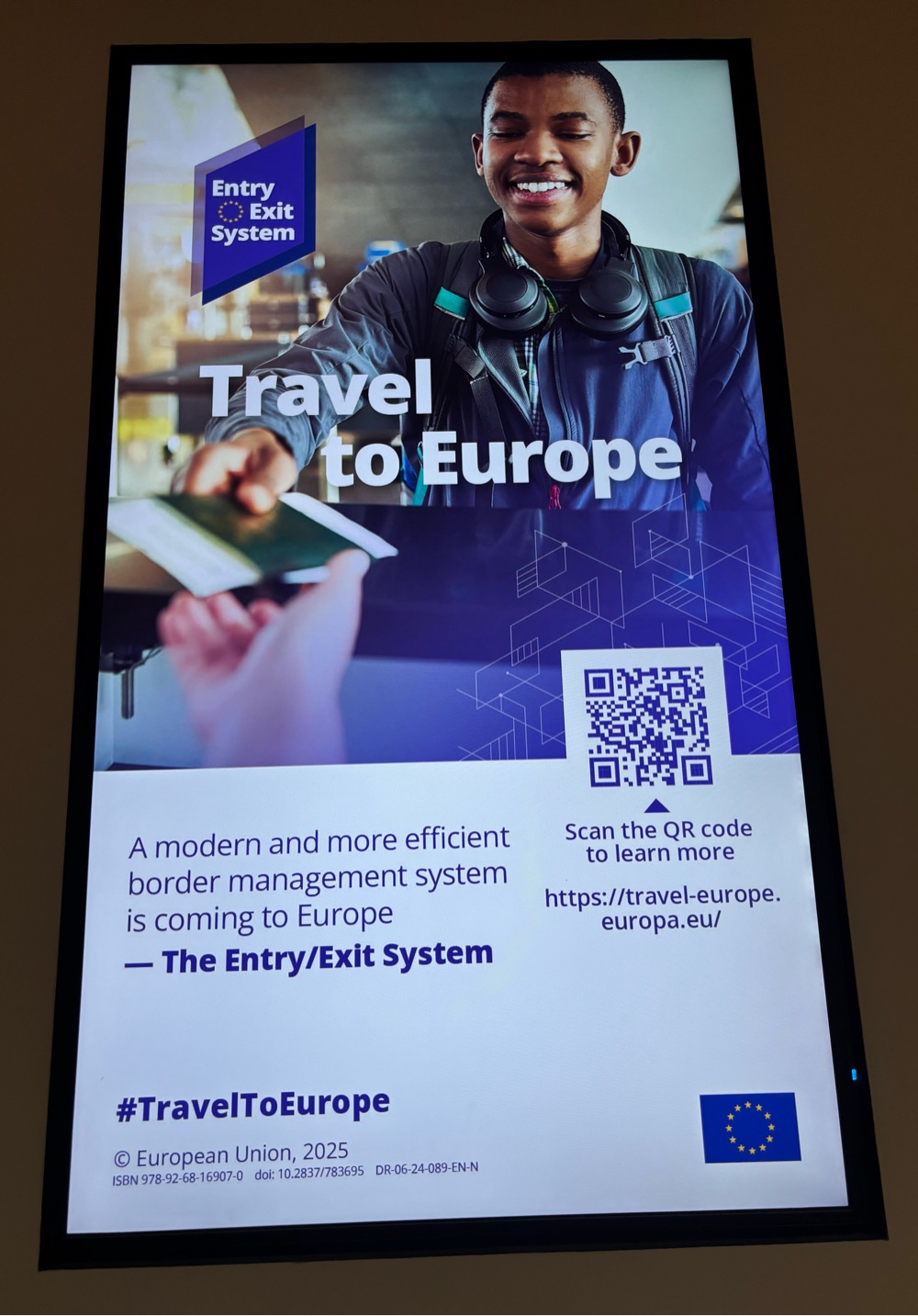 | | We had heard that the EU was implementing a new biometrics-based passport control system and that the customs line-ups across Europe are awful this summer as a result. And sure enough: the line-up at Brussels’ passport control was beyond nasty. It took us two hours to get through it! |
 |
|
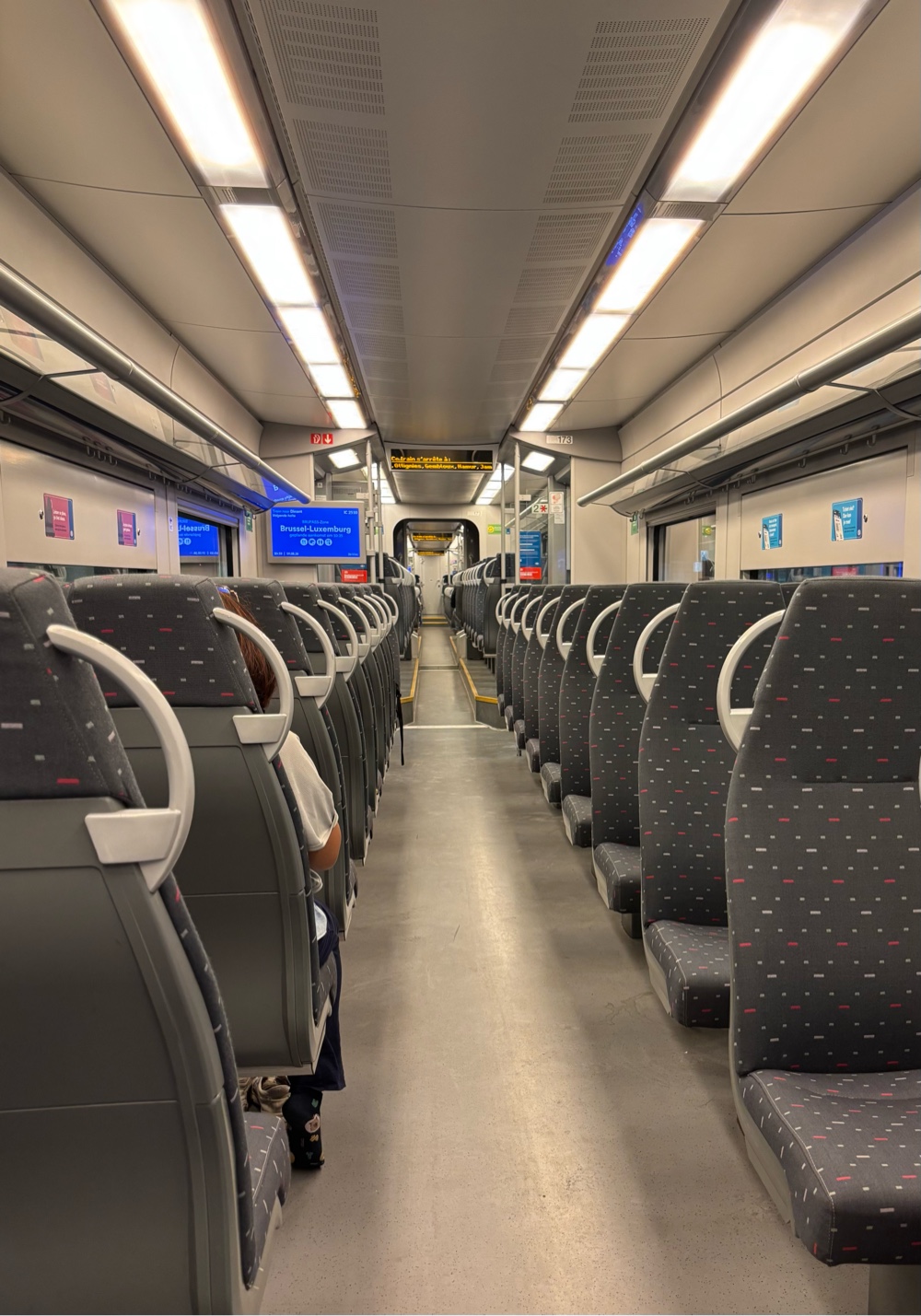 |
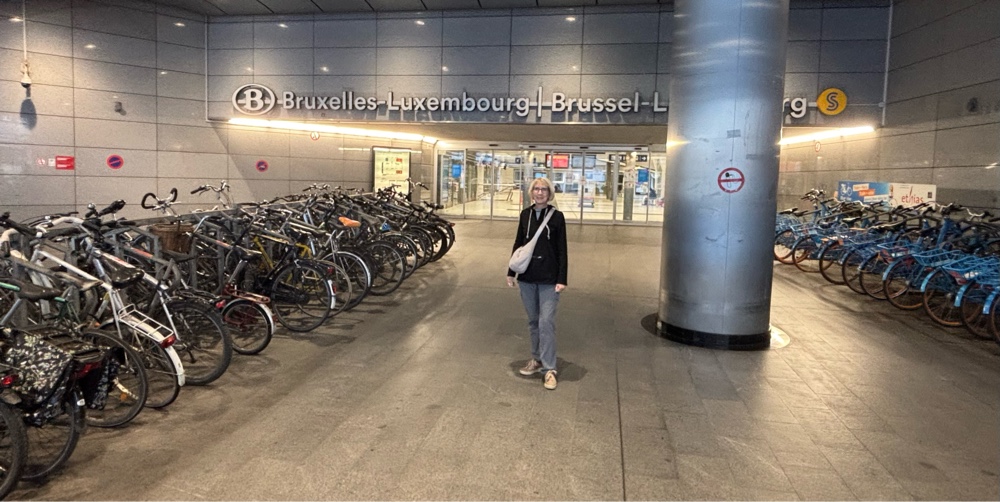
| Out first experience with SNCB - Belgium’s national railway system - was 10/10. We took it from the airport to Brussels-Luxembourg Station, which is across the street from our hotel. A very efficient, smooth, quiet and clean rail experience! We will be making good use of the SNCB trains as we do our “hub and spoke” approach to exploring Belgium in the coming week. |
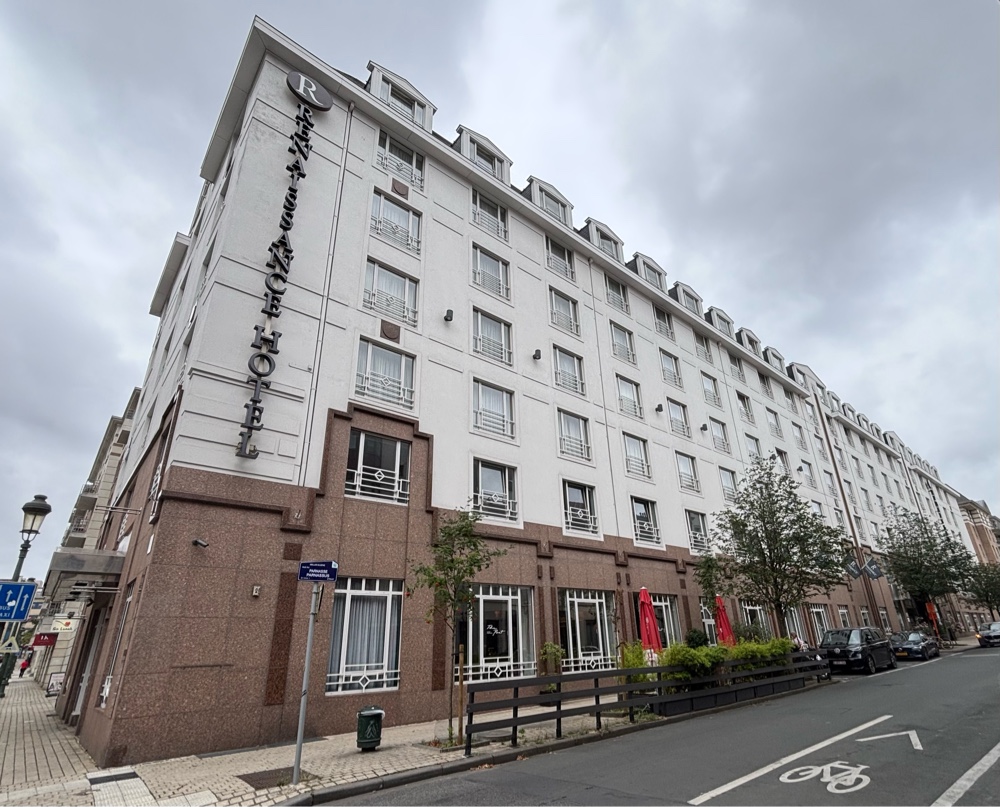 |
| Our hotel, the Renaissance Brussels Hotel, is excellent. Part of the Marriott family, it will be our base for the next seven nights. It is rare for us to plunk down in one spot for such an extended period! |
The European Parliament Complex:
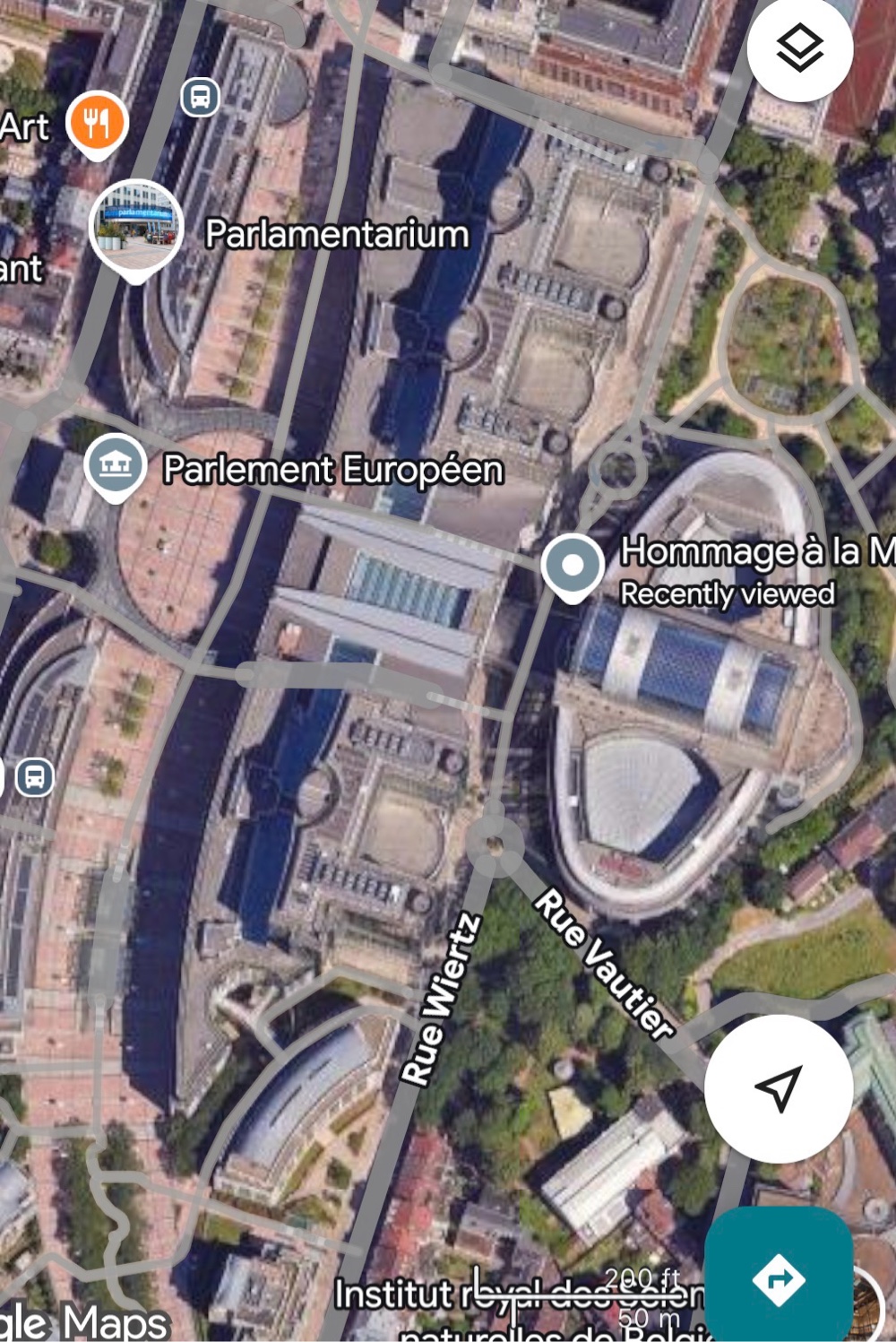 | | This is the view of the EU Parliament complex from Google Maps. It is massive! It was built from 1989-2004. |
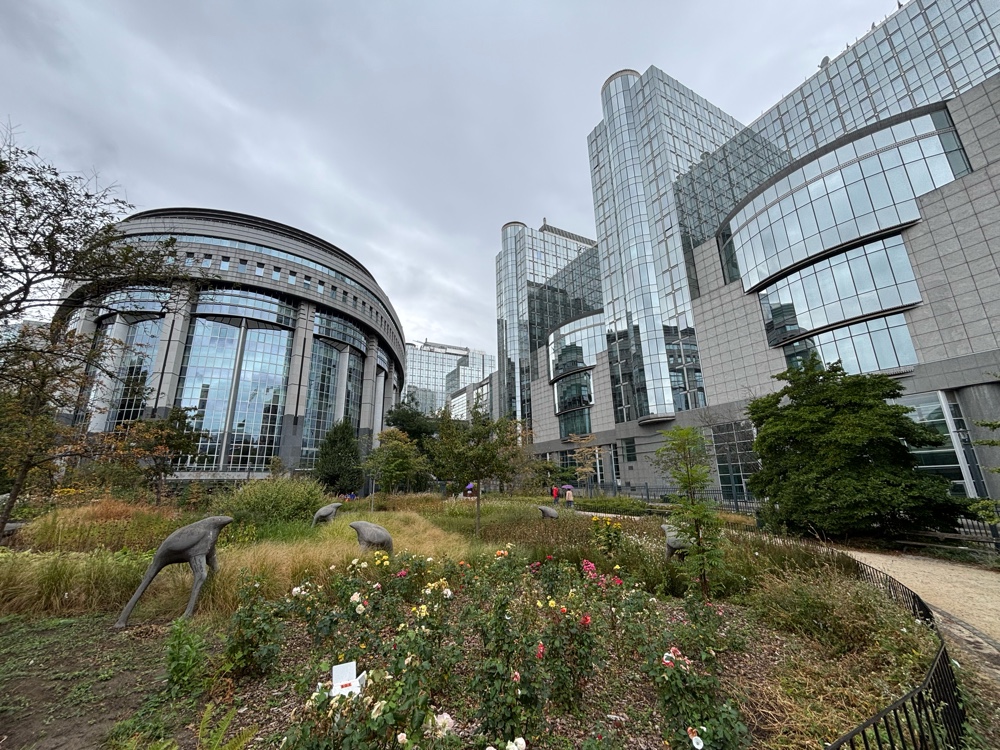 |
| Some of the buildings in the EU Parliament complex. |
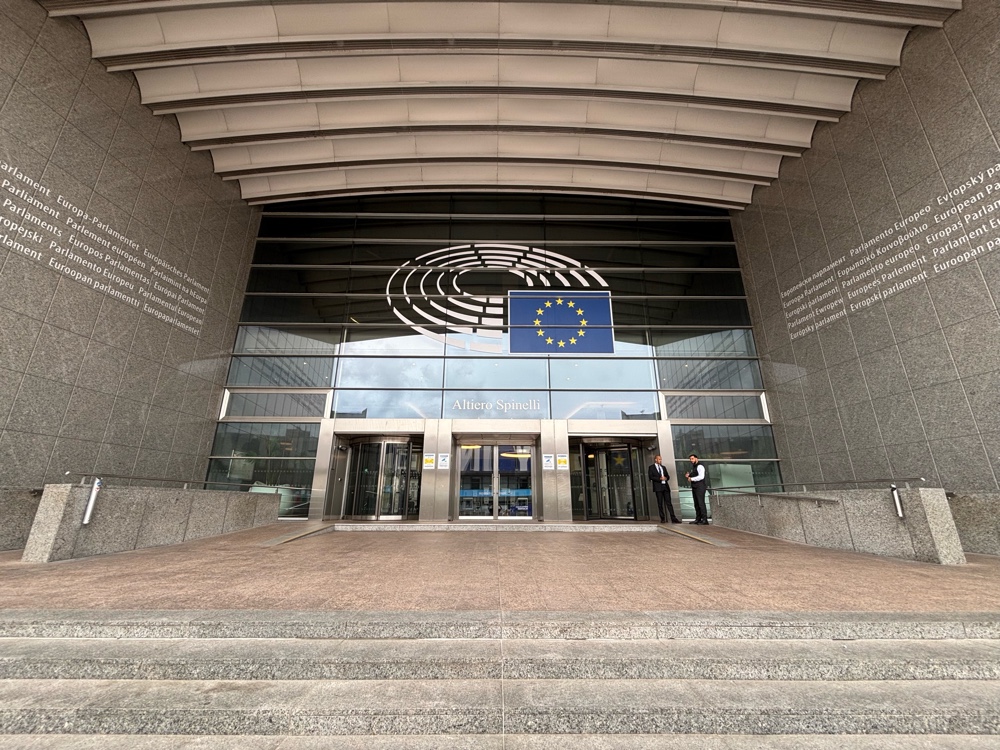 |
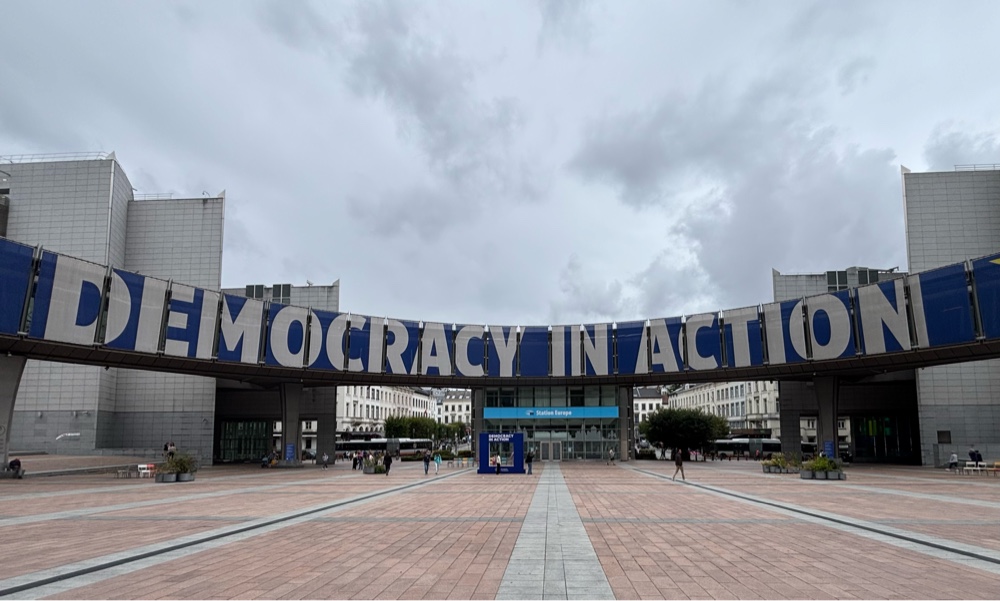
| The entrance to the Algiers-Spinnelli Building at the EU. The building is the largest in the entire complex. |
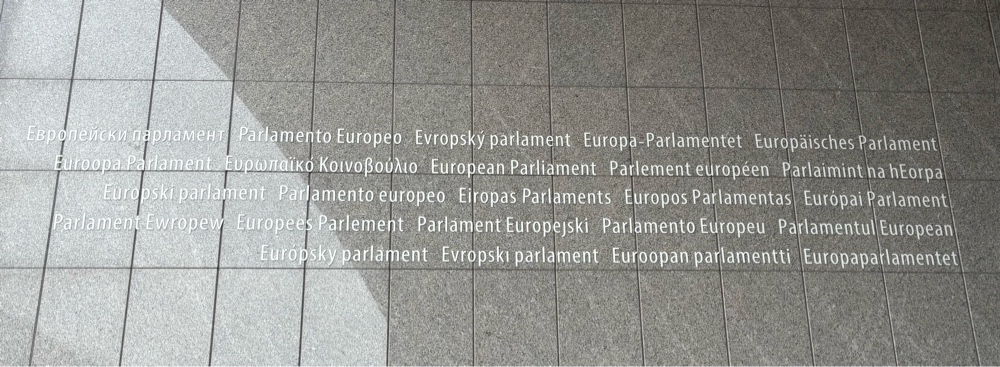 |
| There are 24 official languages in the EU! |
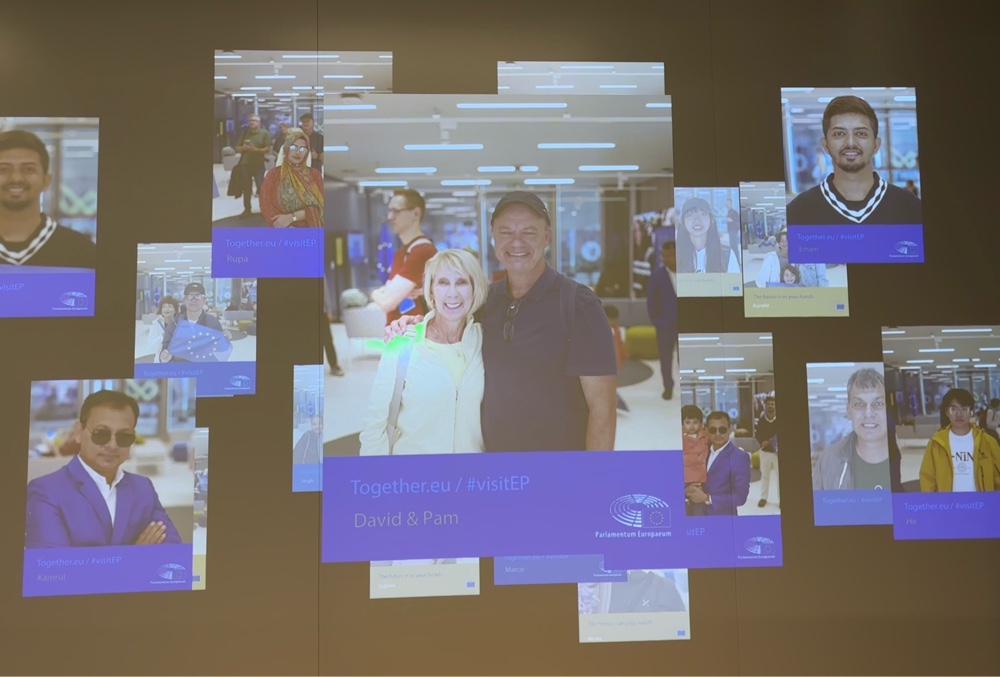 |
| At the EU Visitor Centre, you can have your photo taken and added to an evolving digital montage of visitors. |
Parc Leopold
Parc Leopold is a slice of nature in the European Quarter, adjacent to the EU Parliament complex. Comprising 16 acres, it is done in the English style.
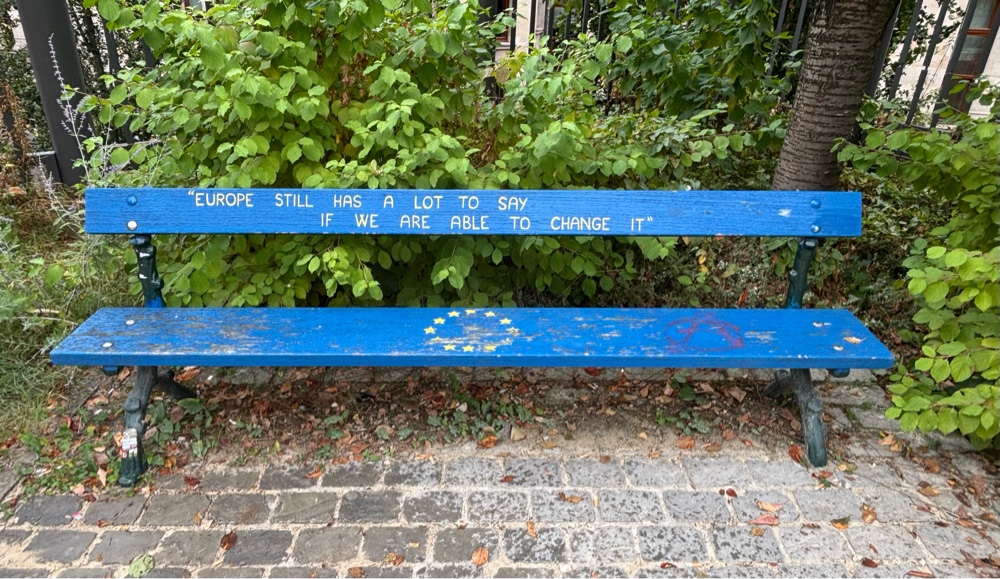 |
| It seems that countries and unions all over the globe are in a state of internal conflict. Someone took the liberty of painting this bench in the Parc Leopold and wrote, “Europe still has a lot to say, if we are able to change it.” That says a lot about the divergent views on the experiment that the EU has been. I cannot imagine the complexities of striving to unify 28 nations and 450 million people. |
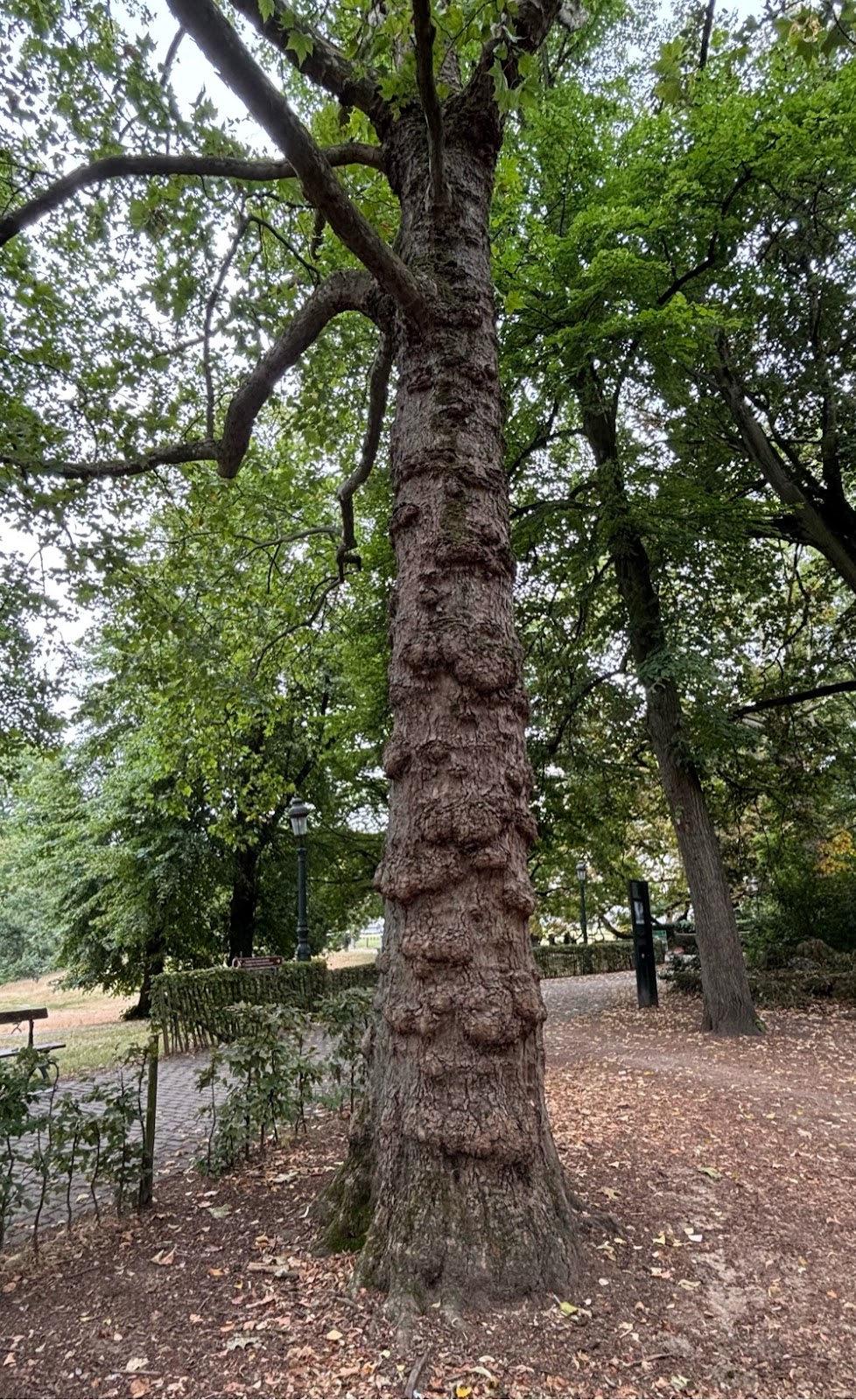 |
| This tree in the Parc Leopold, adjacent to the EU, was so unique, with its knotty bark! |
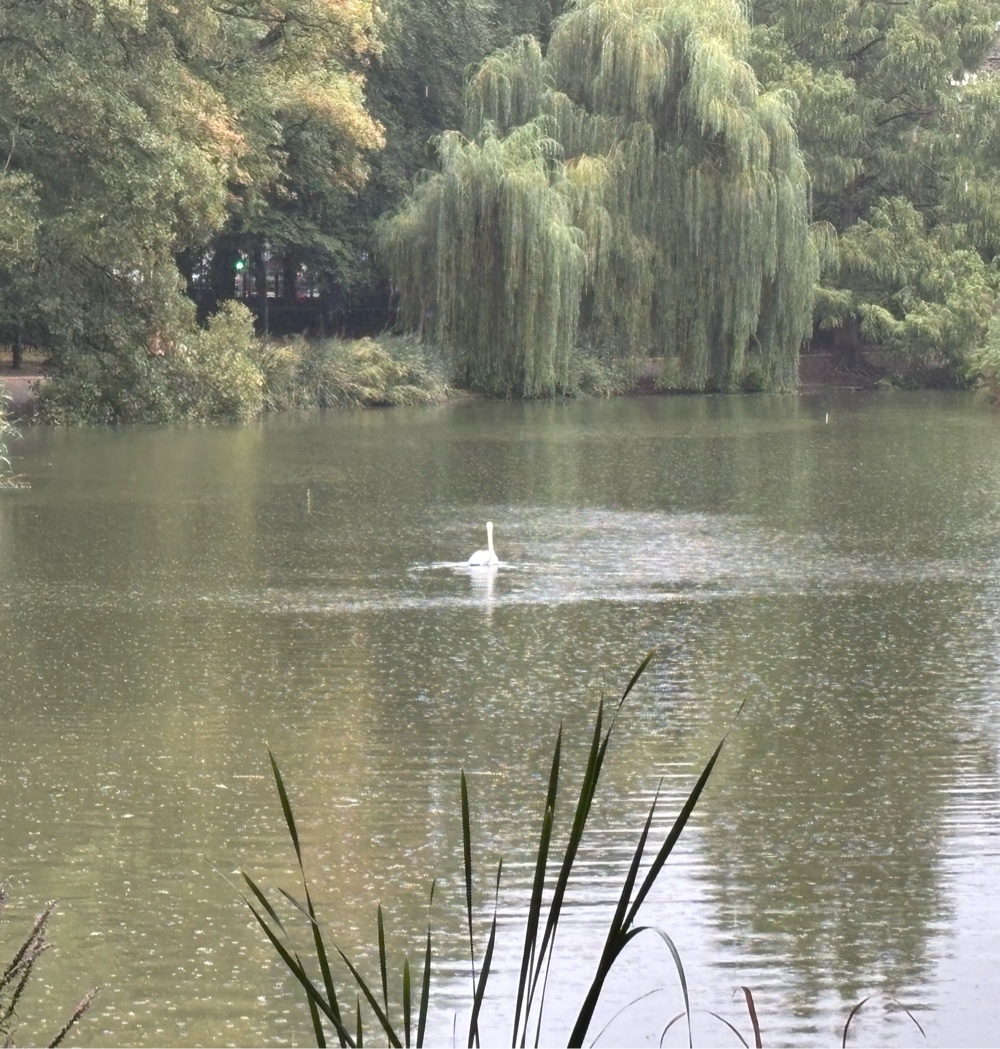 |
| One lone swan on a rainy afternoon in the park. |
Paul Henri Spaak Building
of the EU Parliamant Complex
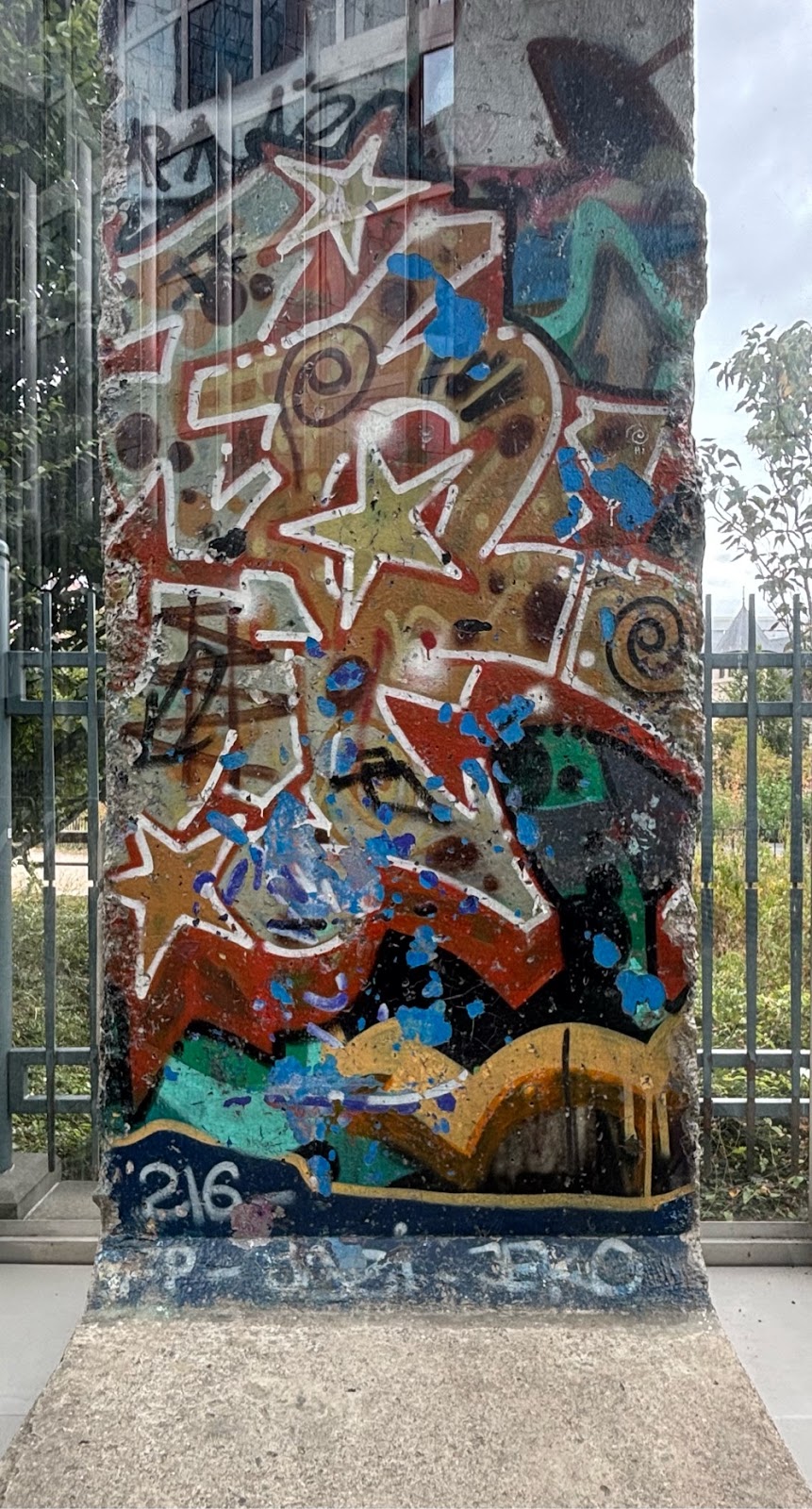 |
| Just outside the building housing the Hemicycle are two chunks of the Berlin Wall, which fell on the night of November 9, 1989. |
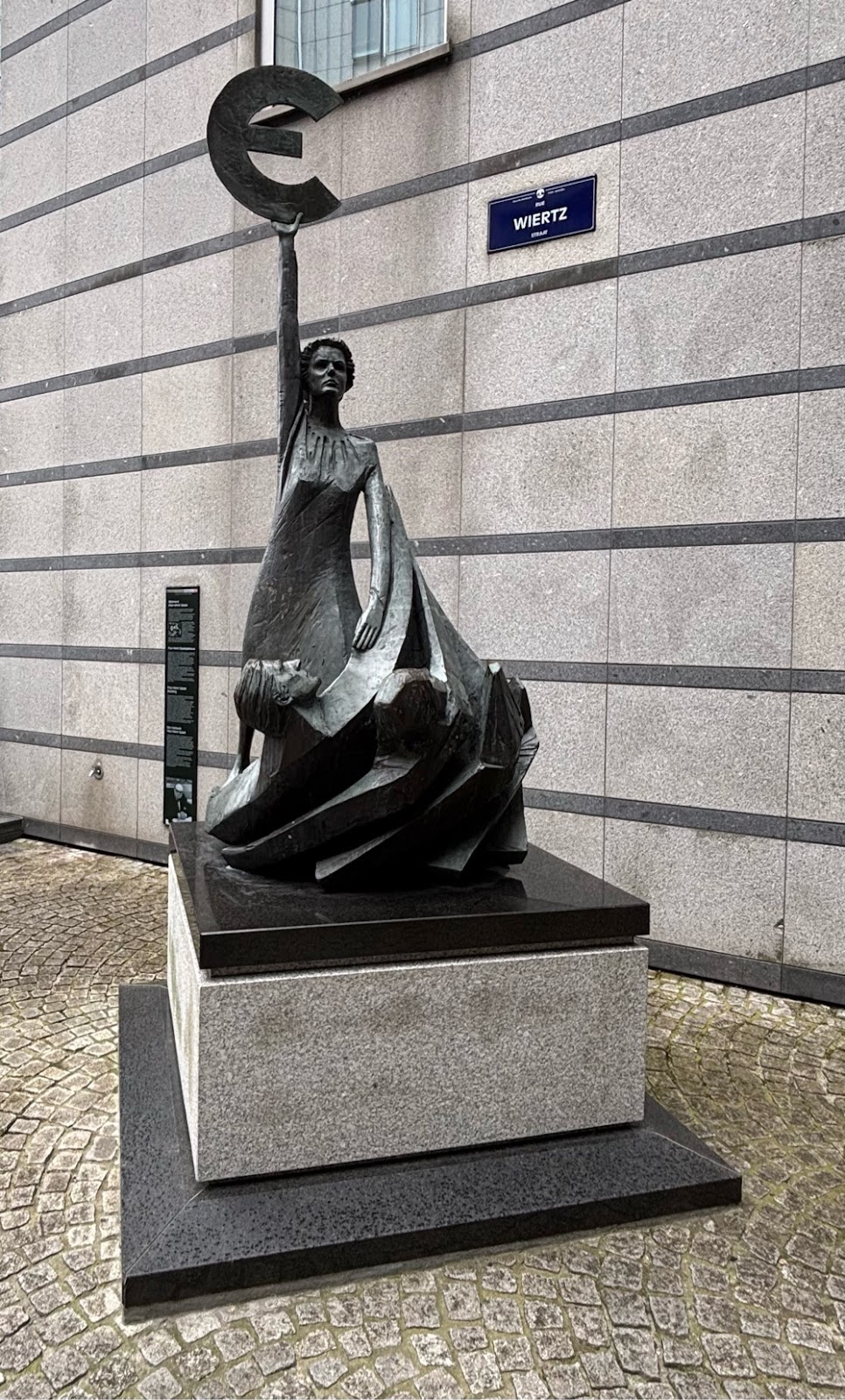 |
| The statue of a woman holding up the symbol of the Euro is titled “Europa” and was created in 1993. It represents the continent of Europe rising above a collective mass of people. |
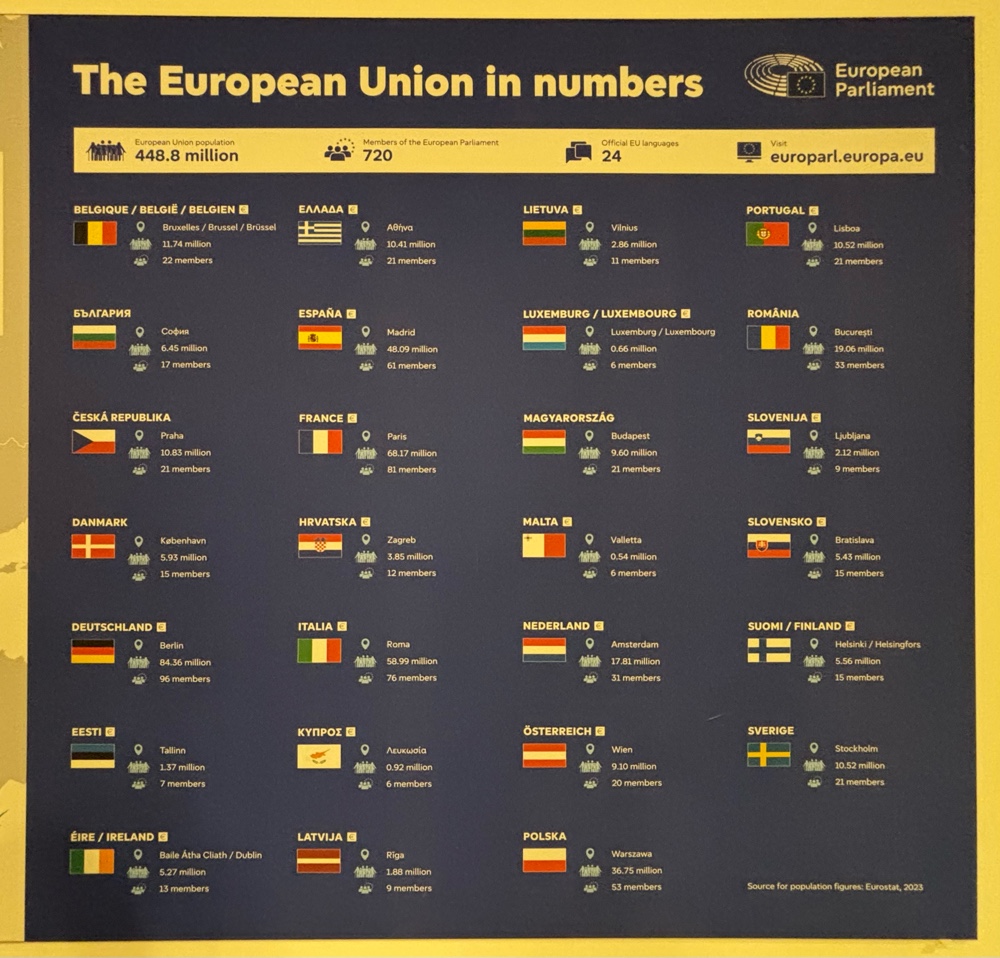 |
| Did you know…. The EU is comprised of 27 nation states and has a population of close to 450 million people? The graphic above shows how many members each nation has in the Parliament. |
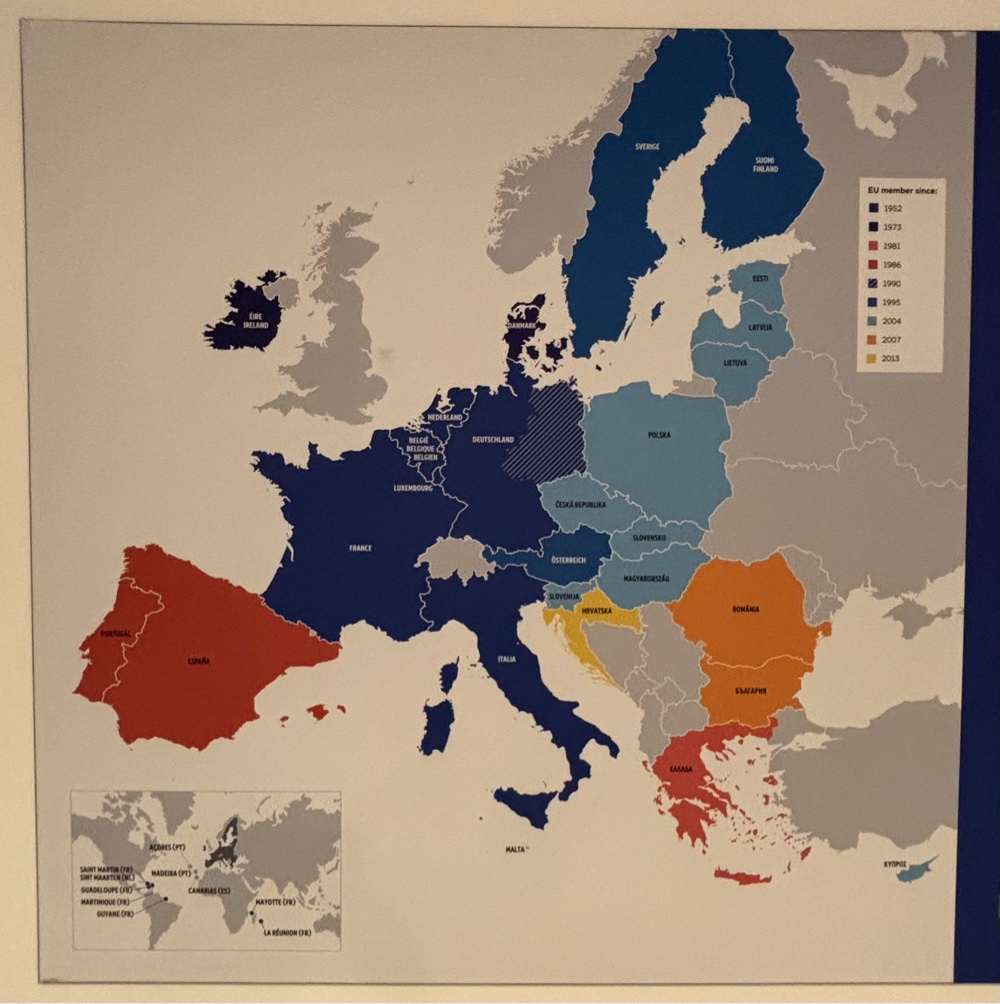 |
| The coloured nations are part of the EU. Note that the UK, post-Brexit, is no longer included. |
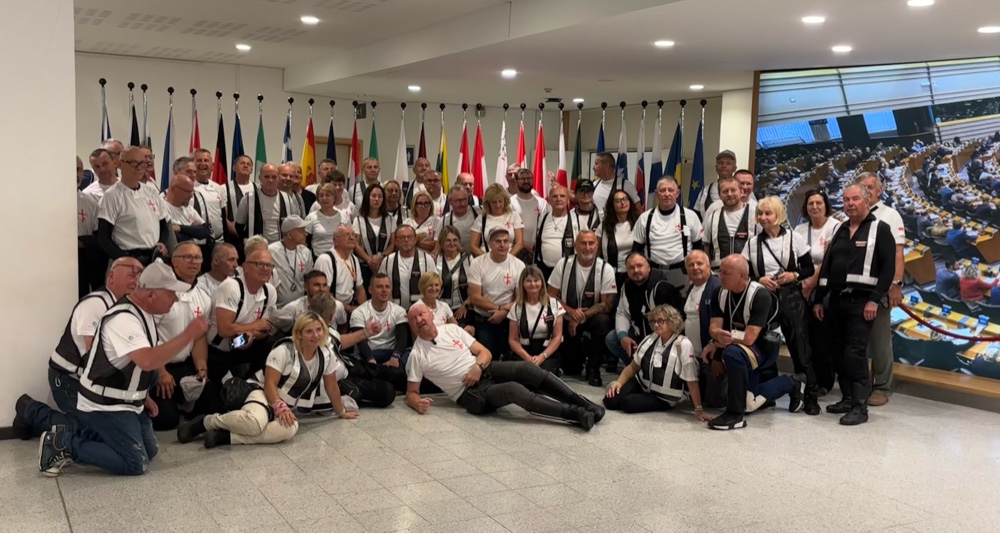 |
| This massive group of Polish motorcyclists was doing the EU Parliament tour as we were. They were super excited to be at the EU Parliament. |
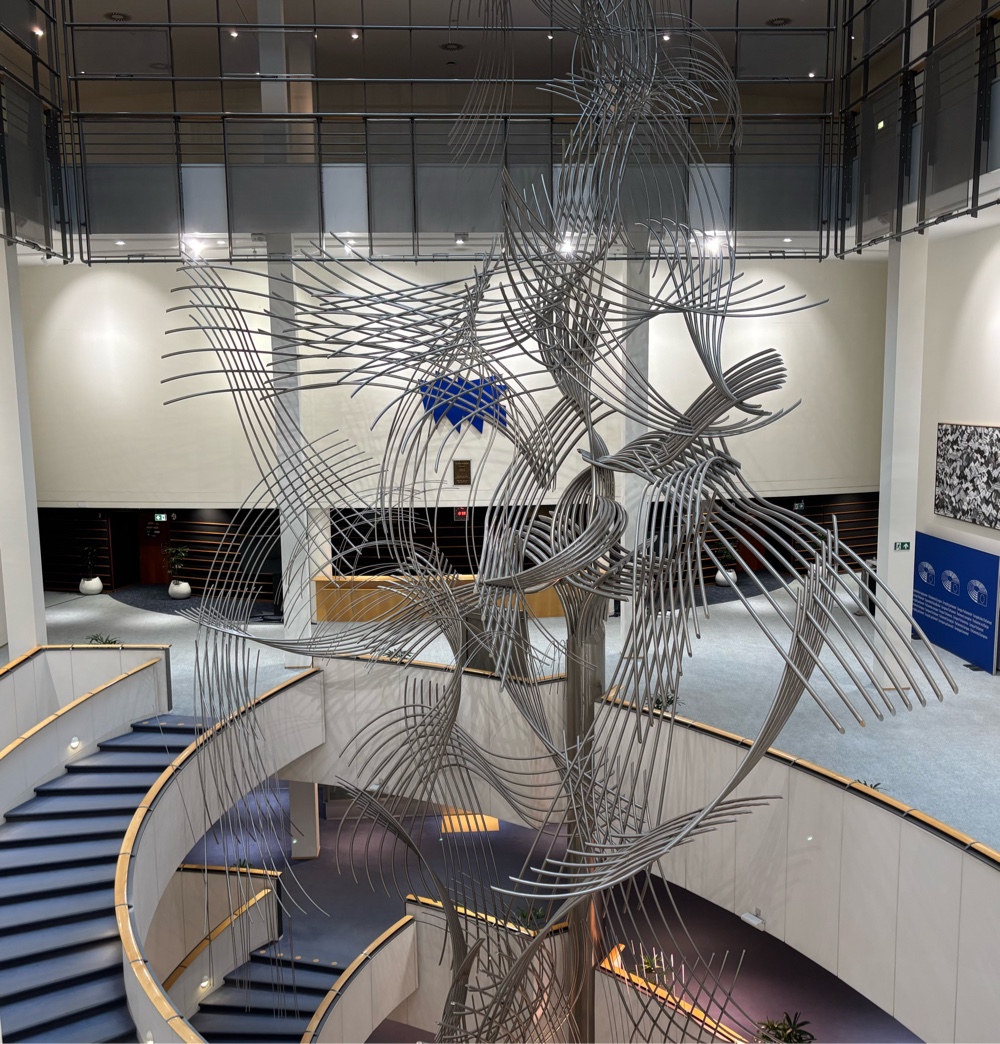 |
| This 34m high installation just outside the EU Parliament Chamber is called “Confluence”. It represents the unity of the EU, with a central trunk and branches symbolizing the member states. |
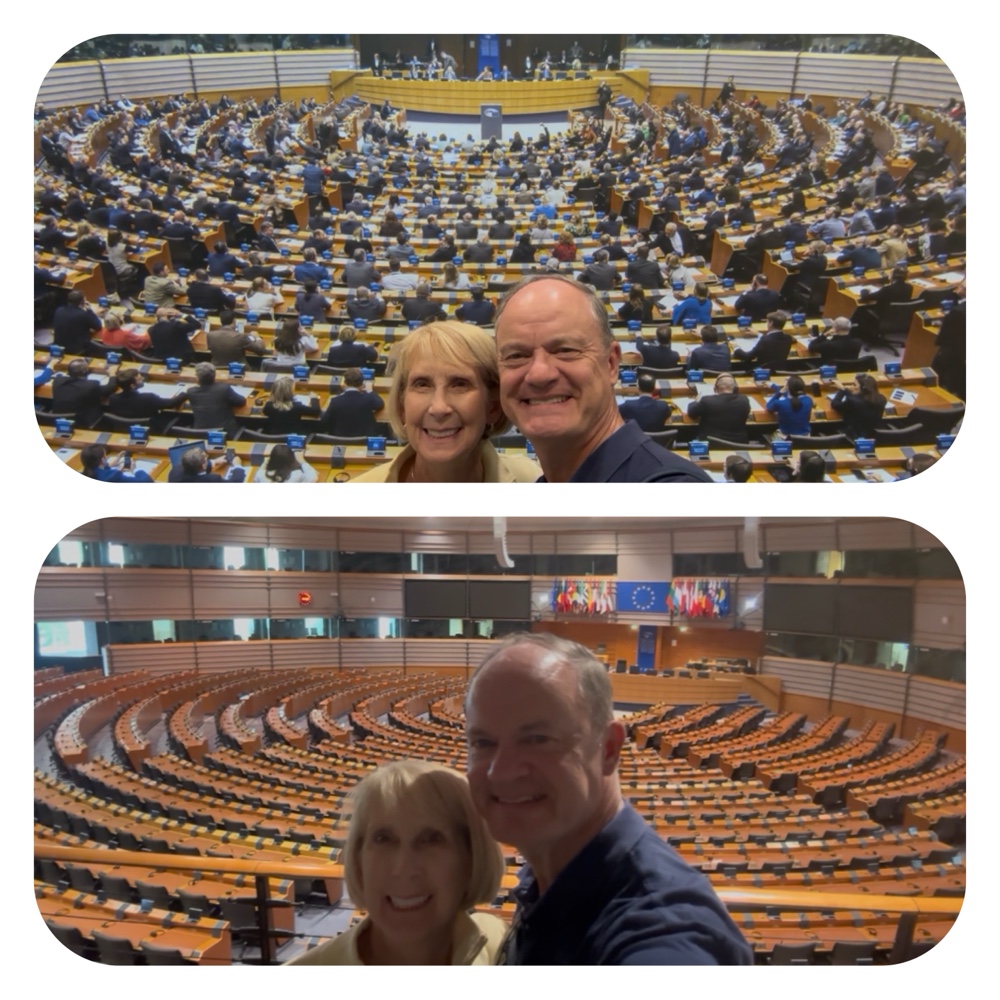 |
| The chamber of the EU Parliament is called the Hemicycle. It is the heart of European democracy. It seats all 720 Members of the European Parliament (MEP), who come together for votes three times a year. The EU Parliament has another site in Strasbourg, France. The top photo shows us superimposed against what a “full house” in the Hemicycle looks like. The bottom photo shows us in the empty Hemicycle today. |
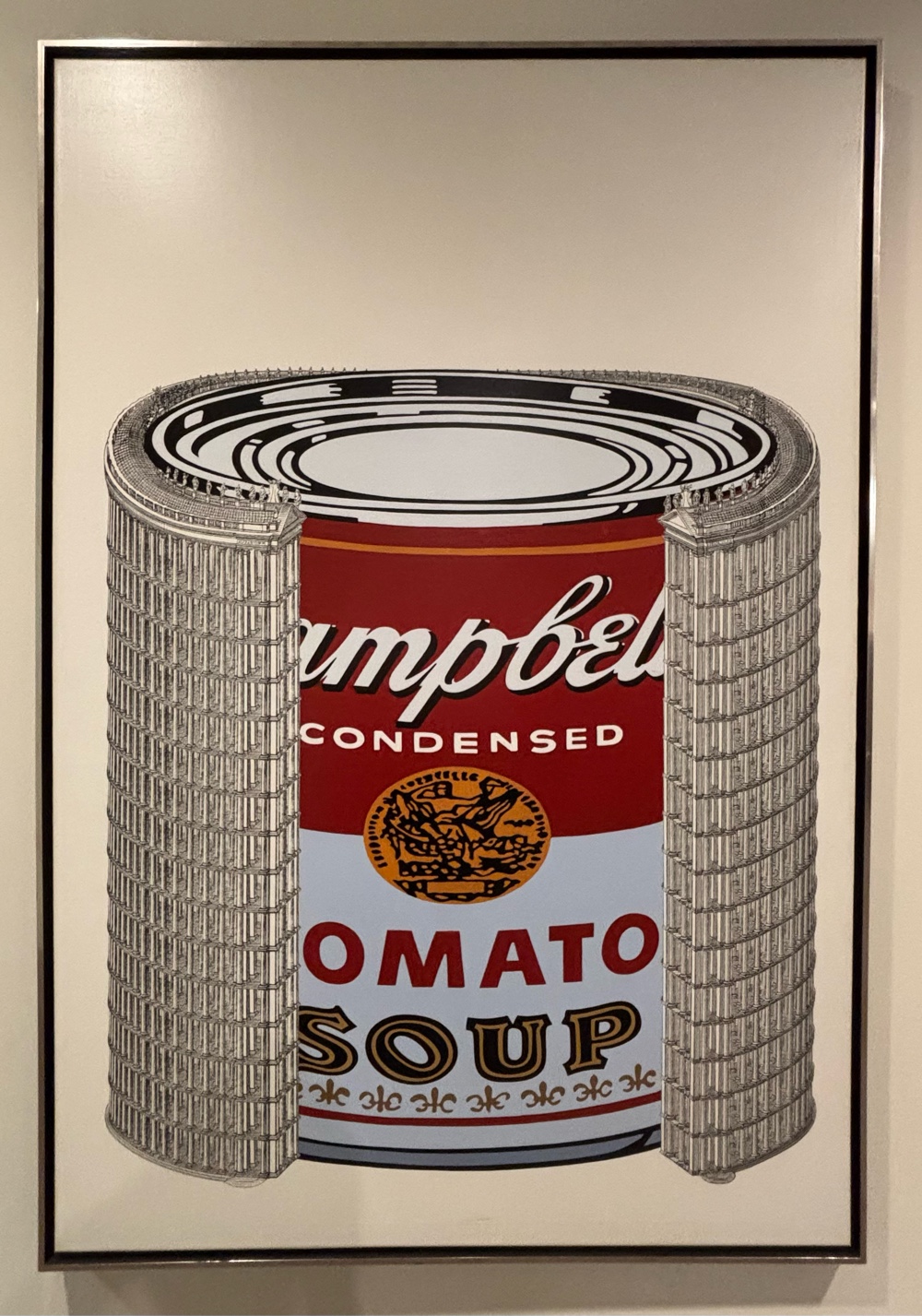 |
| The EU Parliament has a collection of 500 art works from the various member nations on display. This one, by famous artist Andy Warhol, caught our eye. |
House of European History
The House of European History was initiated by the EU Parliament to explore the trans-national history and integration of Europe, 19th and 20th century Europe. It addresses European identity, crisis and integration. Truly an amazing place! But talk about information overload!
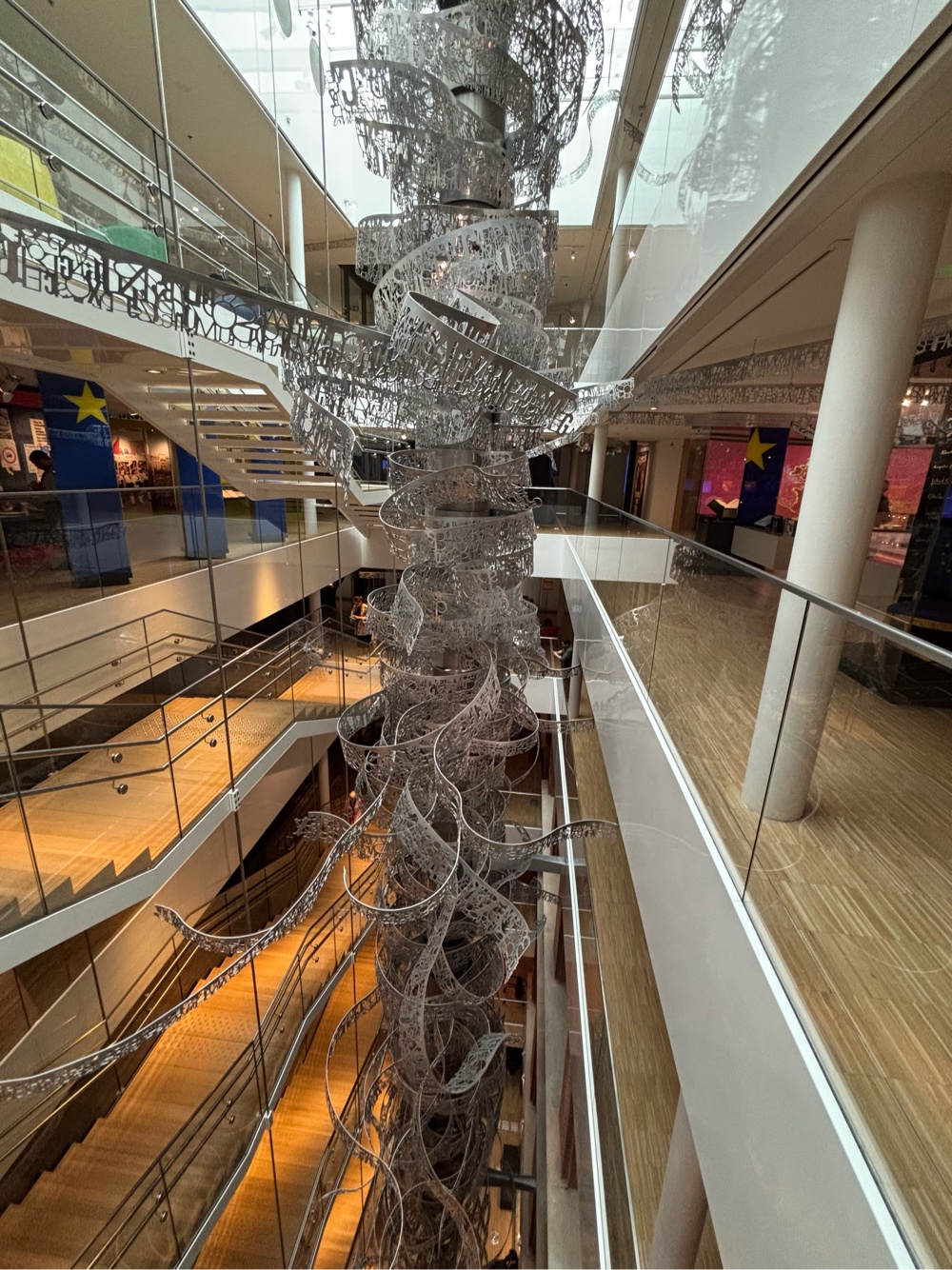 |
| This 25m high metal installation spans all six floors of the House of European History. It reflects union in diversity. |
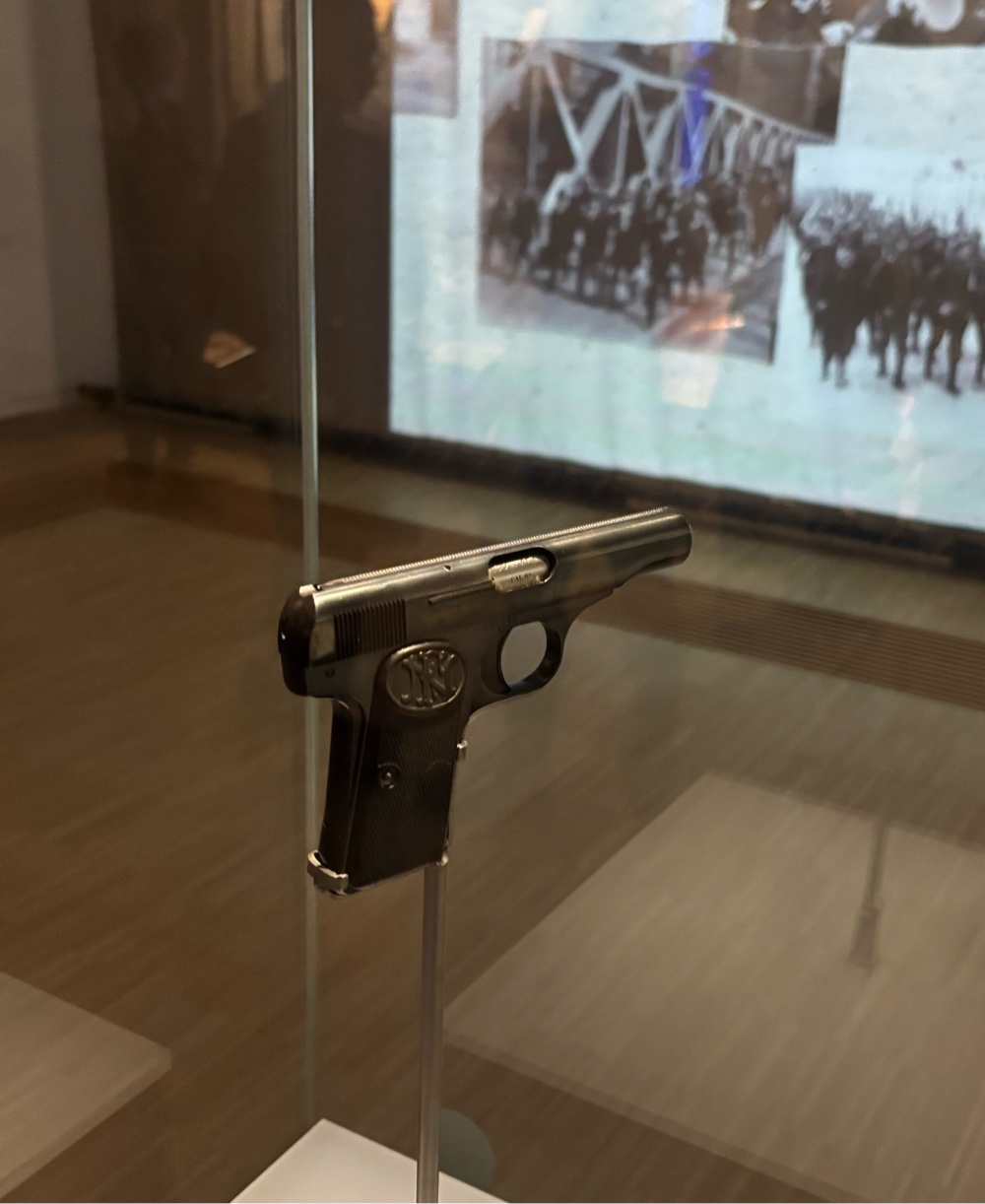 |
| The House of European History now holds the pistol that was used by Gaurilo Princip, who shot Arch Duke Ferdinand in Sarajevo on June 28, 1914. He was a 19-year old Bosnian Serb nationalist. The assassination was the spark which ignited World War 1. Several years ago, we walked the bridge in Sarajevo where the assassination took place. Given the influence and change WW1 imposed - not only on Europe but on the whole world, that pistol literally changed the world. |
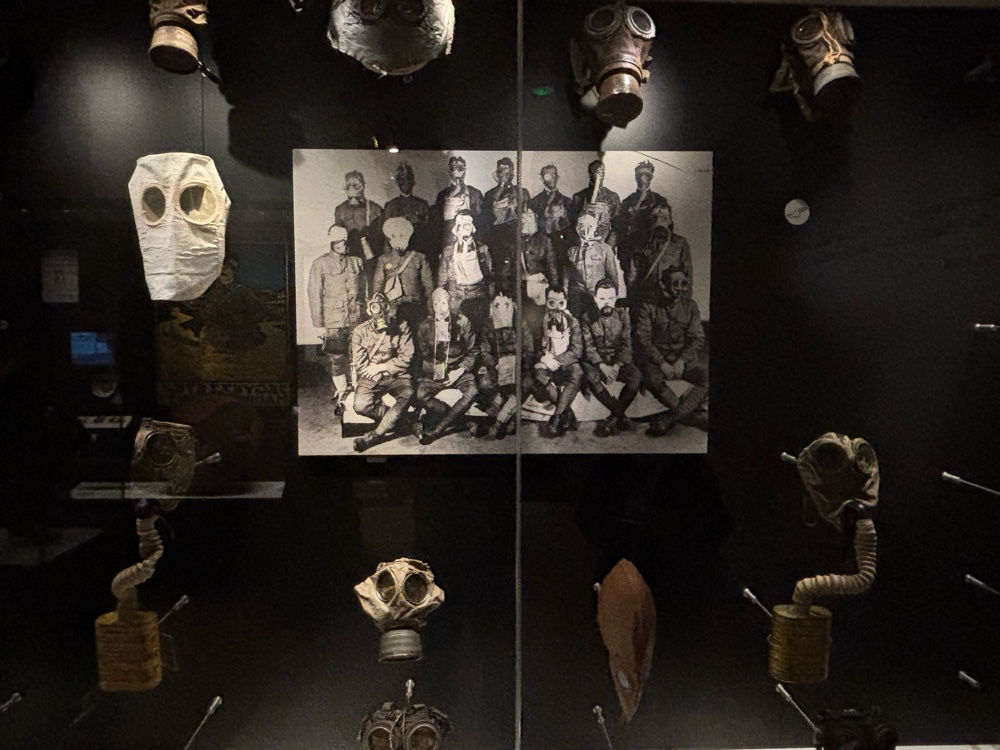 |
| The House of European History has an endless collection of profound objects and photos that depict Europe’s tumultuous progress. Apart from the pistol above, this display of World War 1 gas masks was particularly haunting. |
Parc du Cinquantenaire
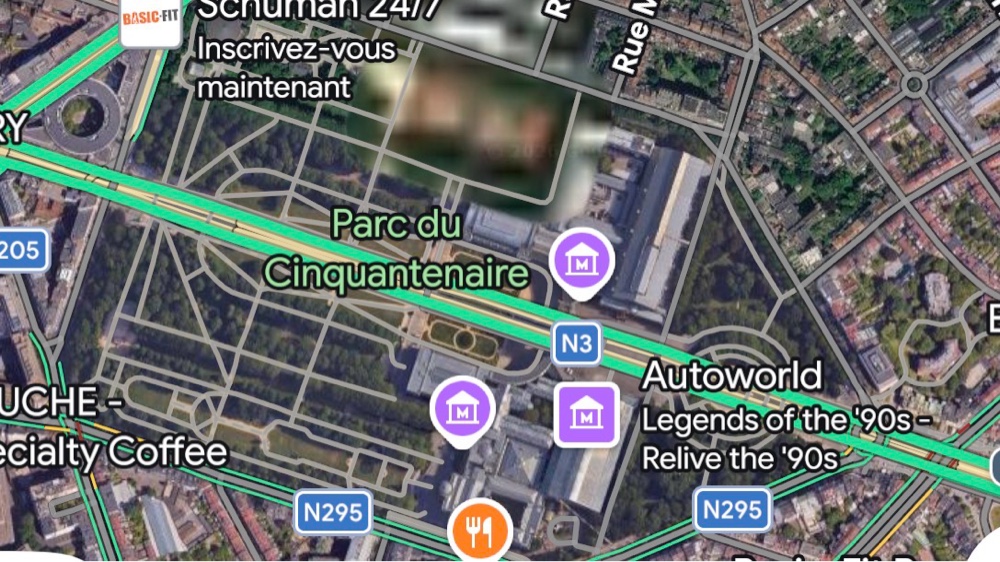 |
| Parc du Cinquantenaire is a massive and impressive park in the middle of Brussels, built in 1880 to mark the country’s 50th anniversary of independence. |
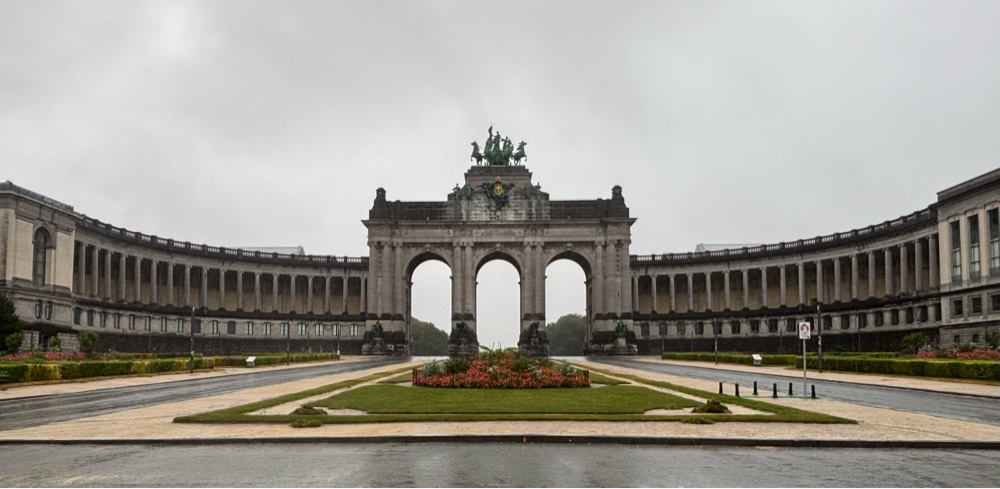 |
| The Cinquantanaire Arch was built in 1905 to celebrate 75 years of Belgian Independence. |
Trying to stay awake, dry off and warm up!
When we left the Hemicycle, the rain started coming down in buckets. And it kept coming down for the rest of the afternoon. The House of European History kept us dry for awhile, but Parc de la Cinquantaine truly soaked us. By the time we got an Uber back to the hotel, we were cold and wet, not to mention fighting sleeplessness. Hot beverages revived us a little. We ordered Ubers Eats for our room and essentially called it a day.
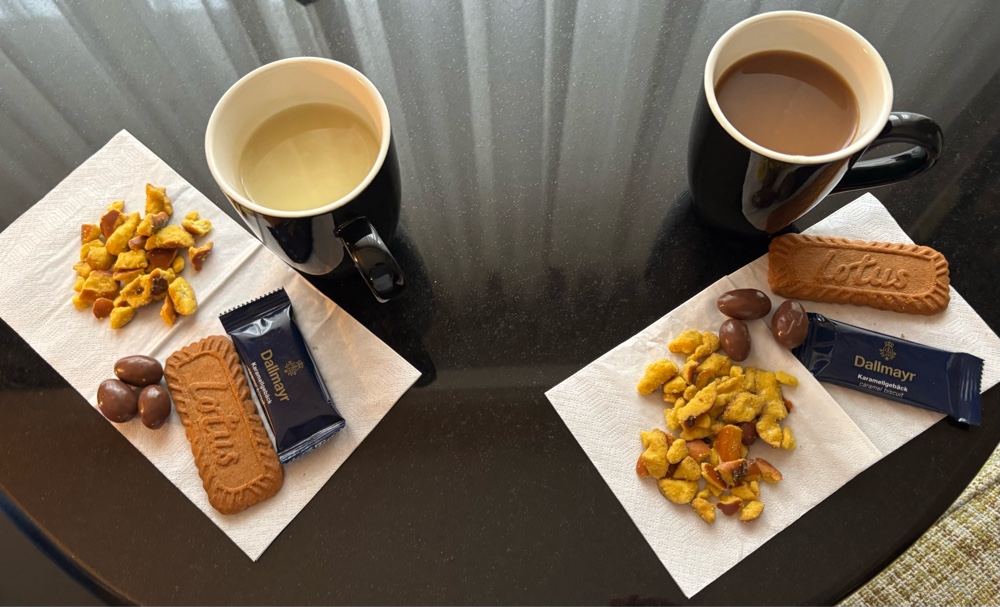 |
| For years, my “thing” on vacation is to provide a nice cuppa at the end of our exploration days. Here is today’s effort, which was greatly needed, given that we were soaked and chilled when we finally made it back to the hotel. |
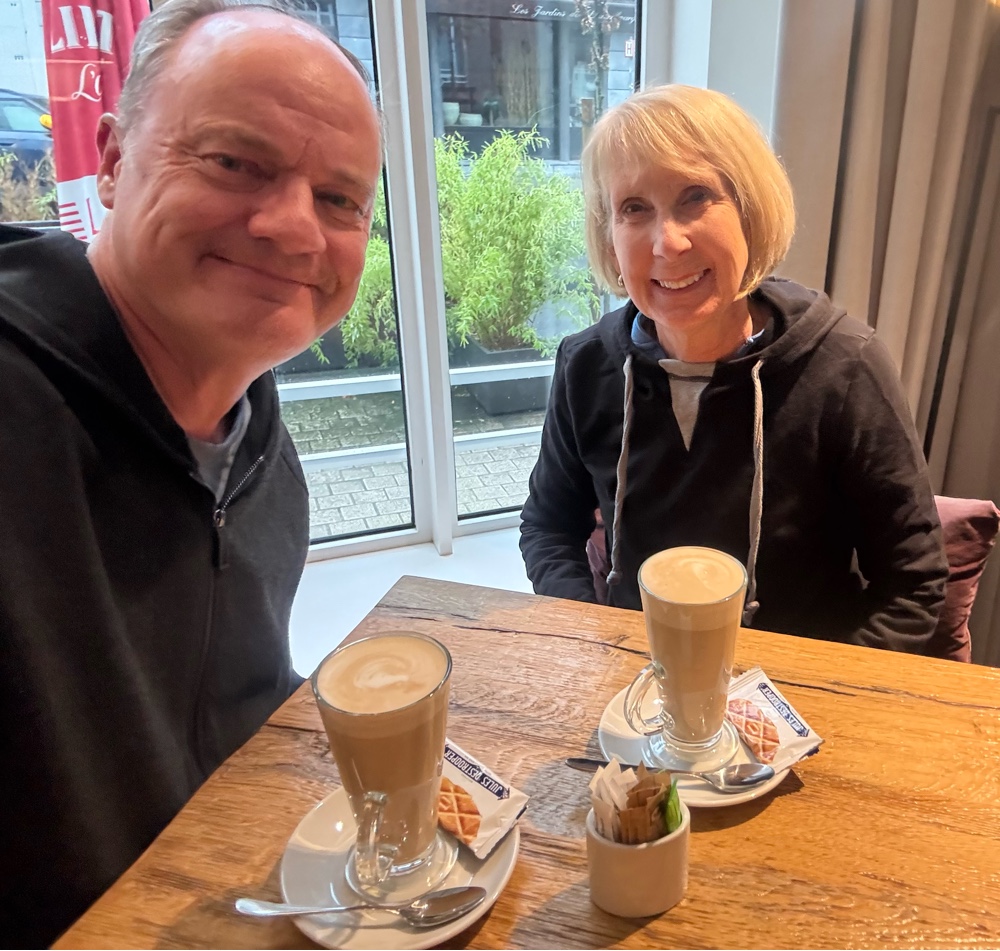 |
| The Renaissance kindly gave us two welcome drink vouchers when we checked in. After an Uber Eats dinner of Japanese noodles in our room, we went downstairs to the hotel bar to use our vouchers on a couple of excellent lattes. |
Comments
Post a Comment