With a population of 270,000 (a quarter of them students), Ghent is a port and university city in northwest Belgium, serving as the capital of East Flanders. It is known for its well-preserved medieval architecture and rich history and sits at the meeting point of the Leie and Scheldt rivers. During the Middle Ages, it grew into one of the largest and richest cities in northern Europe due to the cloth trade.
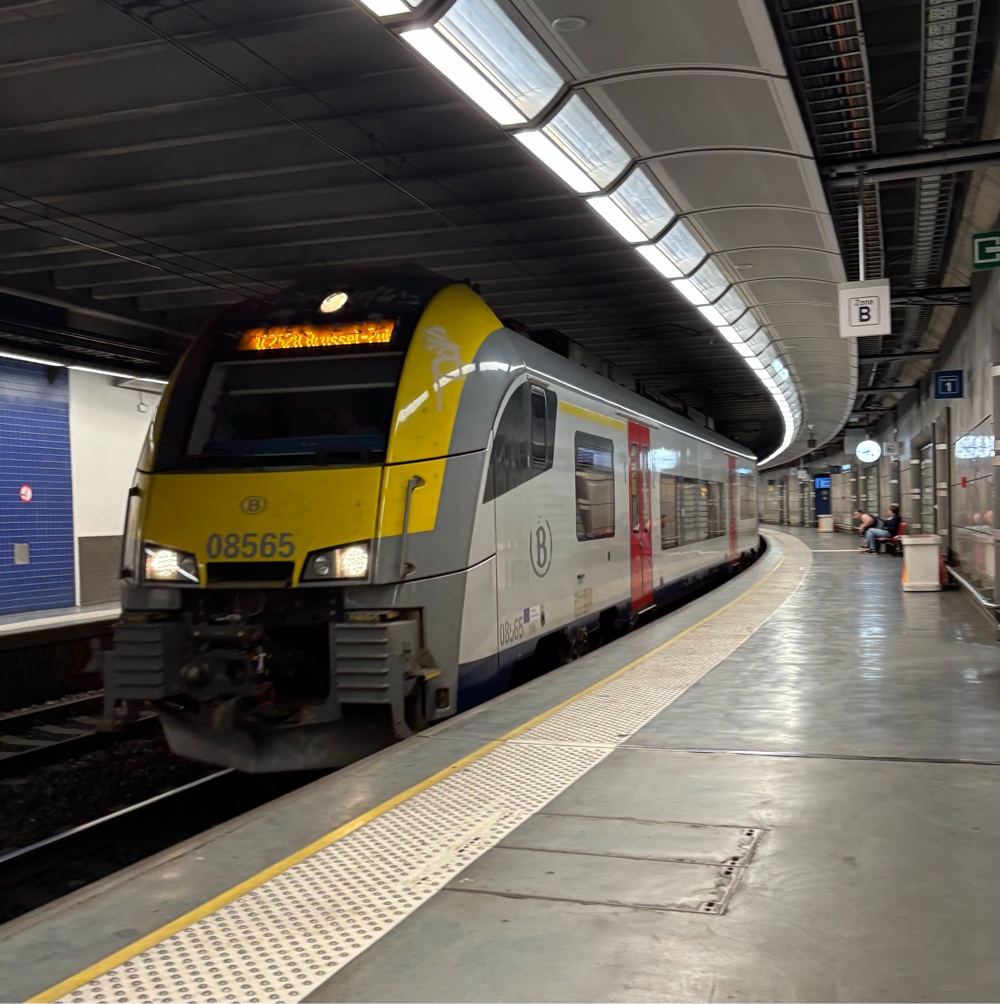 |
| The quiet, consistently-on-time, user-friendly electric trains of the SNCB. Our morning routine has been to walk the two minutes from our hotel lobby to Platform 1 of Brux-Lux Station and get a SNCB train to start the day. |
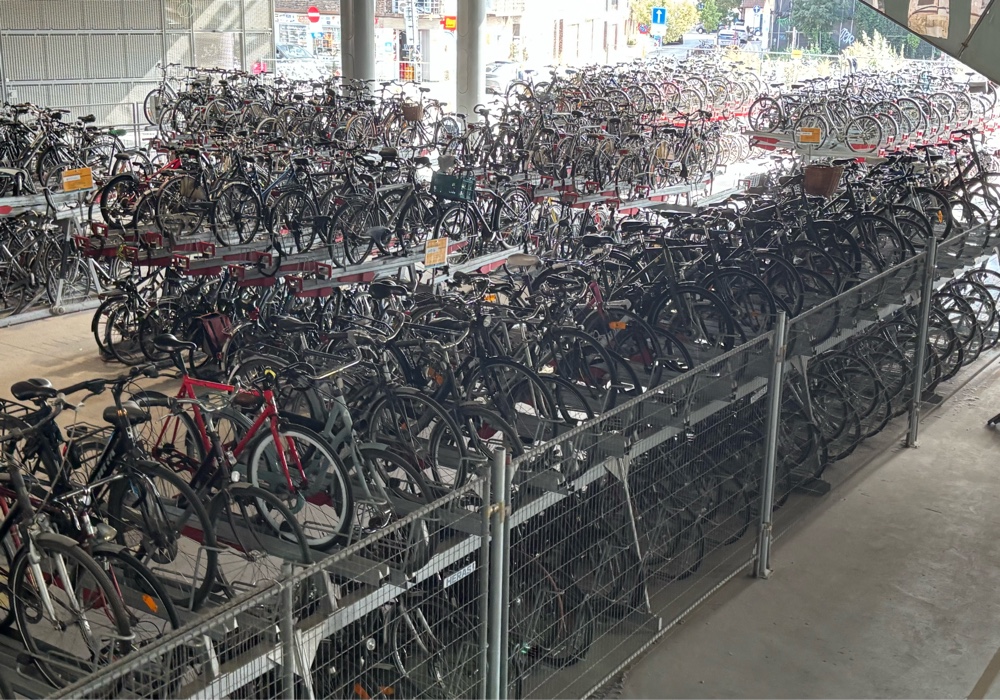 |
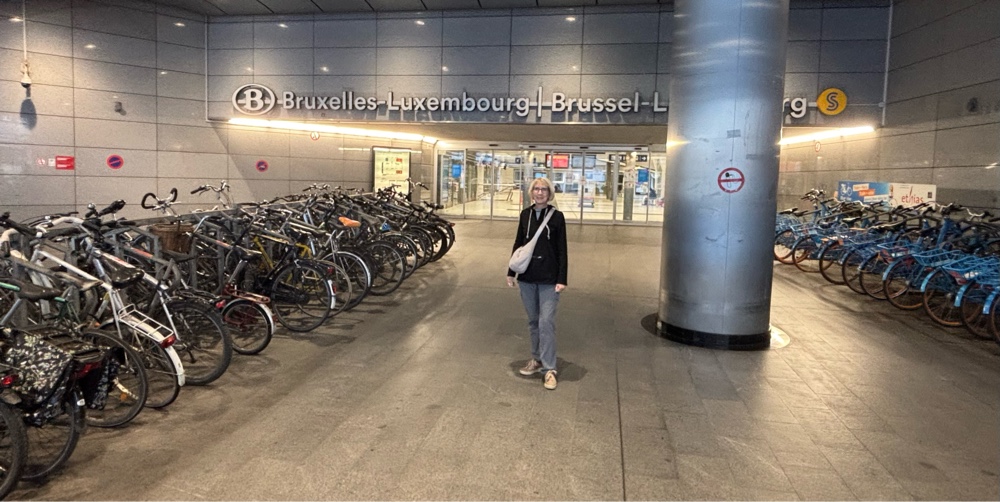
| We are blown away by the complete lack of cars in the inner centre of places like Antwerp, Liege and Ghent. The trains, trams and buses are so frequent, prolific and efficient, that owning a car isn’t necessary. Plus, the bicycle infrastructure is amazing. This bike stand at the Ghent train station says it all! |
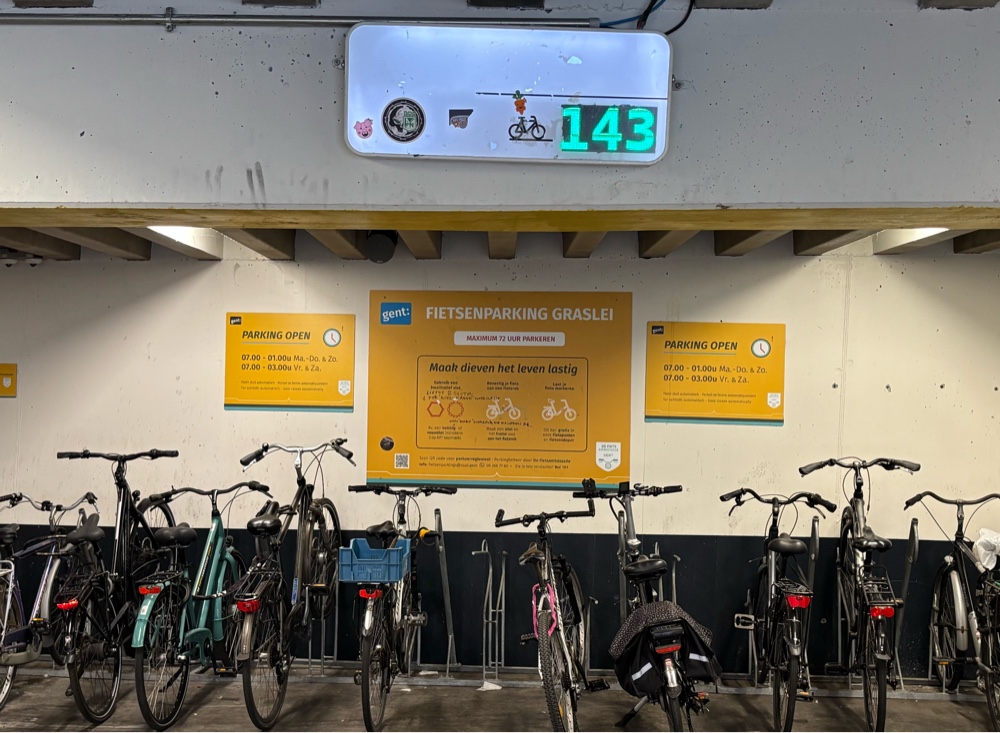 |
| In Canada, a parking garage would indicate how may vehicle spaces remain. Here, they indicate how many bicycle spaces remain! More evidence that bikes rule in Belgium. |
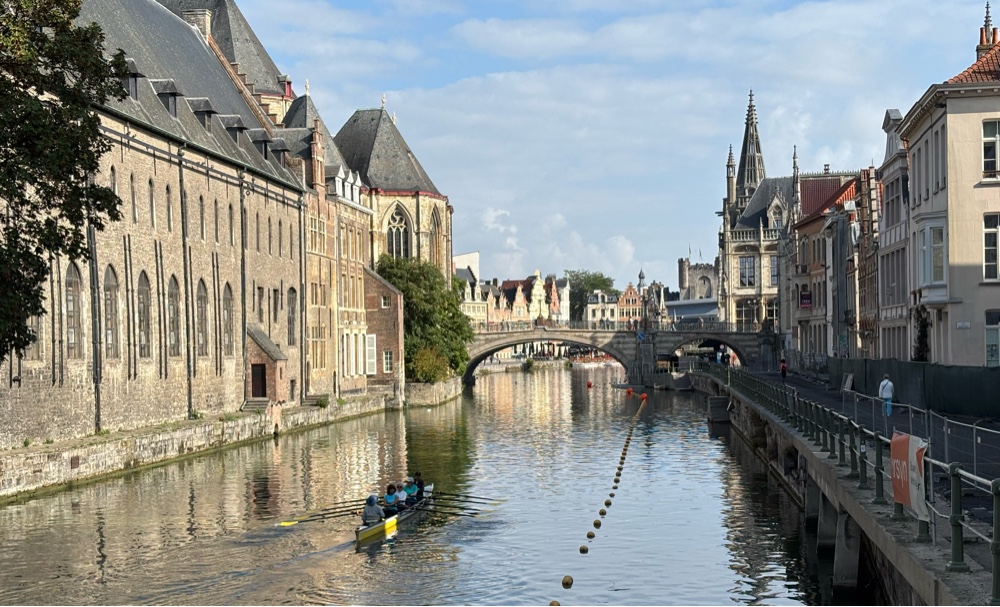 |
| Morning paddlers on the Leie River. |
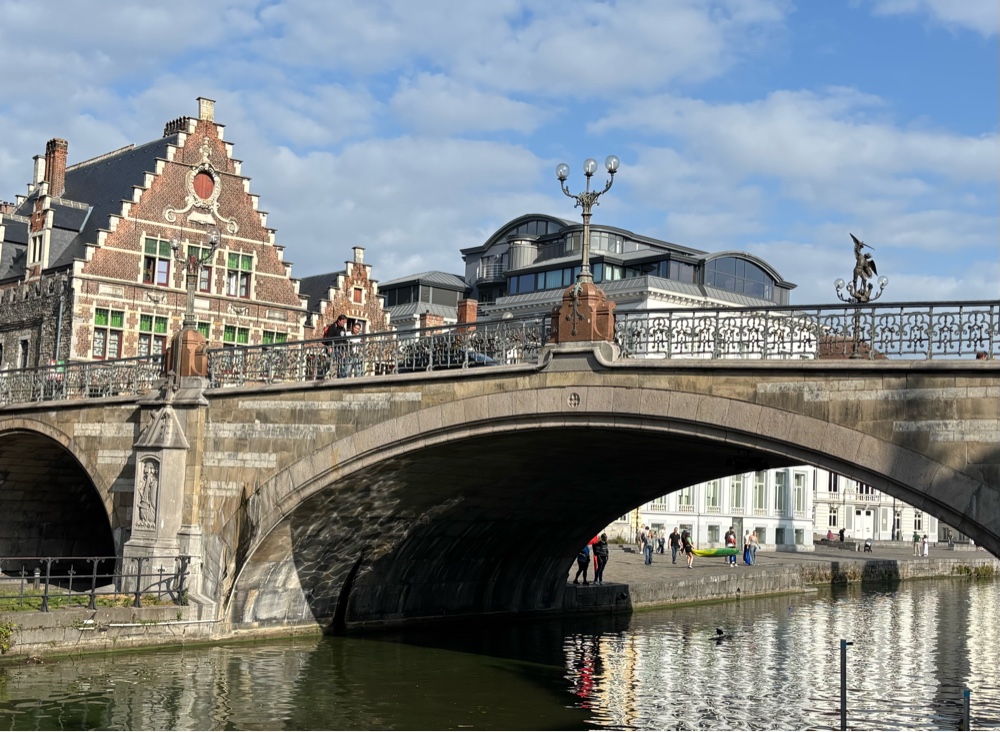 |
| St. Michael’s Bridge. It looks medieval, but it was actually built for the 1913 World’s Fair in Ghent. |
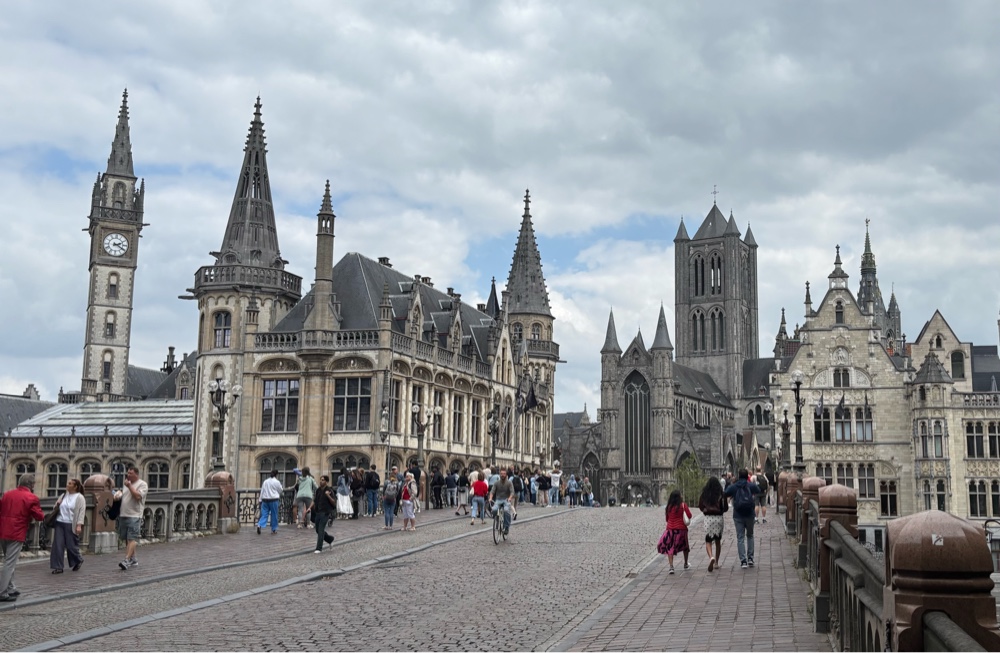 |
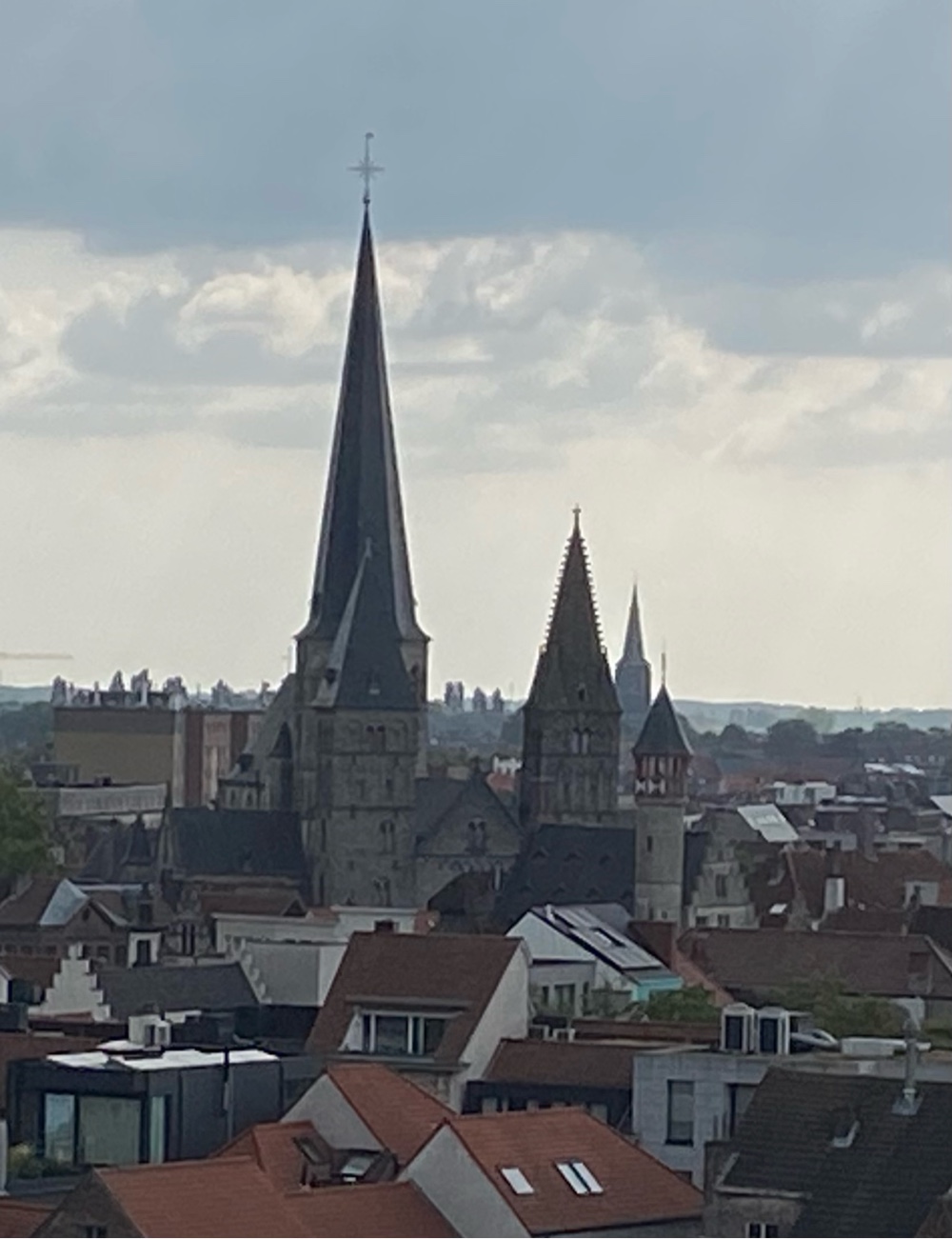
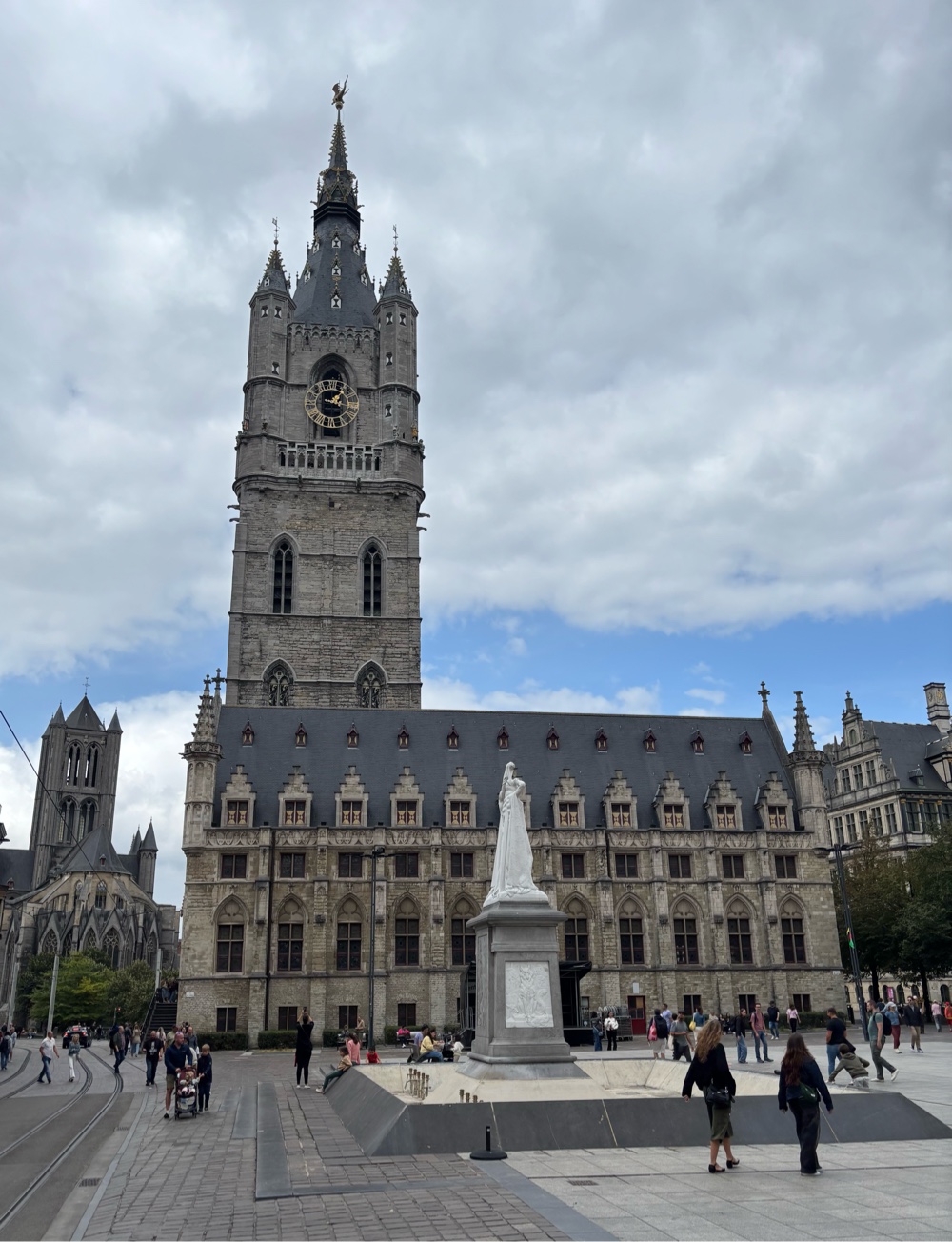
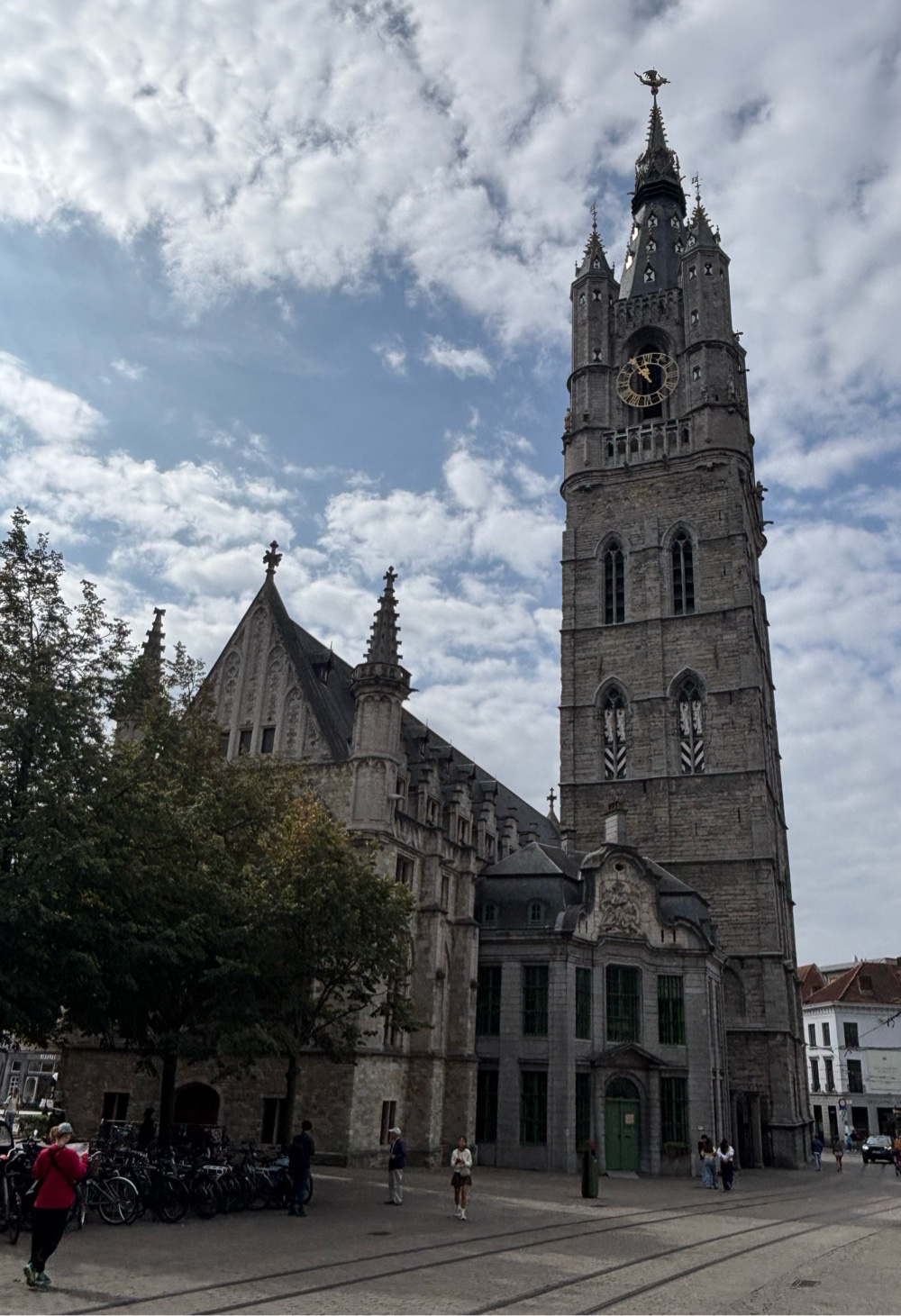
| A good overview of Ghent’s ‘peaks’! We will explore these later. |
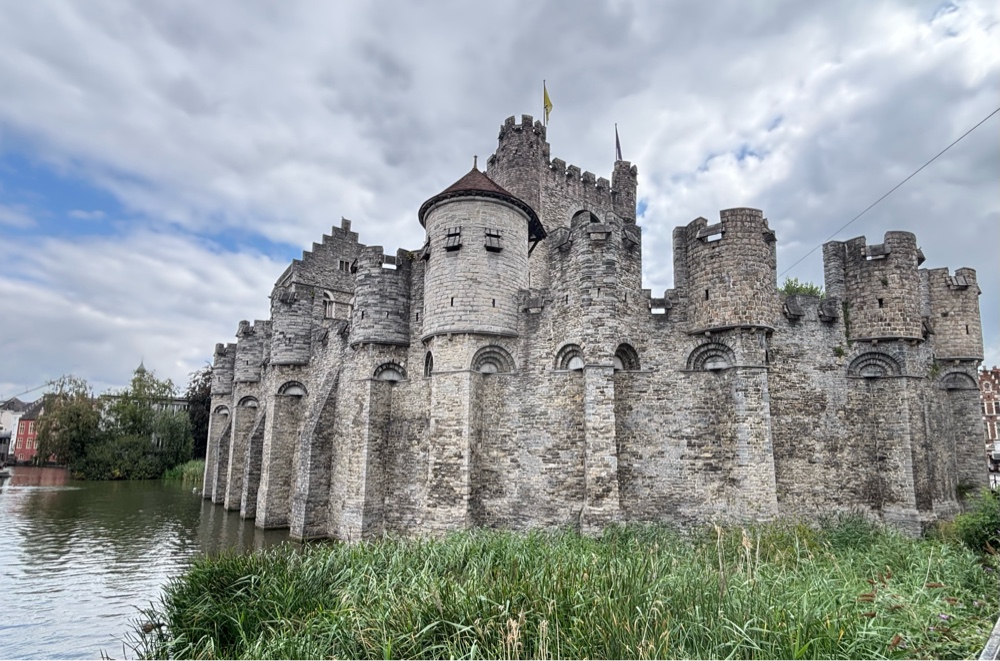
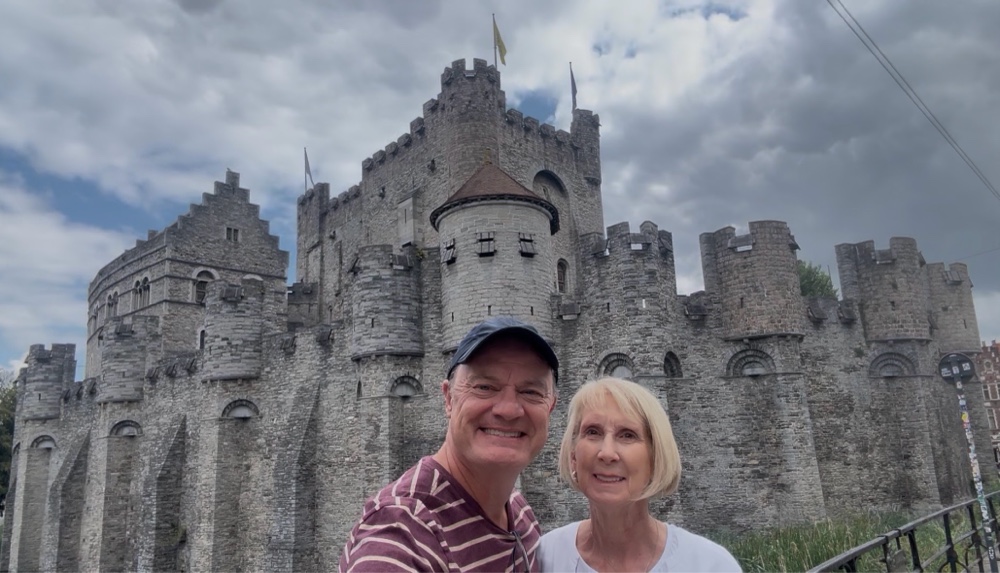
.Gravensteen (Castle of the Counts):
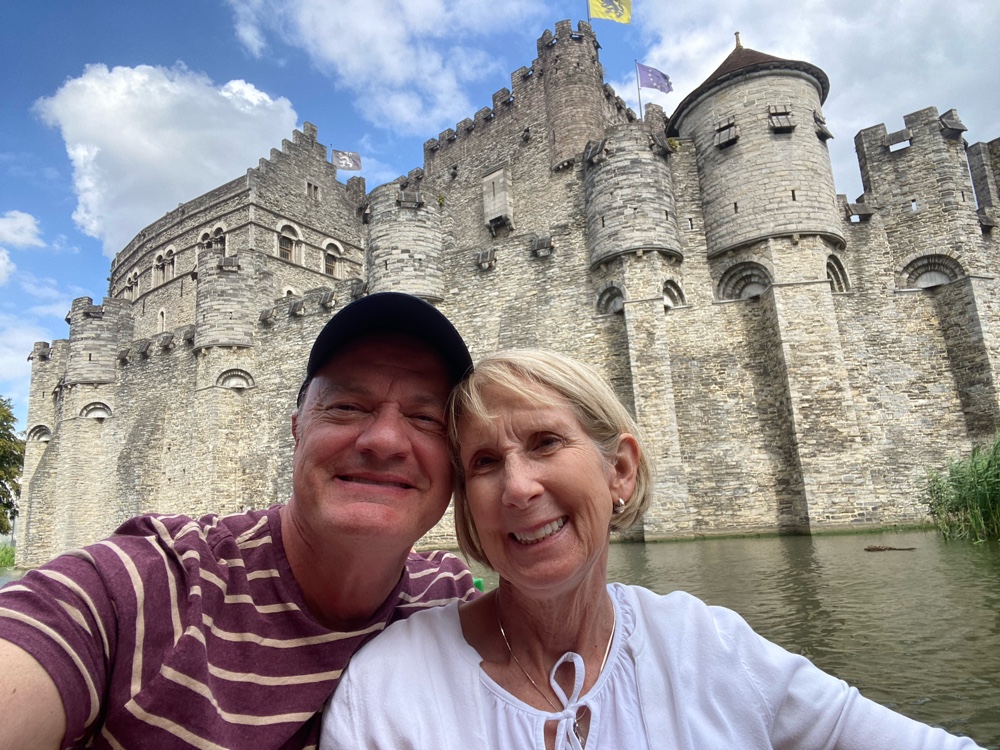
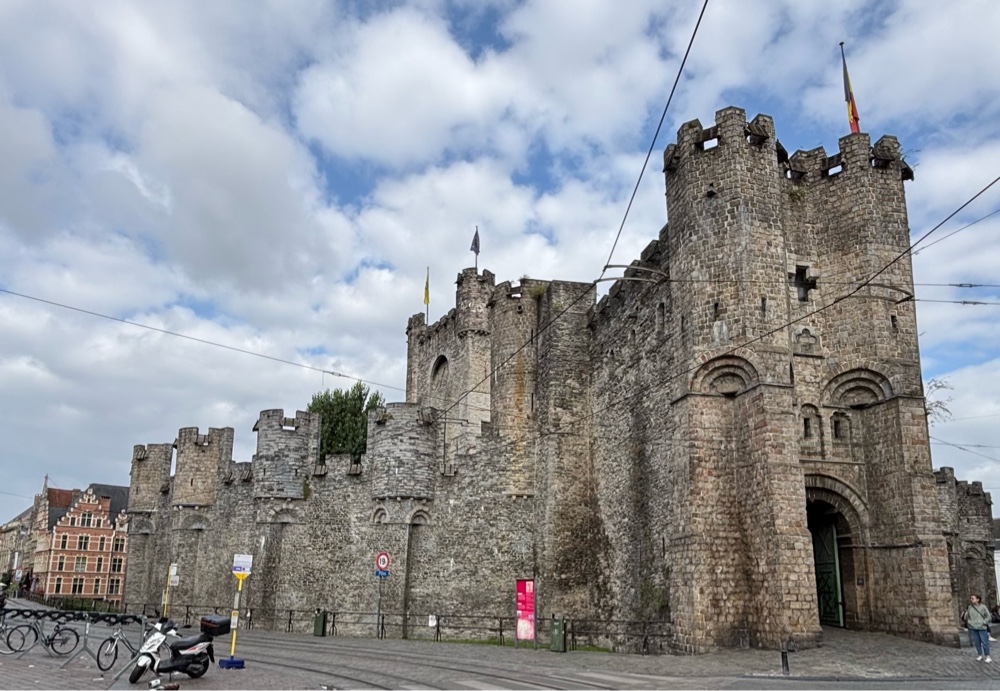
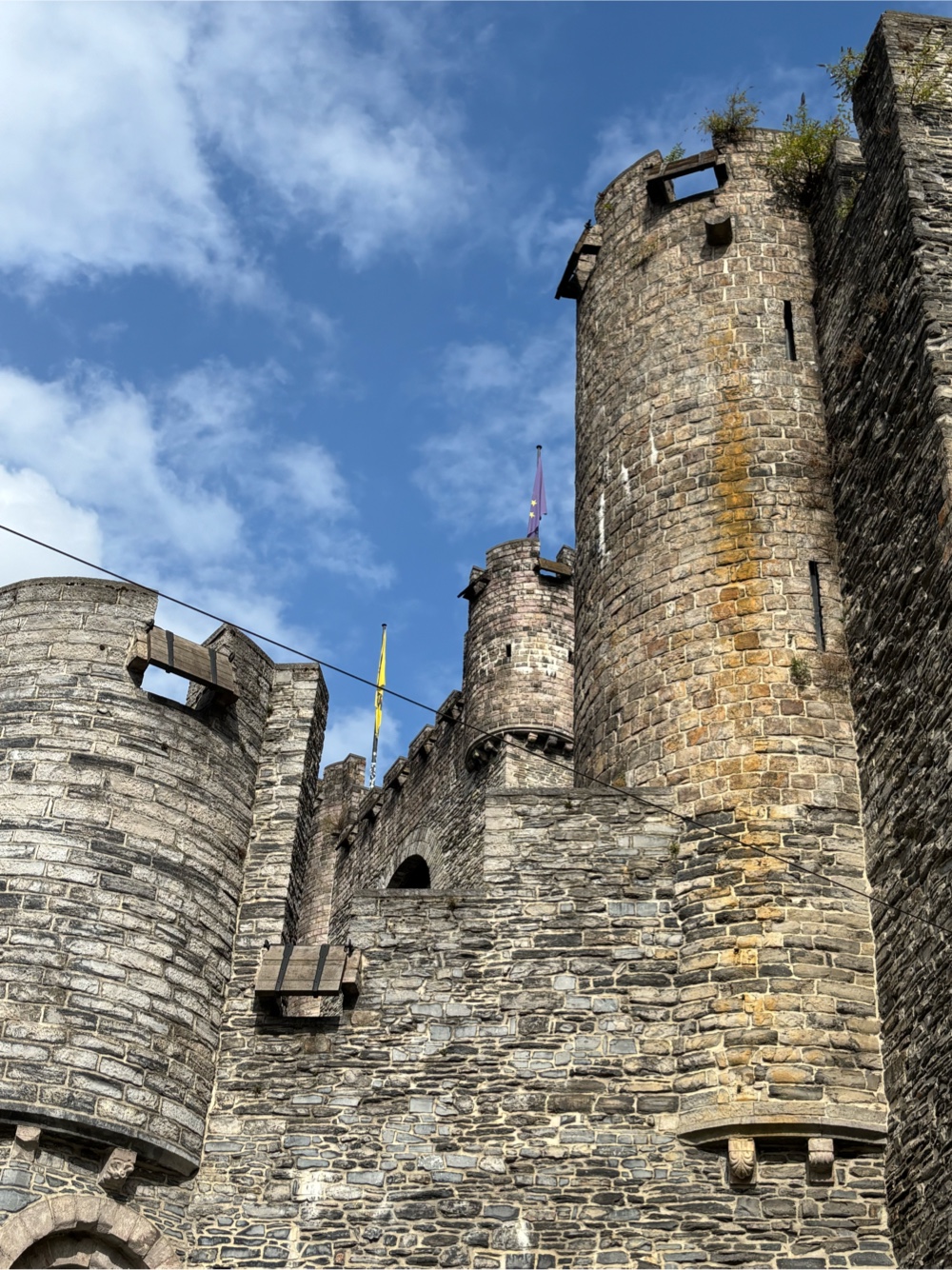
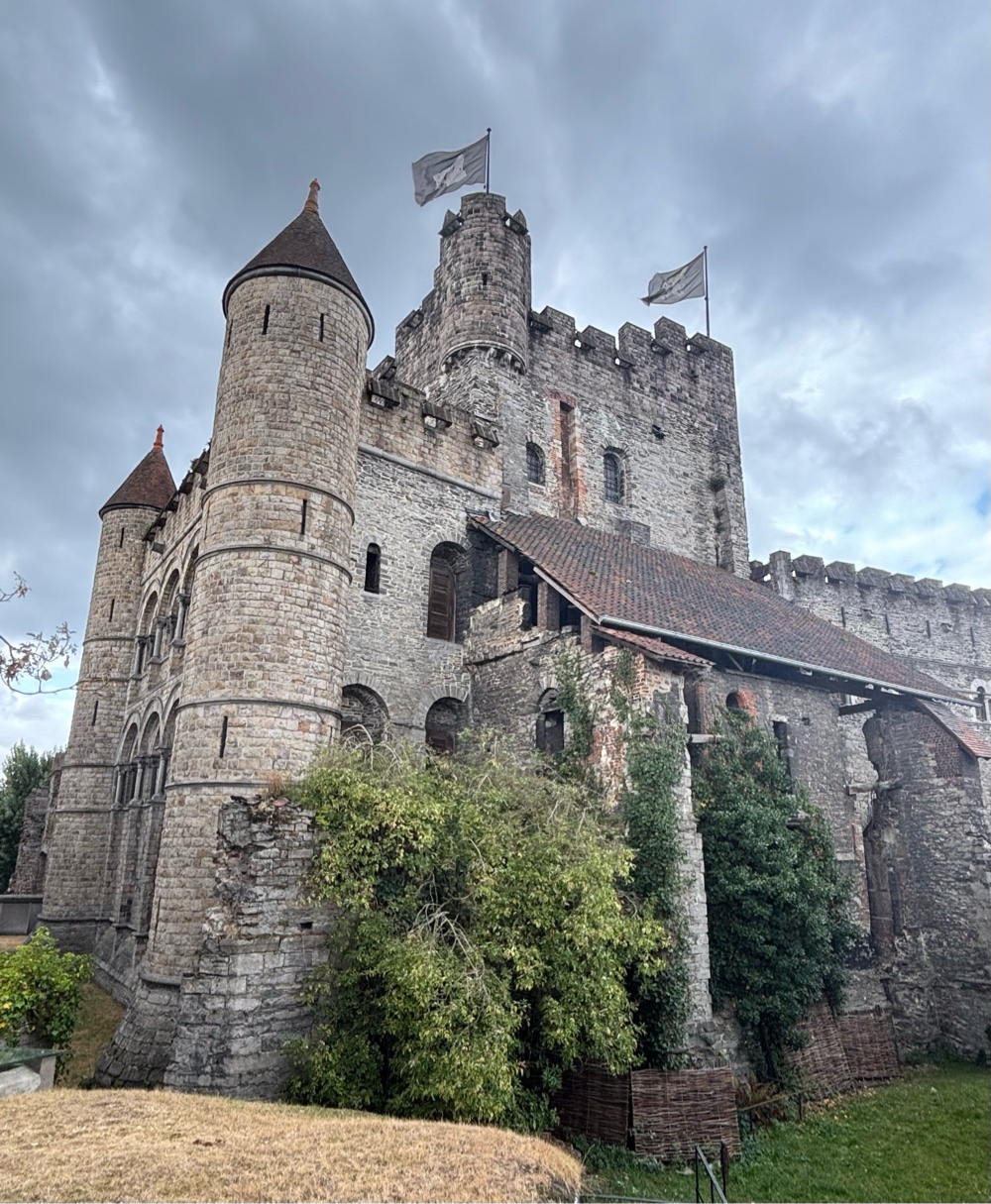
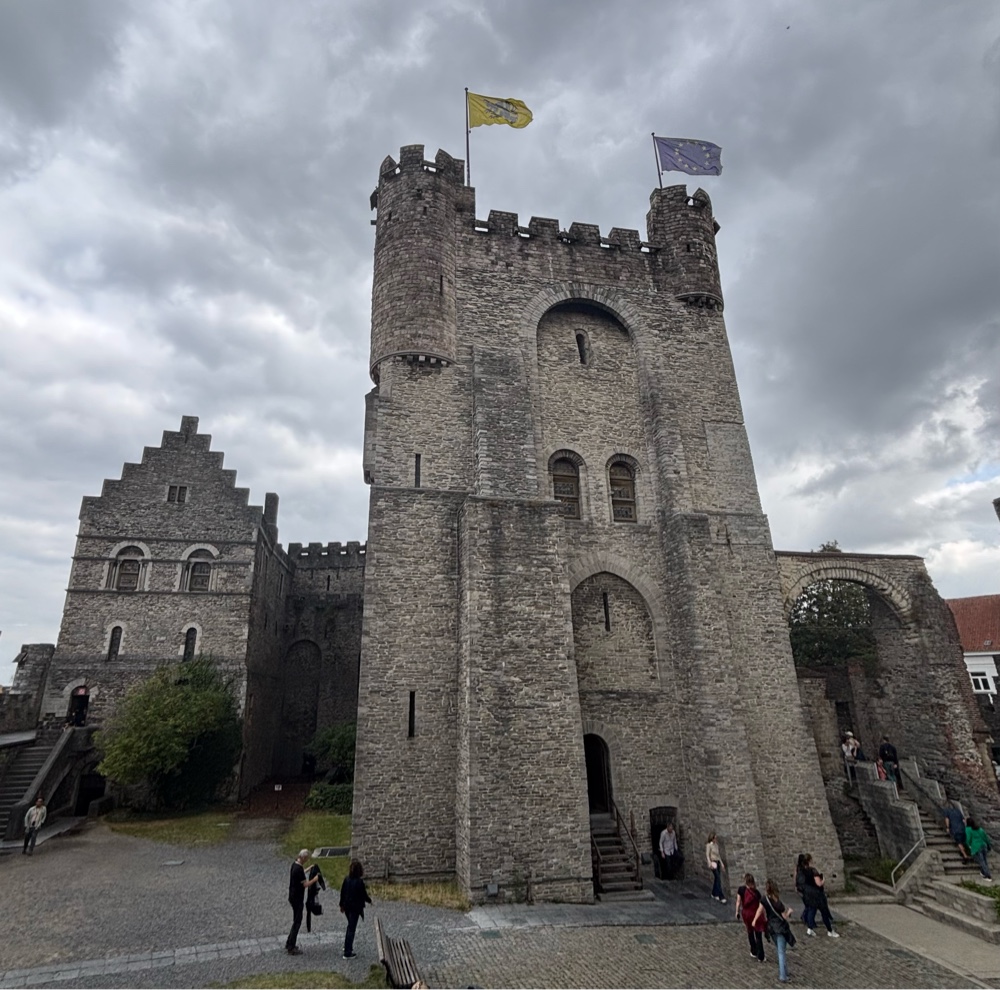
Gravensteen is an imposing medieval castle of the Counts of Flanders located right in the city center, first built in 1180, replacing a 9th century wooden fortress on the site. Most castles were built in a location that strategically served to protect a population. Not Gravensteen: it was deliberately built to impress, not to protect.
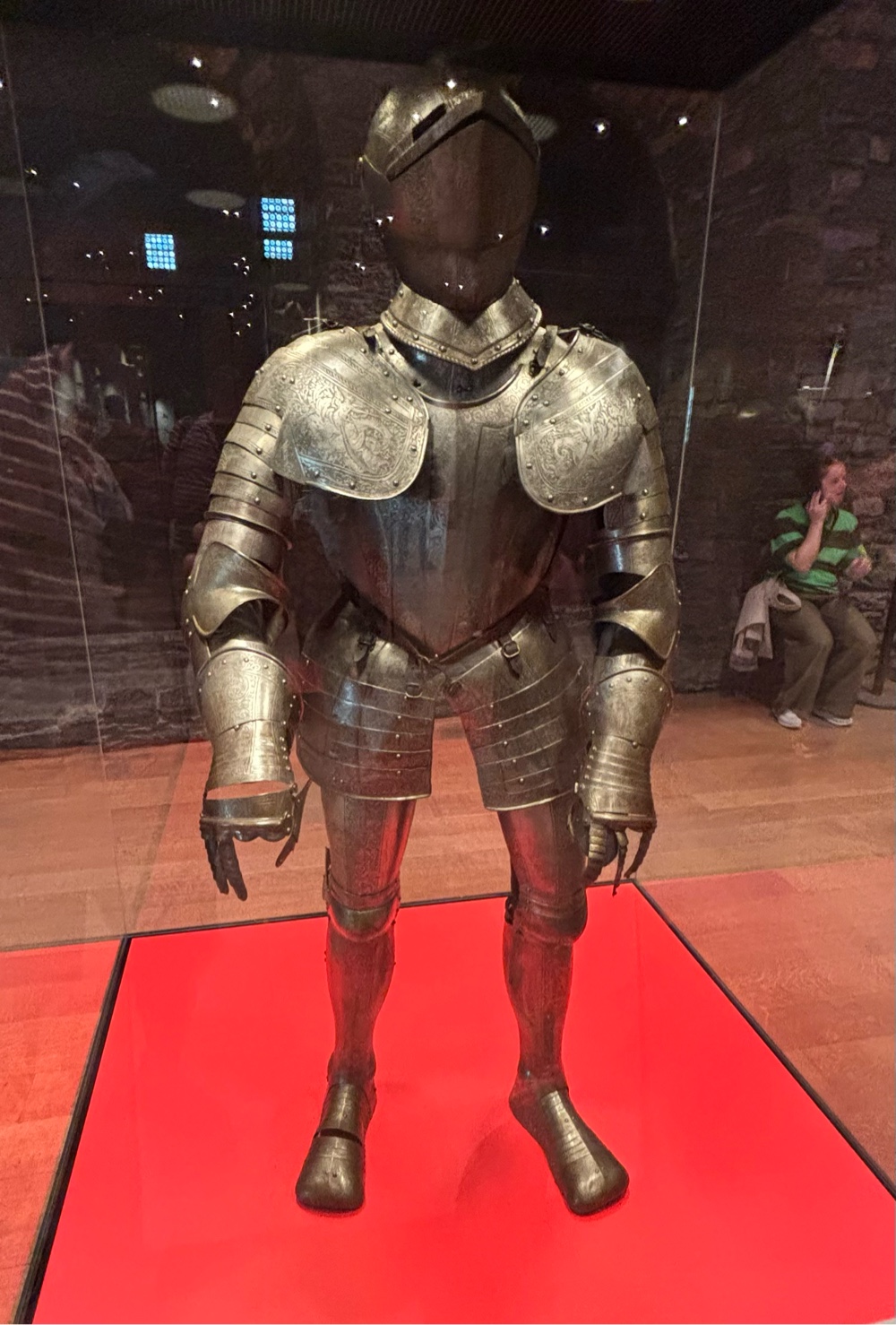
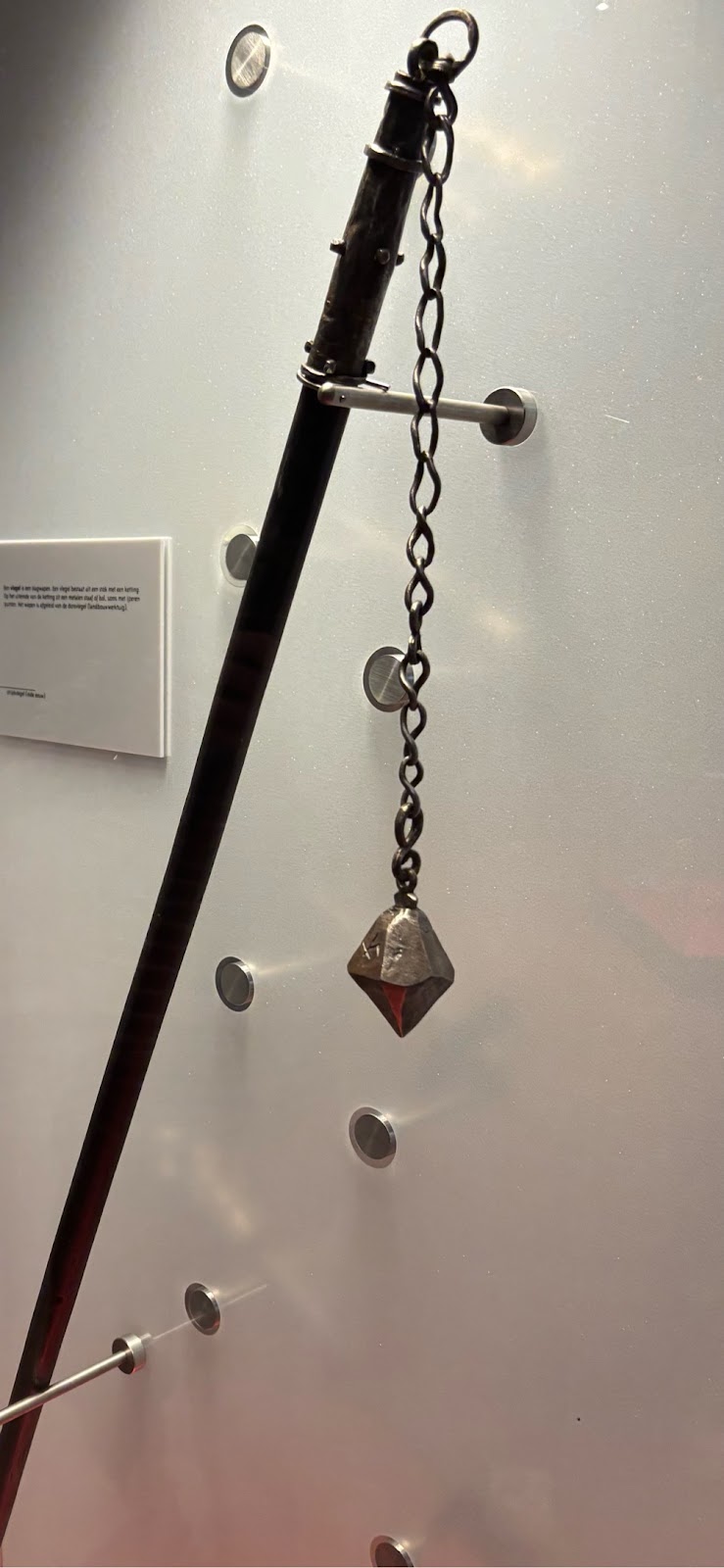
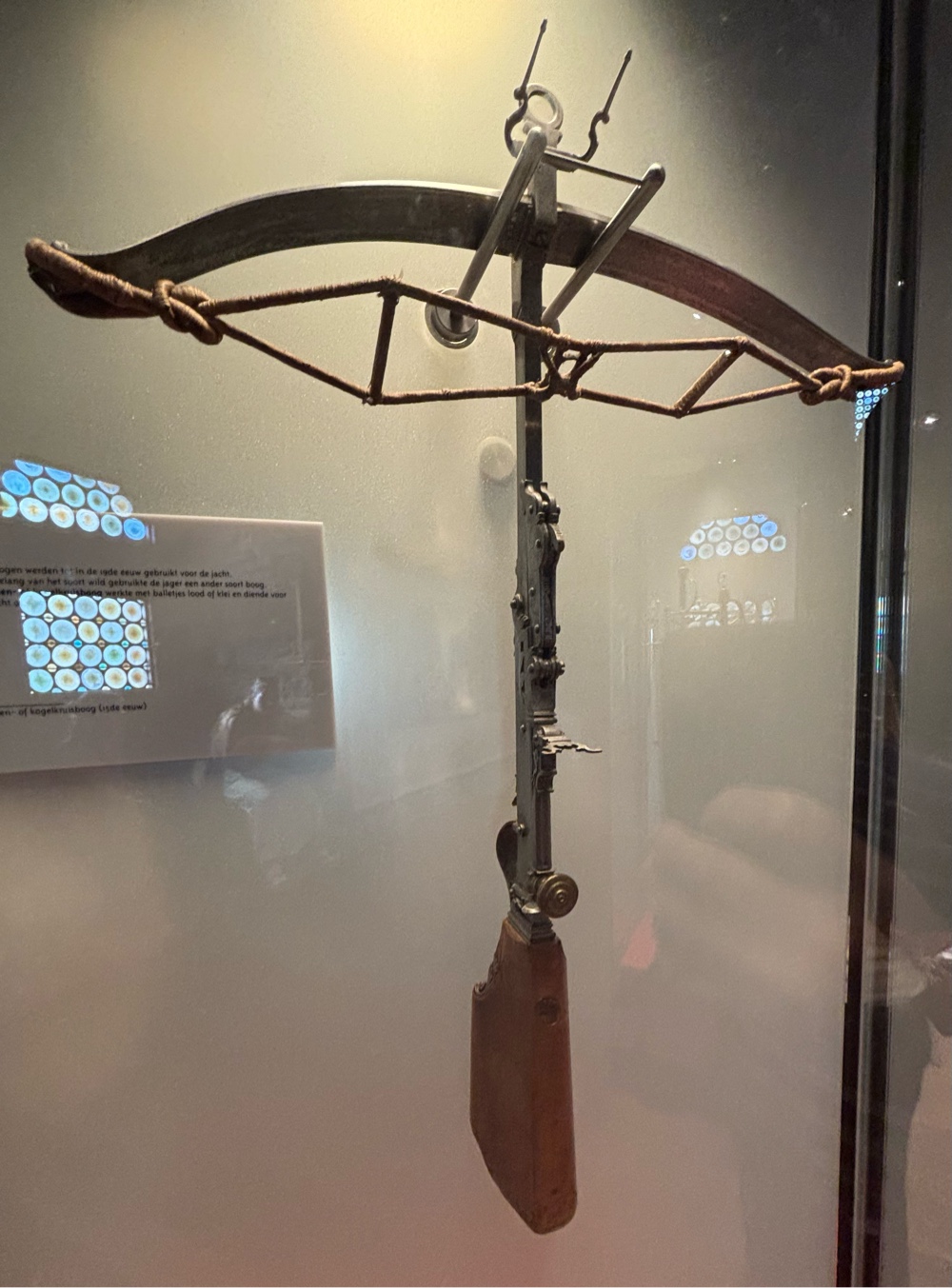
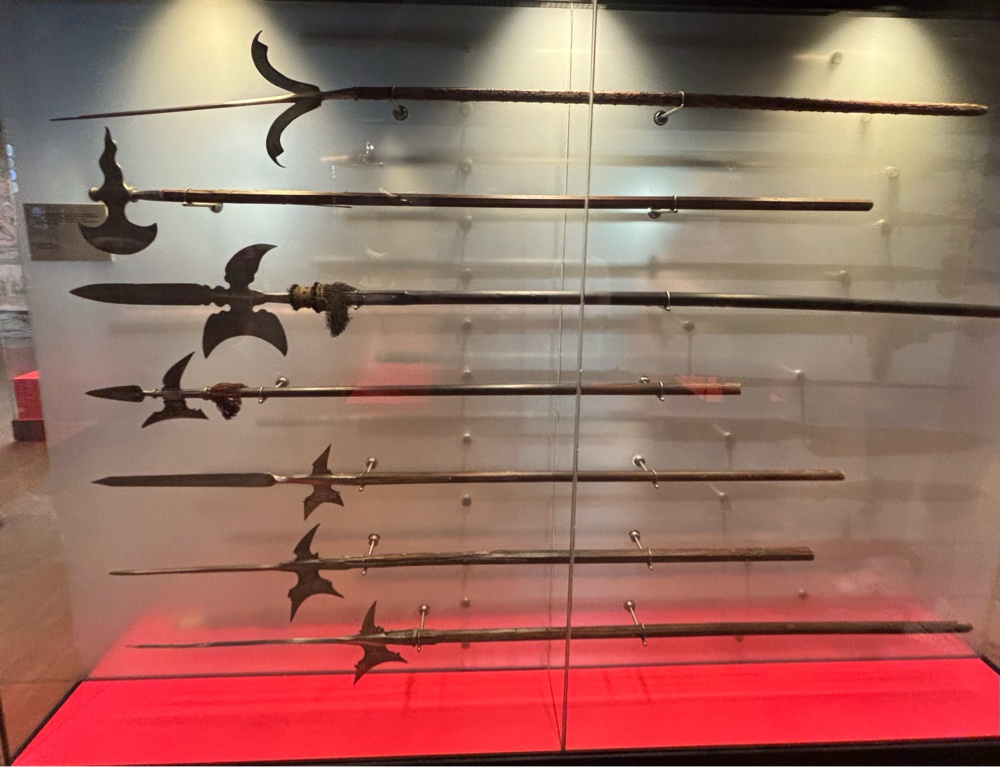
Gravensteen has some excellent displays of Medieval armour and weapons.
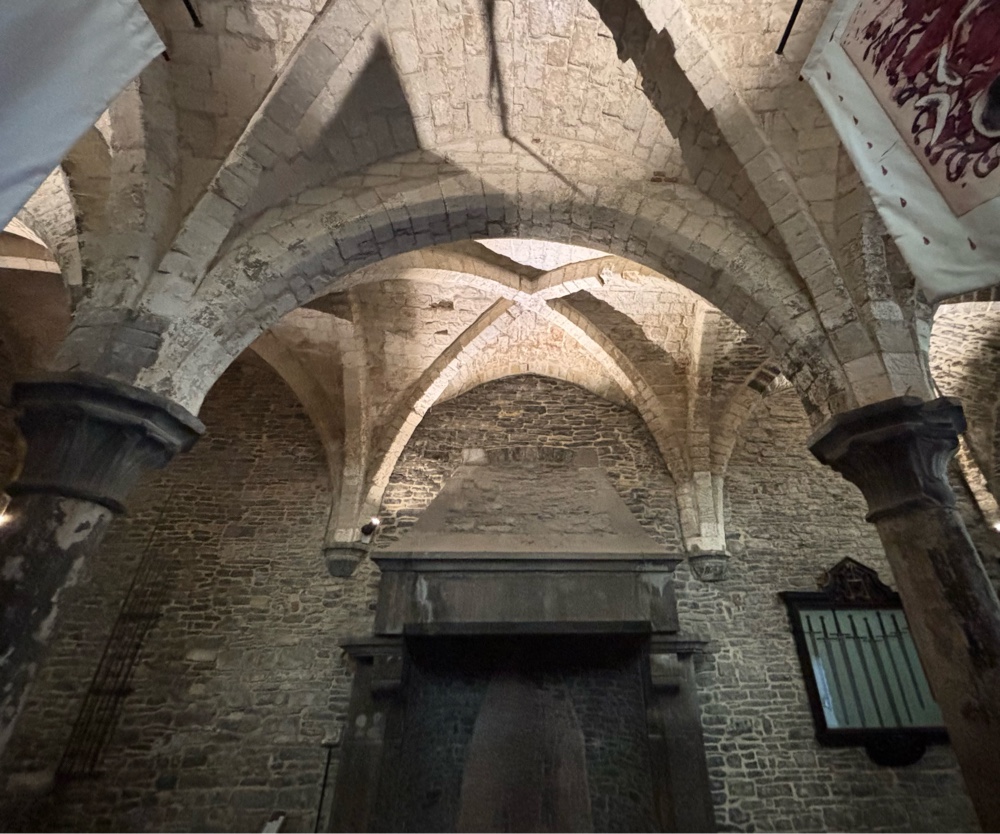 |
| Vaulted ceiling inside the castle. |
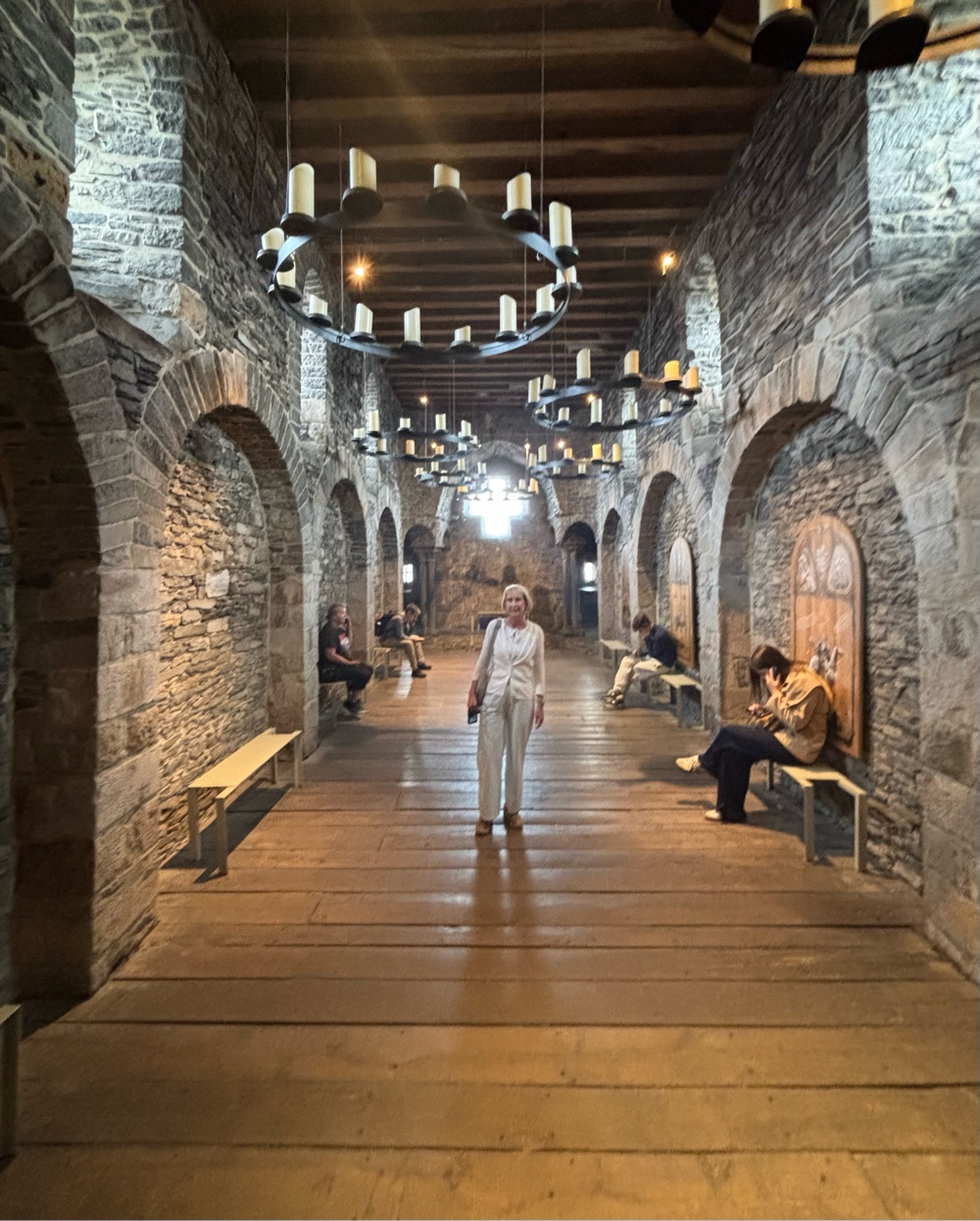 |
| A ‘great room’ at the castle. |
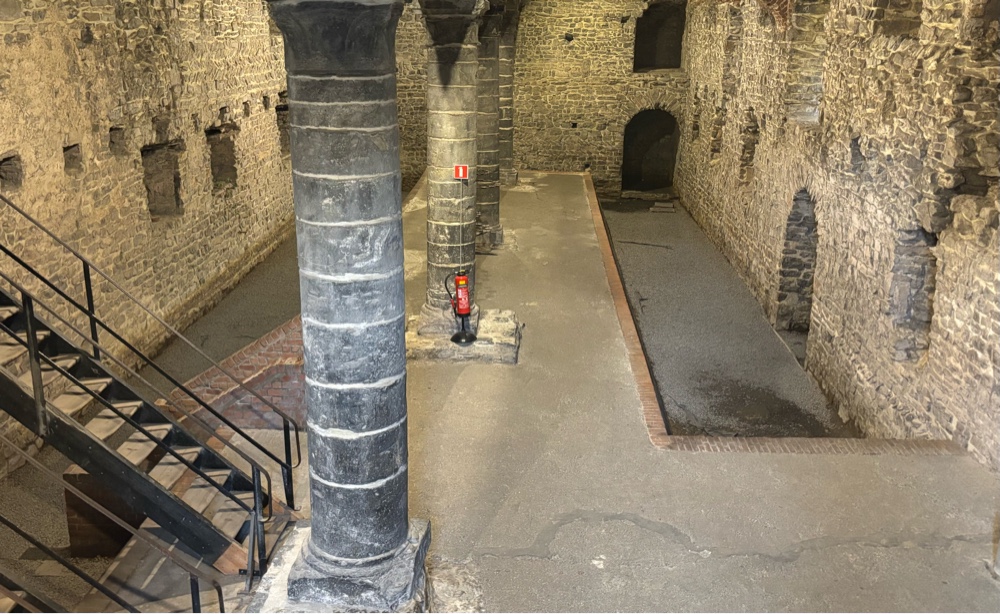 |
| The castle served as the judicial center for the area in Medieval times. Horrible punishments were handed down for everything from theft to suspected witchcraft, and countless people were served a sentence of swift capital punishment through many awful means and following great torture. The sufferings of human beings held in this space were unimaginable. |
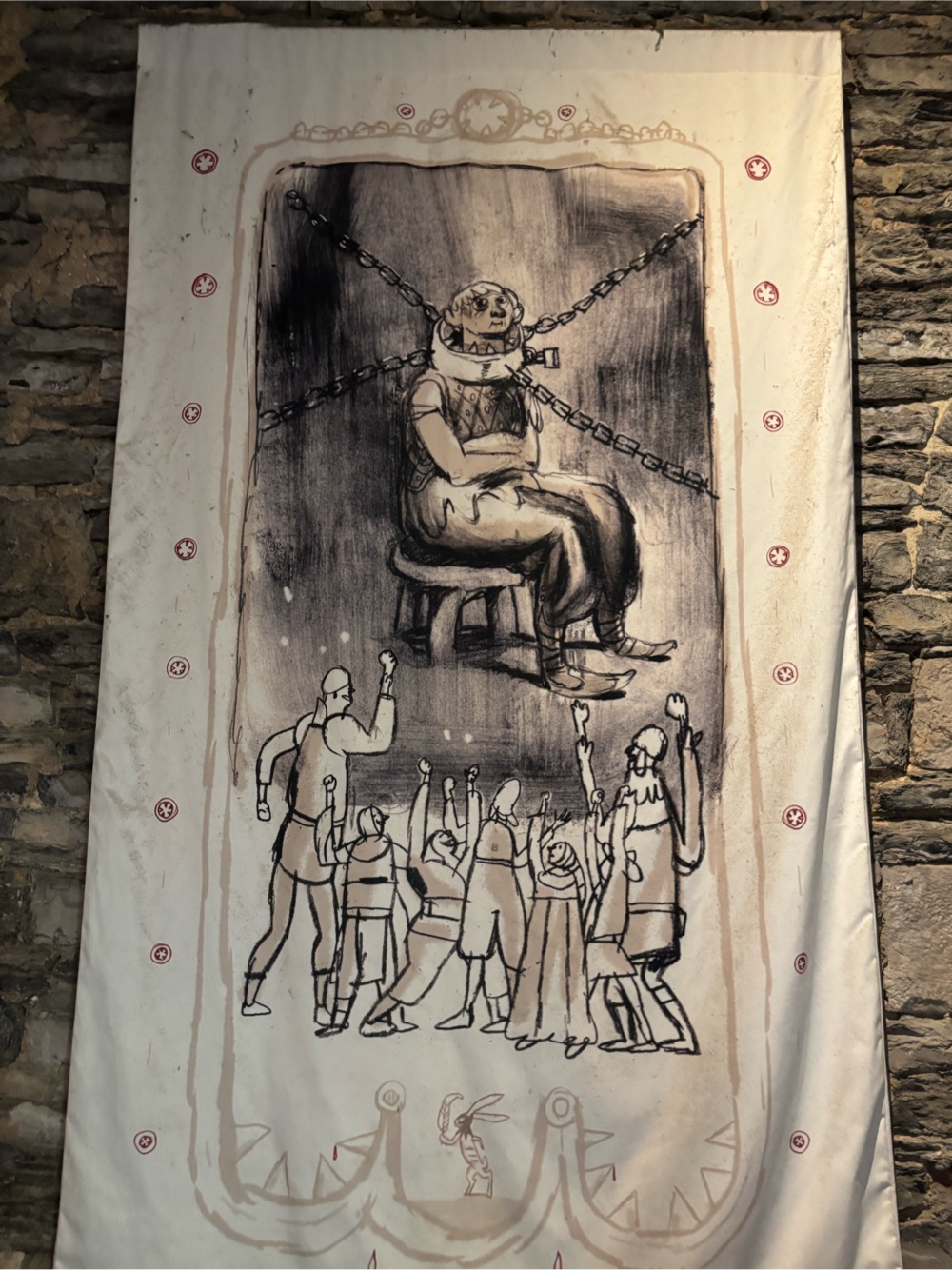 |
| In the Square Room, where this banner hangs today, a person brought in for their hearing would have this spiked collar placed on them, which was chained to each corner of the room. If the person tried to move or struggle as their case was heard, the soft flesh of their neck would be ripped by the spikes. Just one of the many terrible things that were done in the name of justice. |
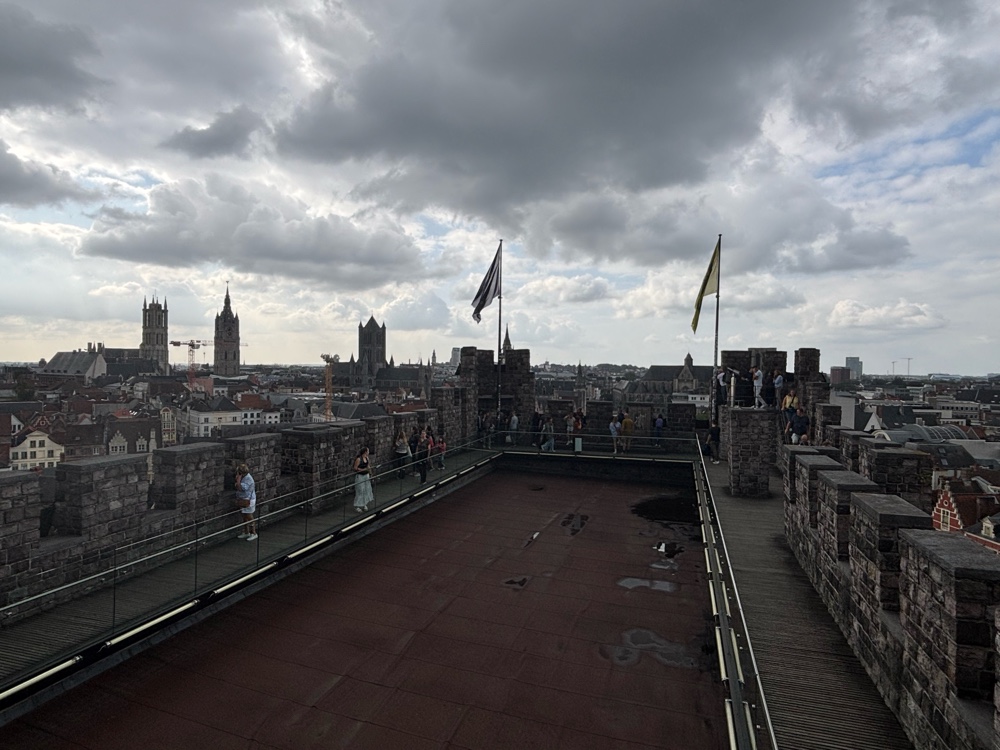 |
| The view from the castle roof. |
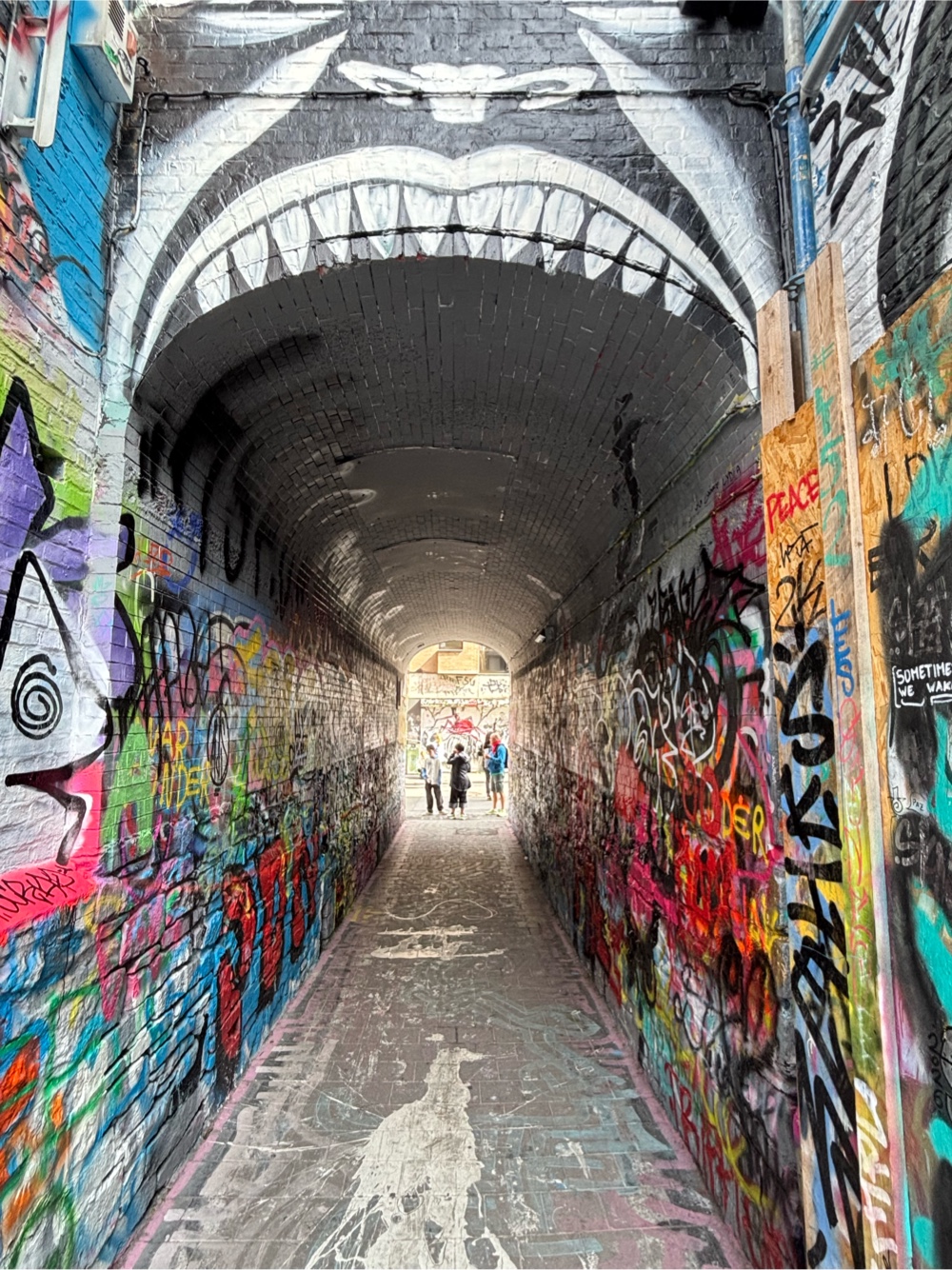
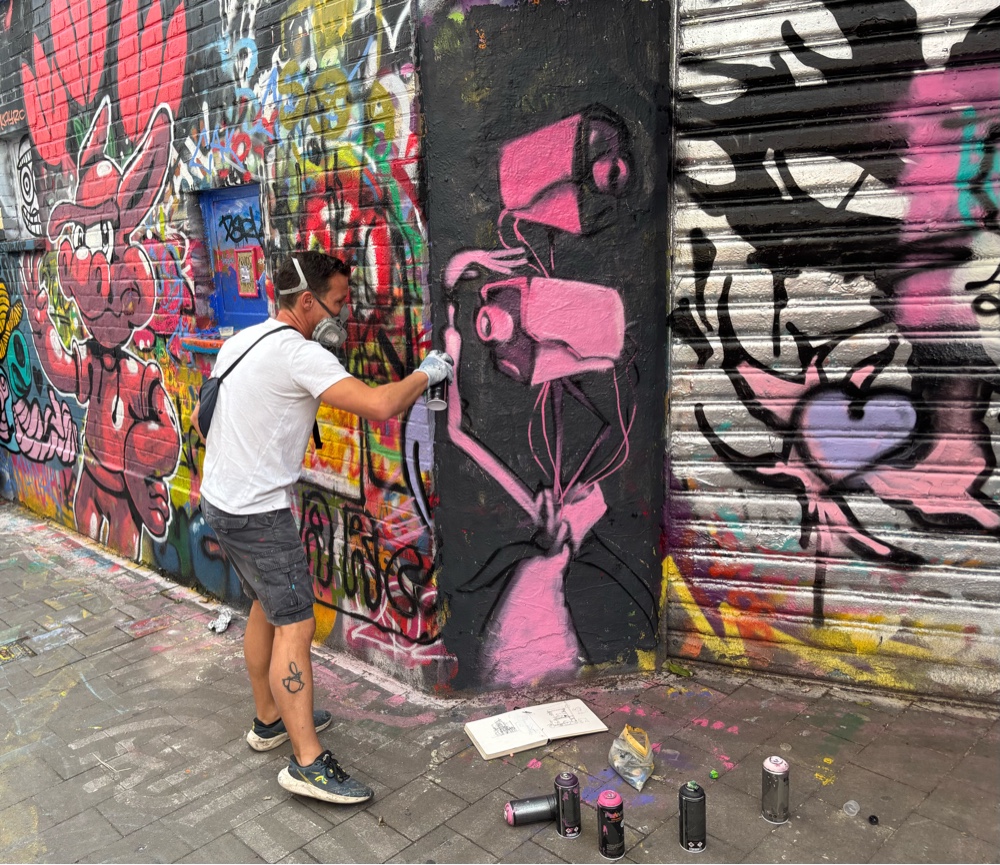
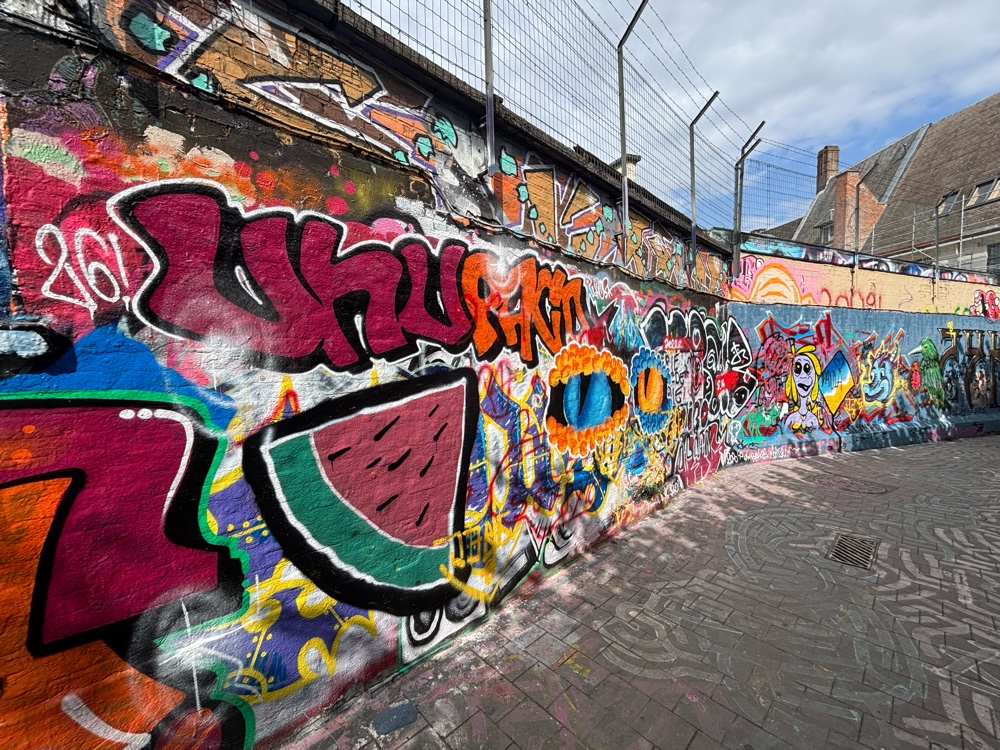
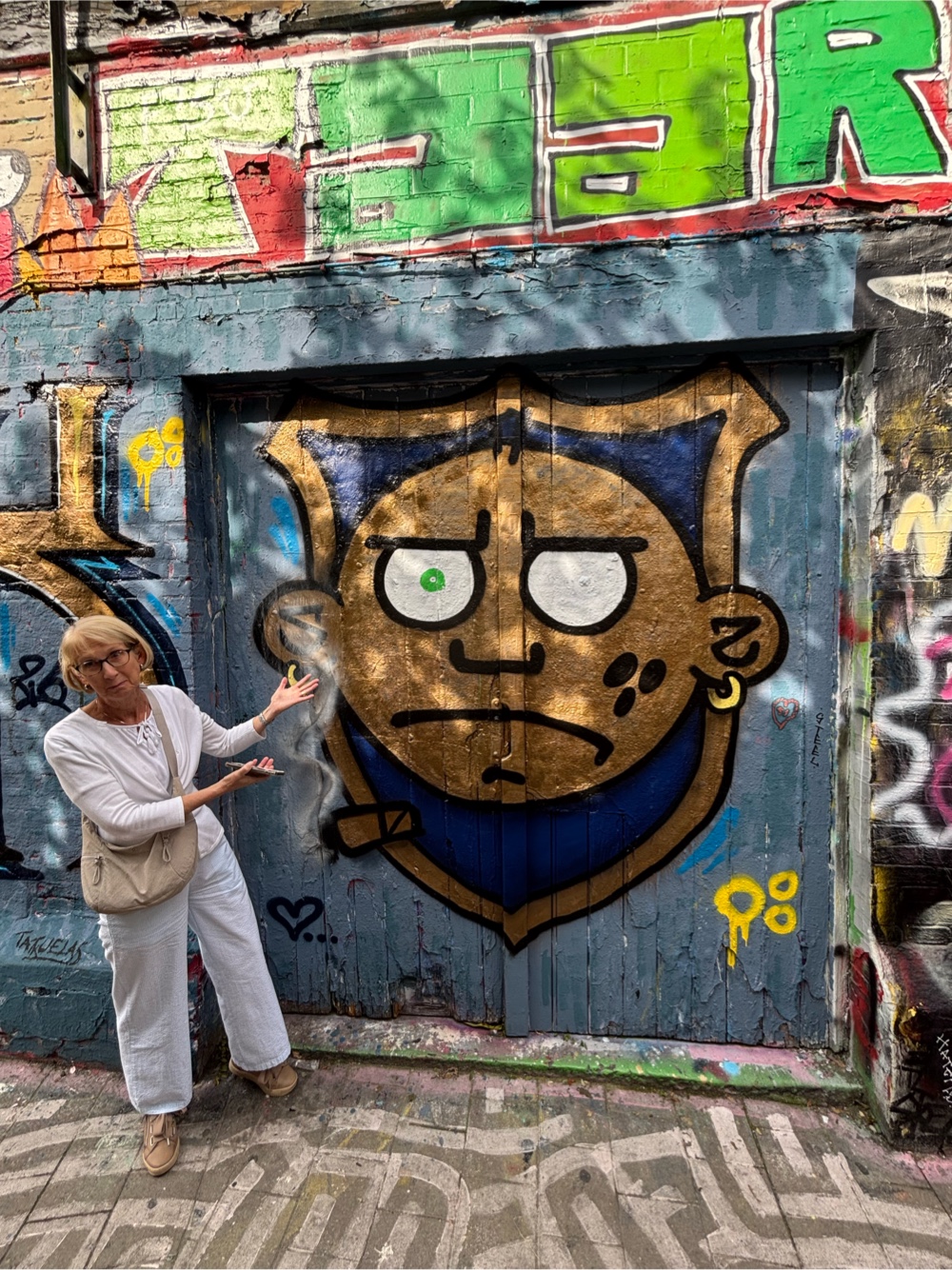
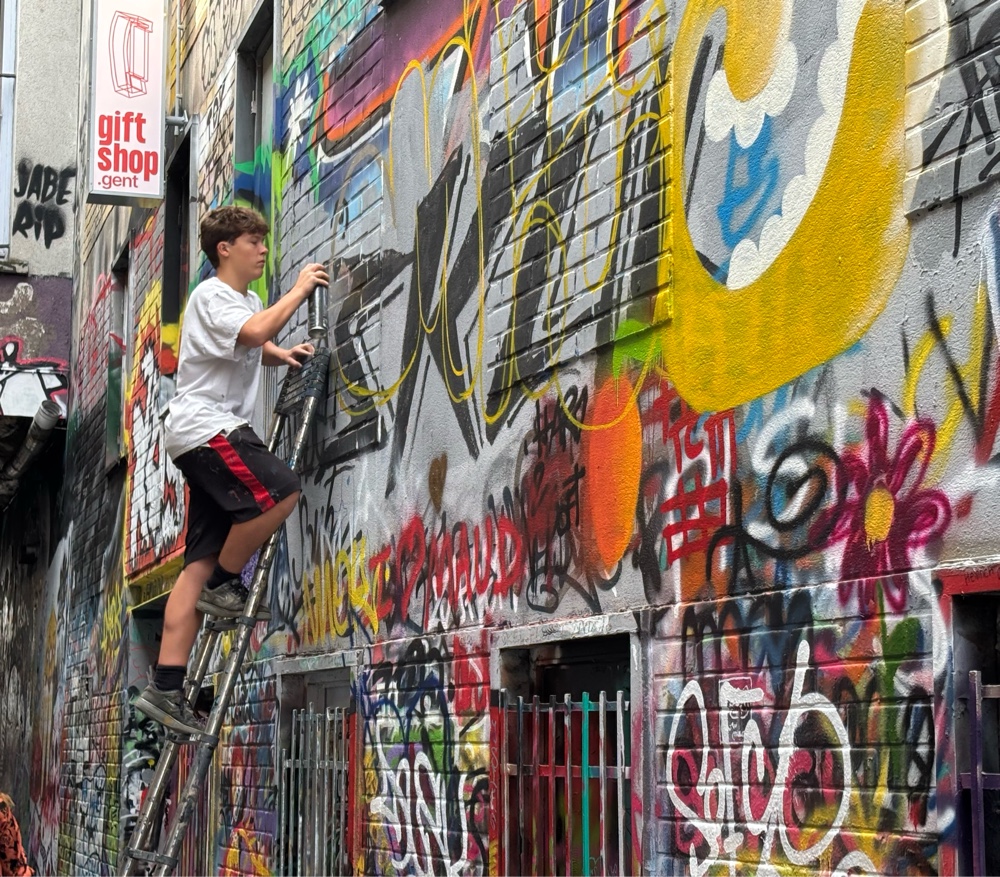
Werregarenstraat — "Graffiti Street"
This area is a fun contrast to the medieval architecture. Ghent officially embraces its street-art culture, and this narrow lane is
covered with constantly changing graffiti. We even saw some ‘artists’ at work.
A Hodgepodge of Ghent Sights:
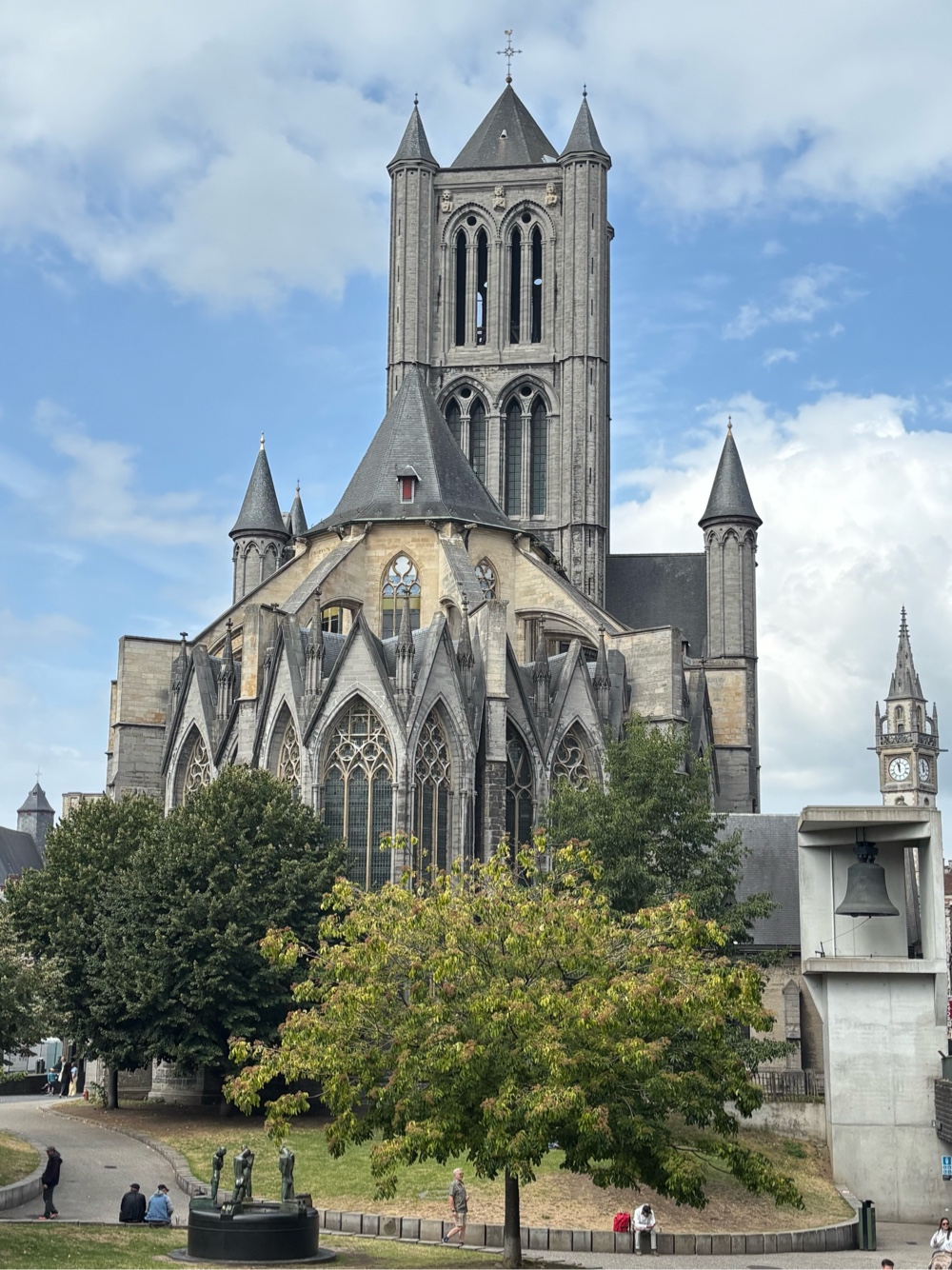
St. Nicholas Church:
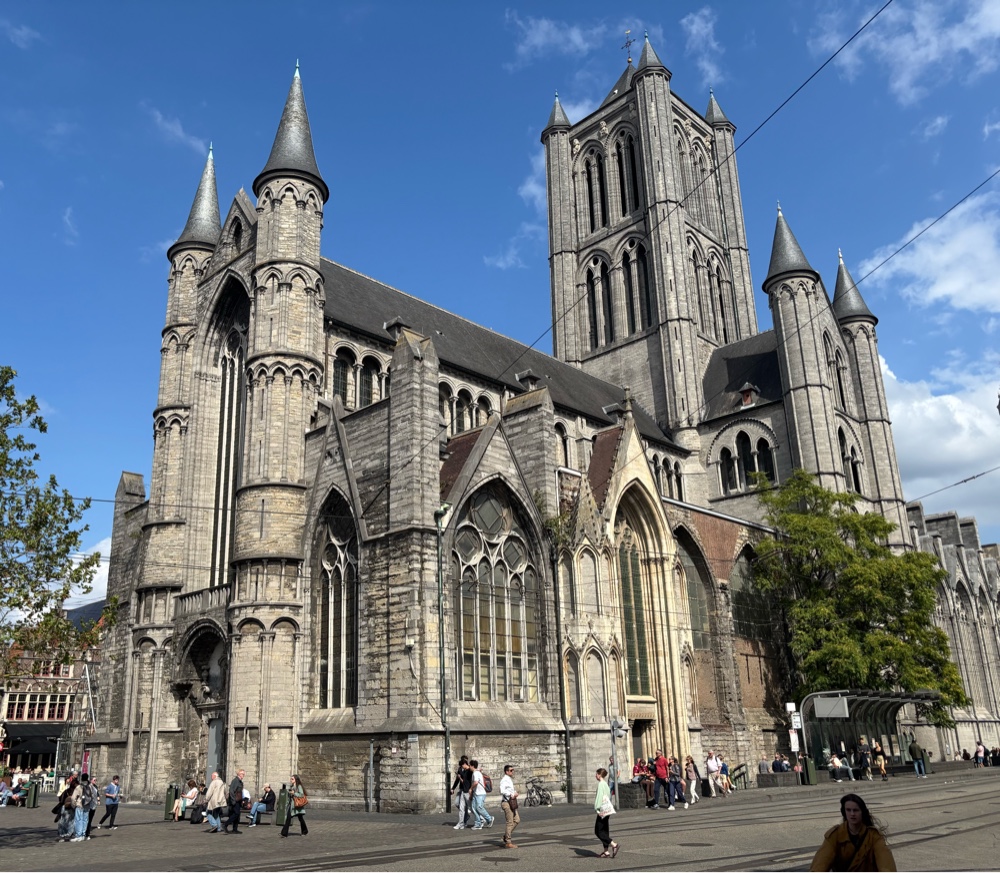 |
| Built in the early 13th century, replacing an earlier Romanesque church damaged by fire. |
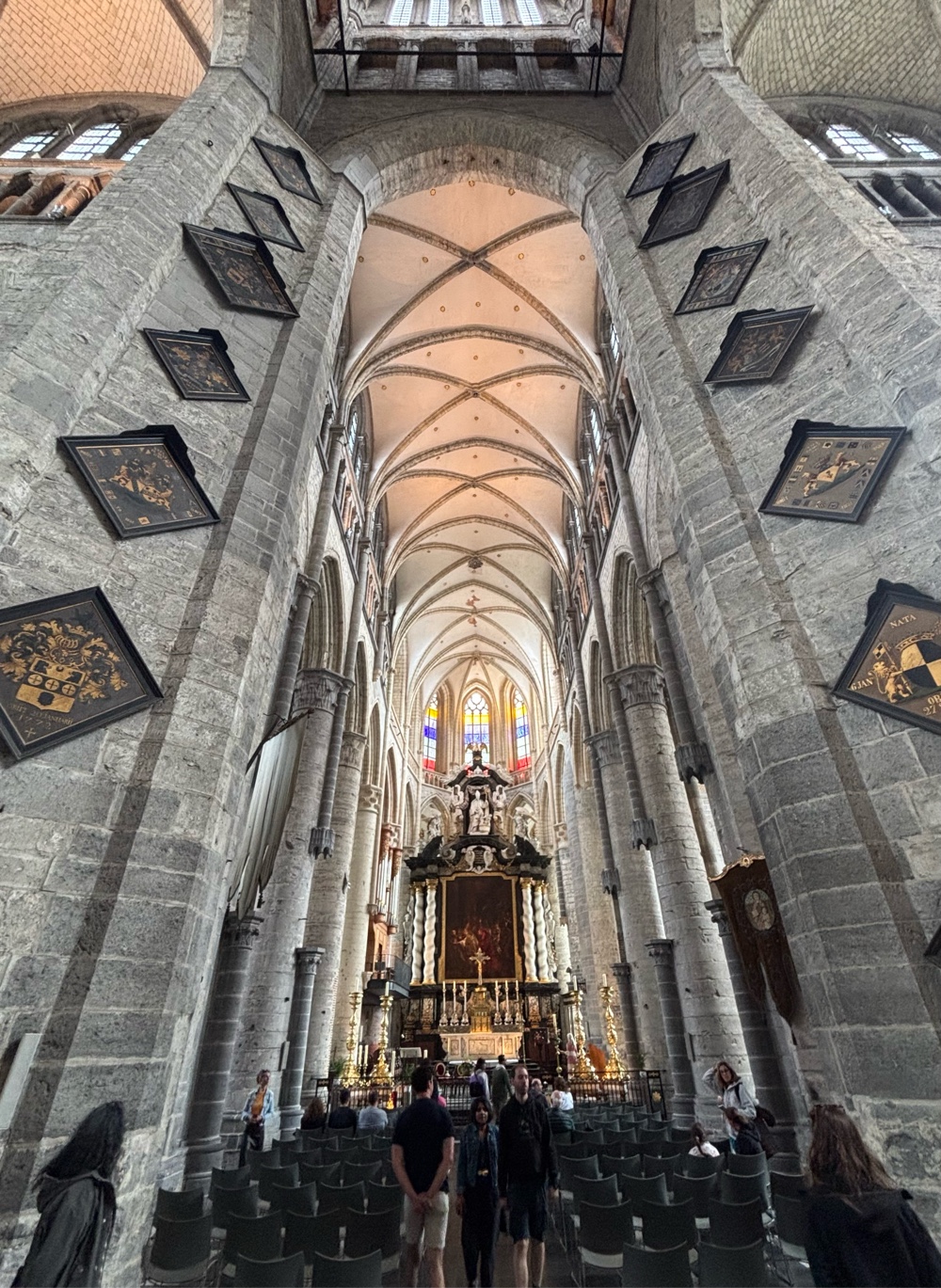
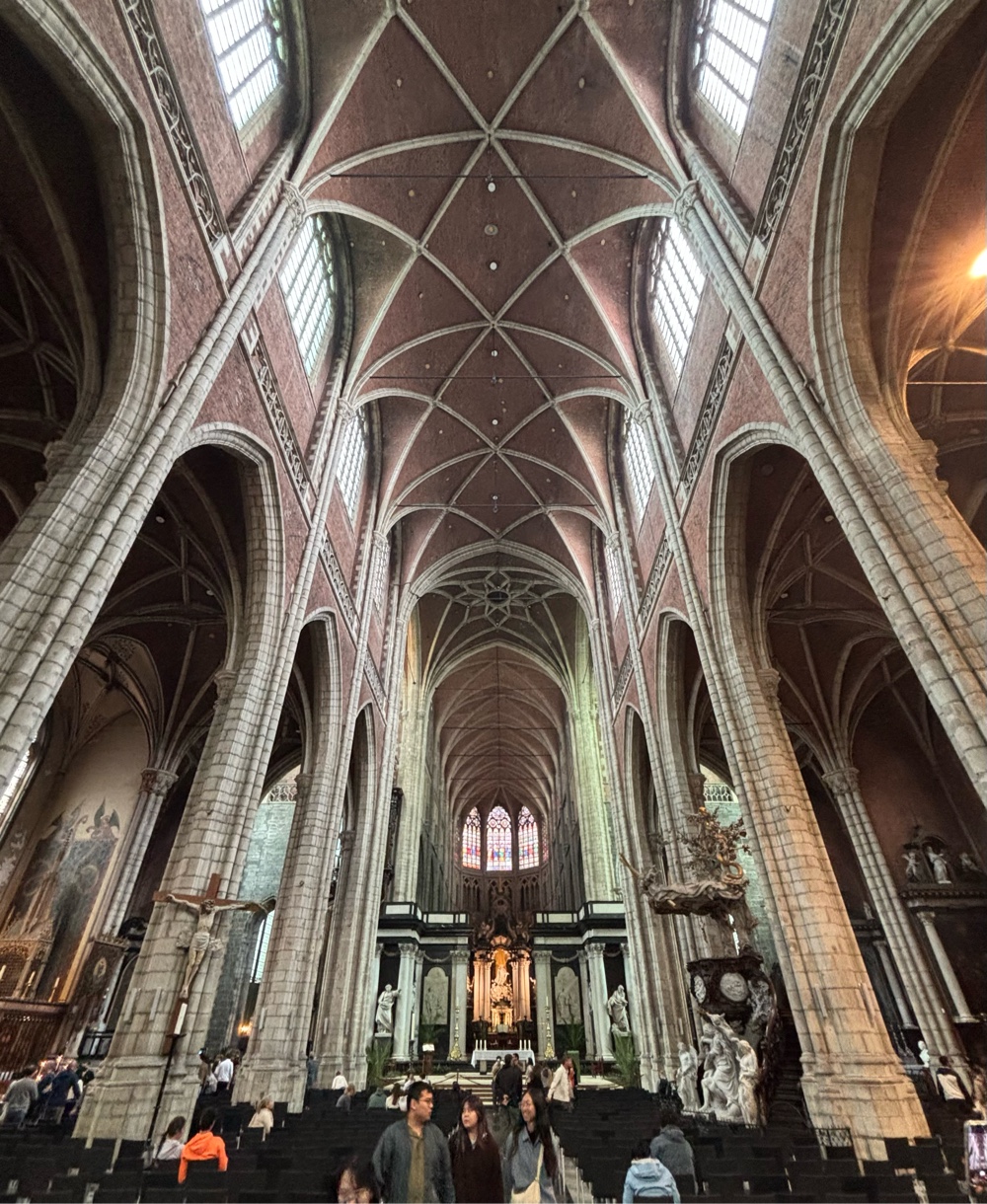
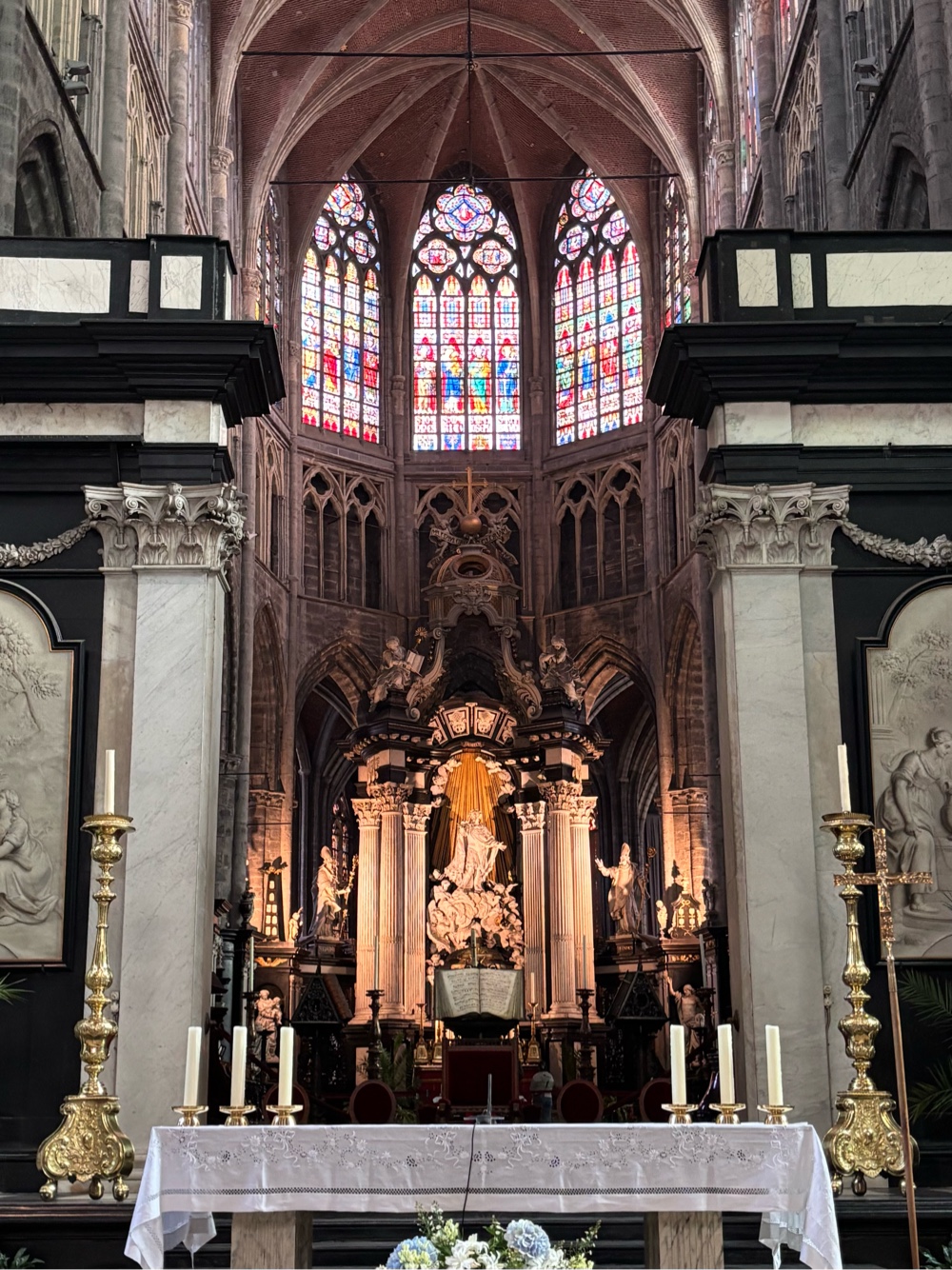
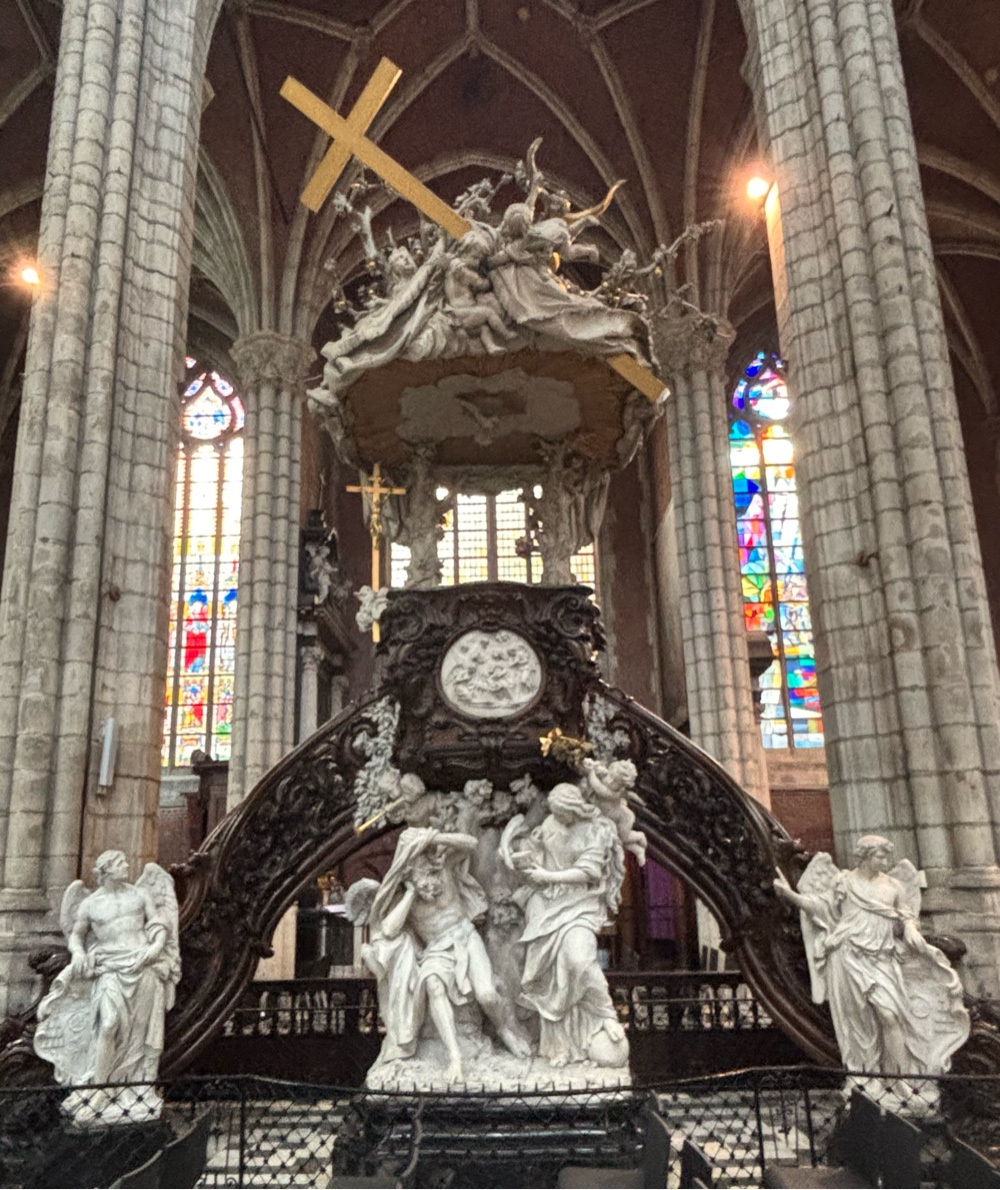
St. Bavo’s Cathedral: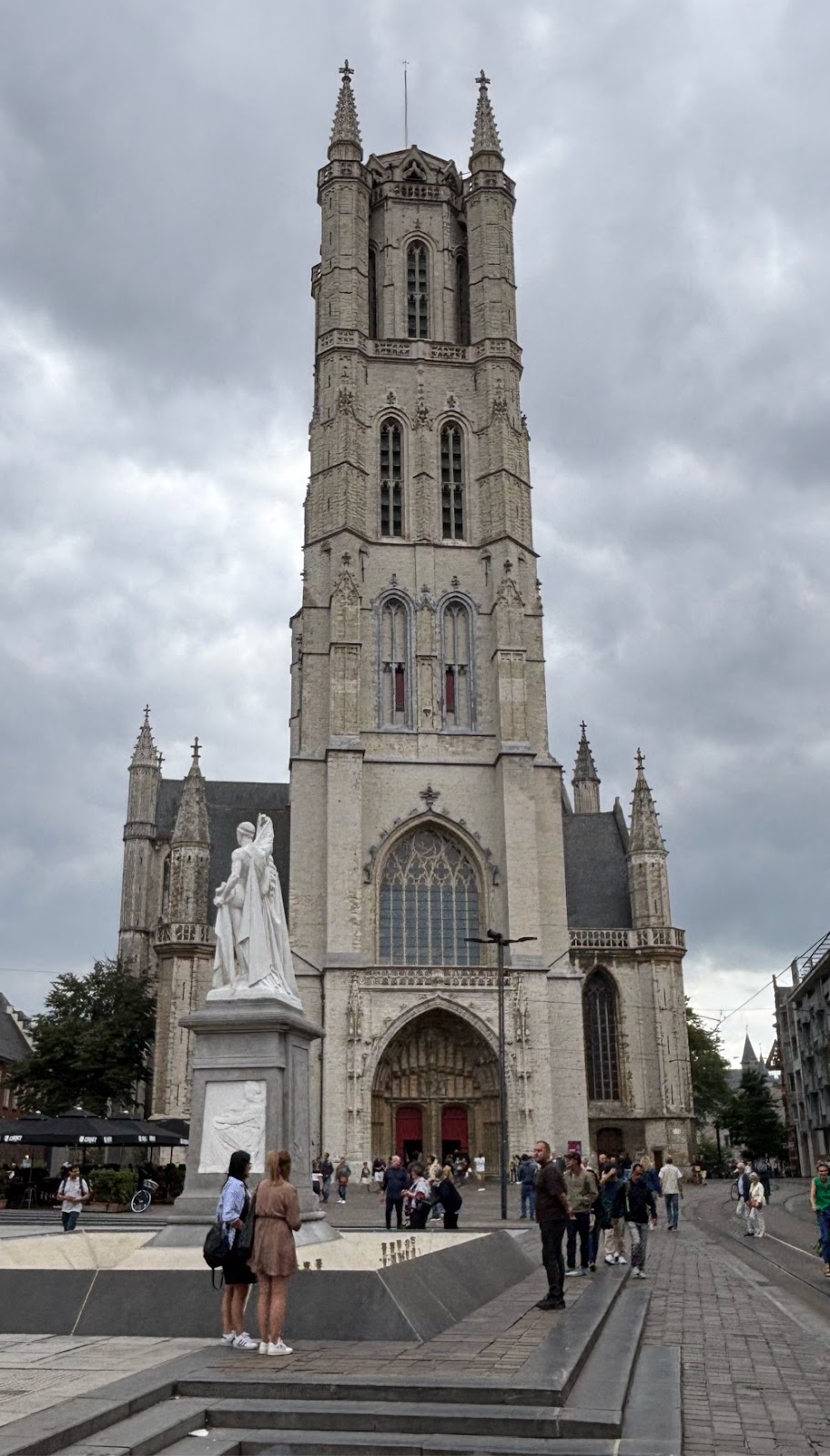 |
| Built in stages between 1274 and 1569. |
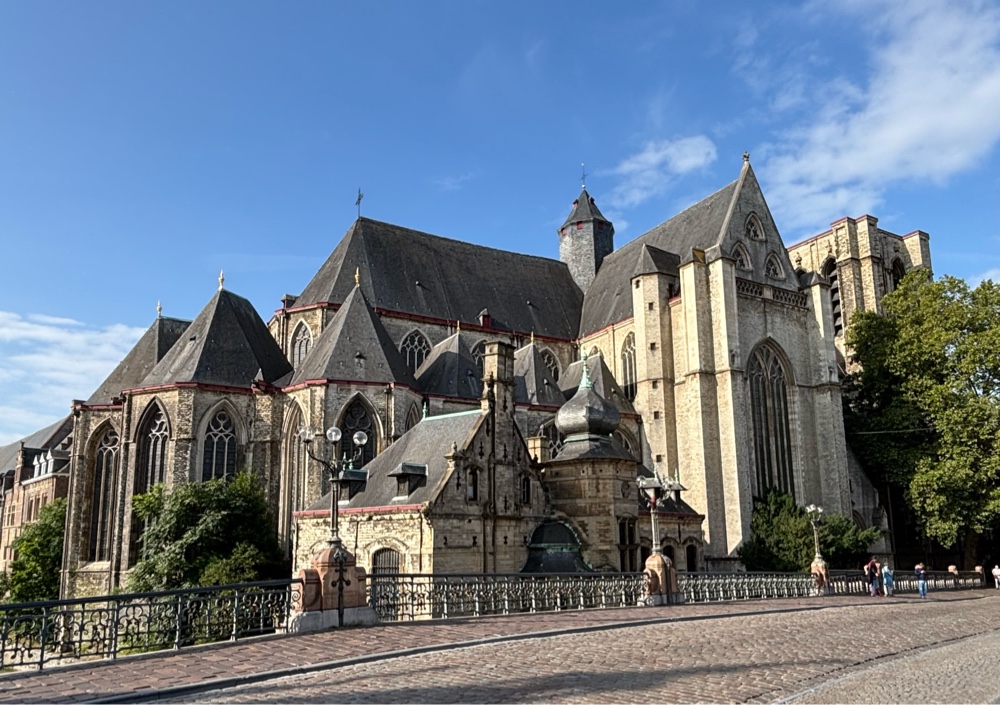
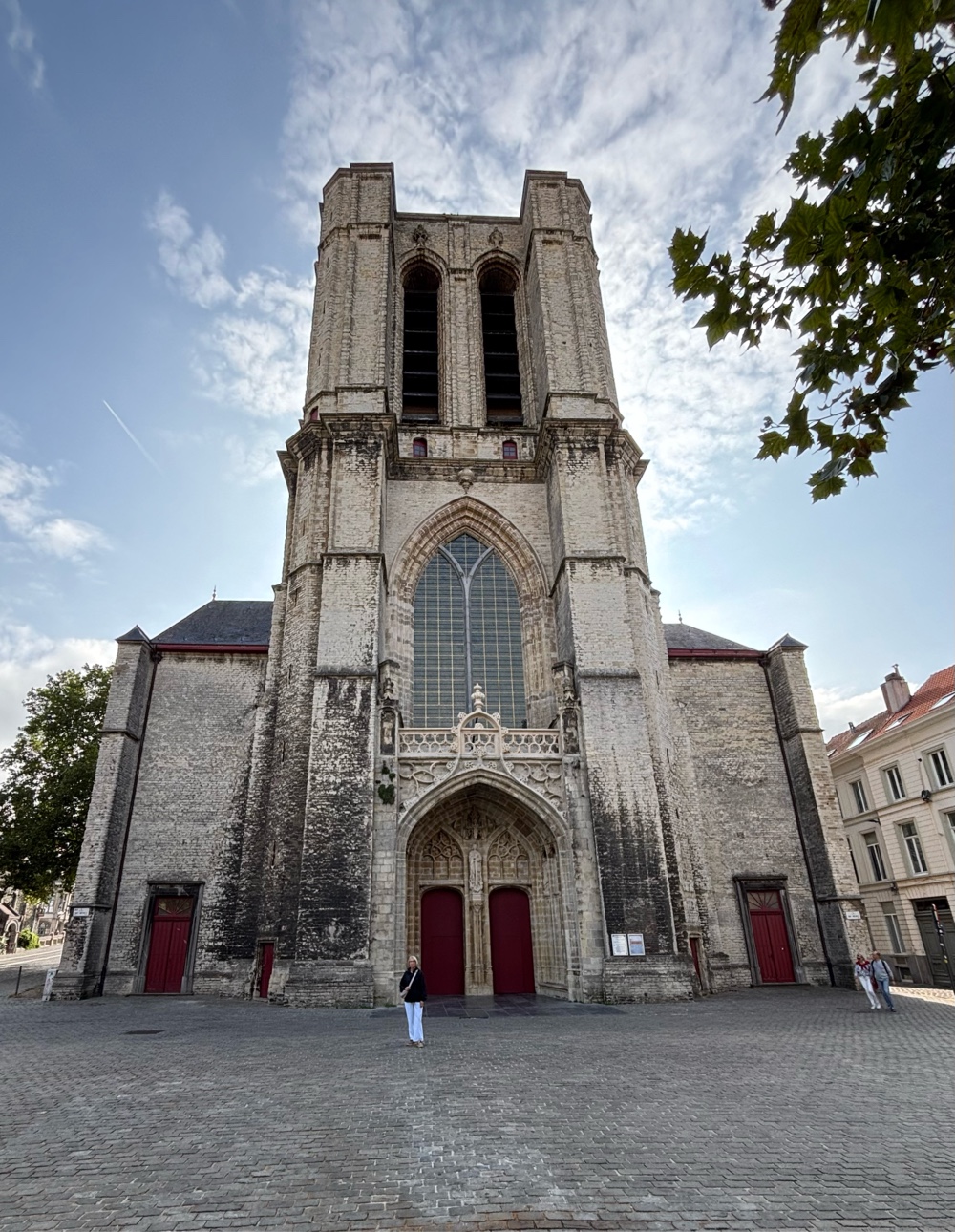
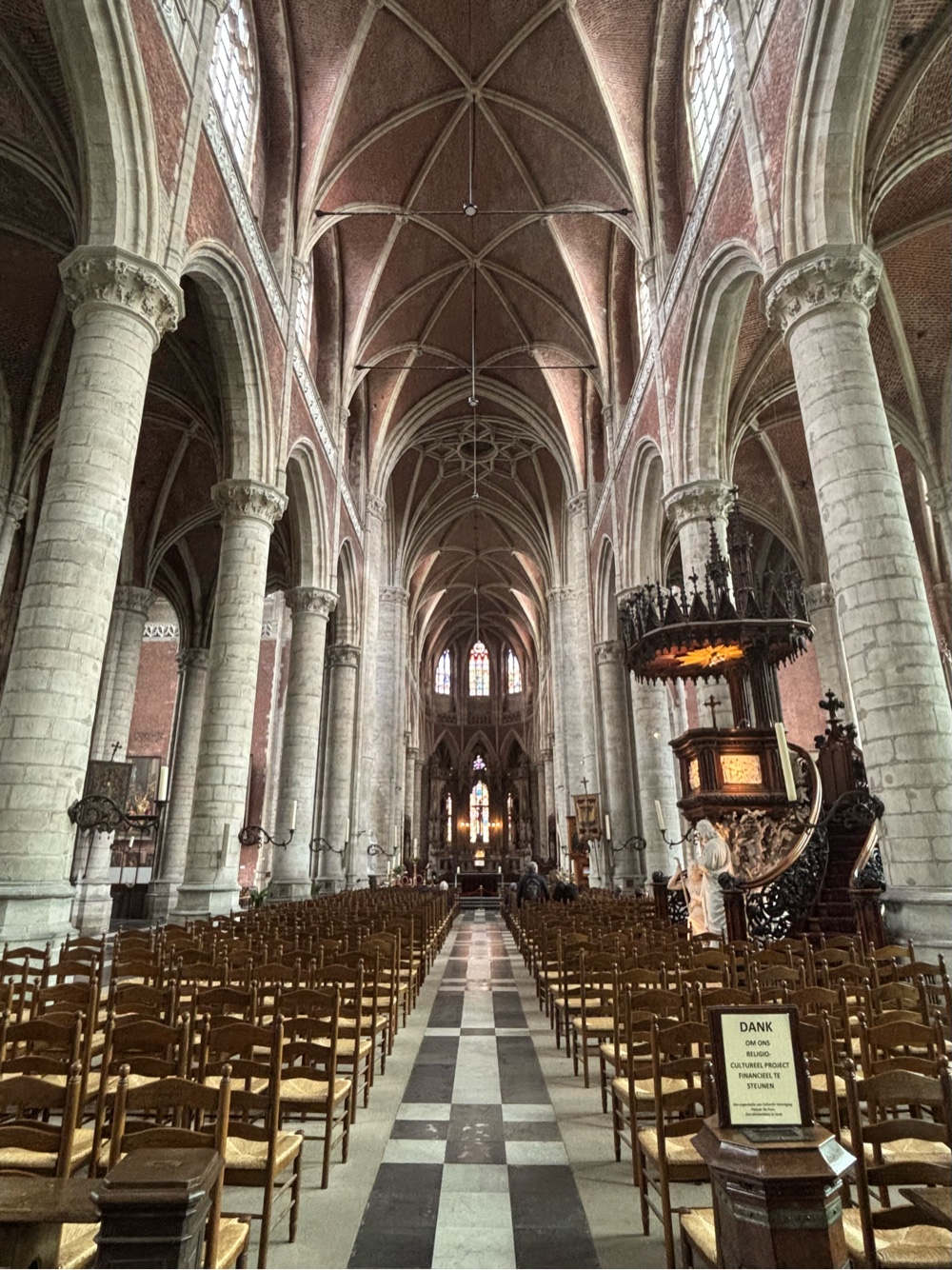
St. Michielskirk:
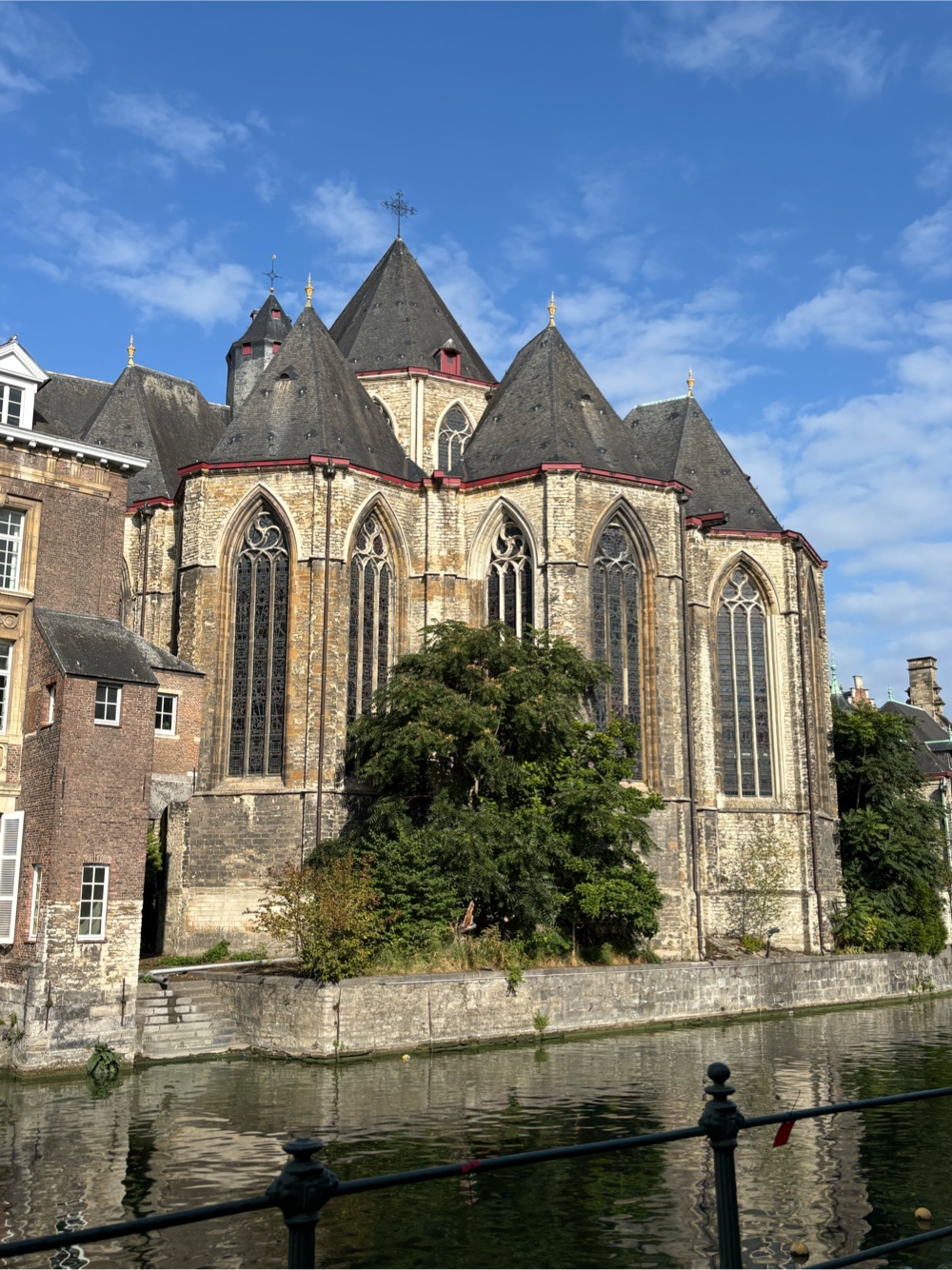 |
| On the bank of the Leie River, construction began 1440, on the site of an earlier 12th century chapel. The tower was left unfinished for financial reasons. |
Belgian Chocolate!
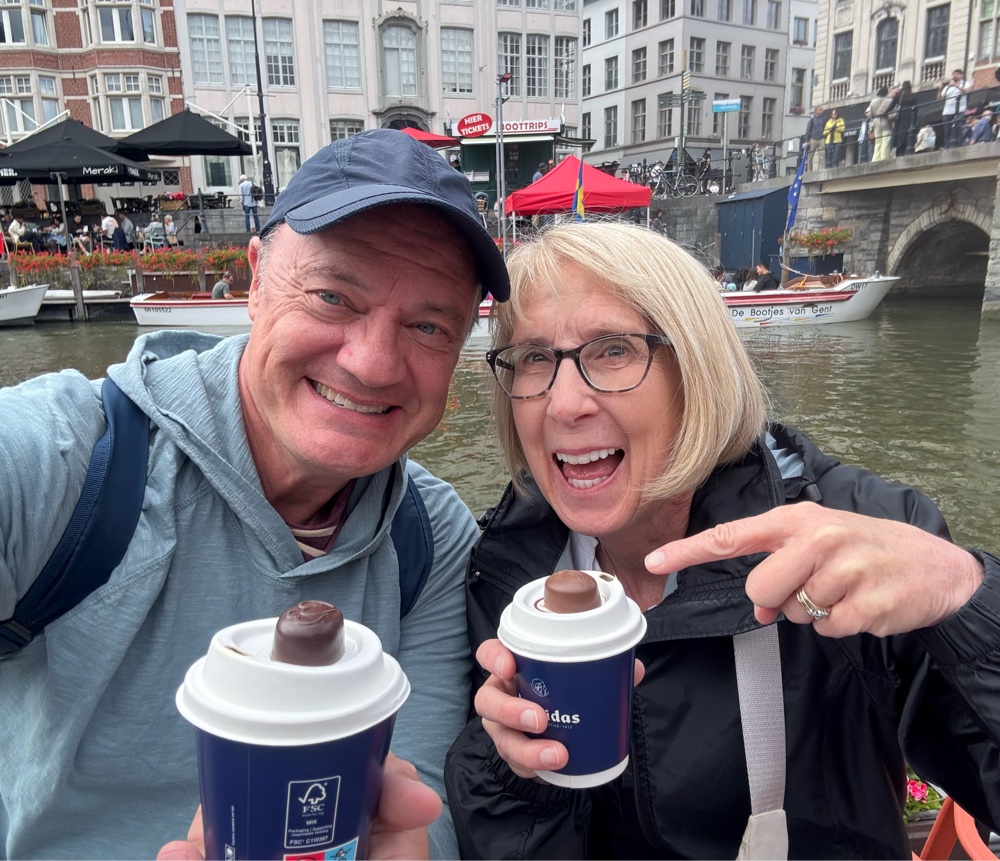 |
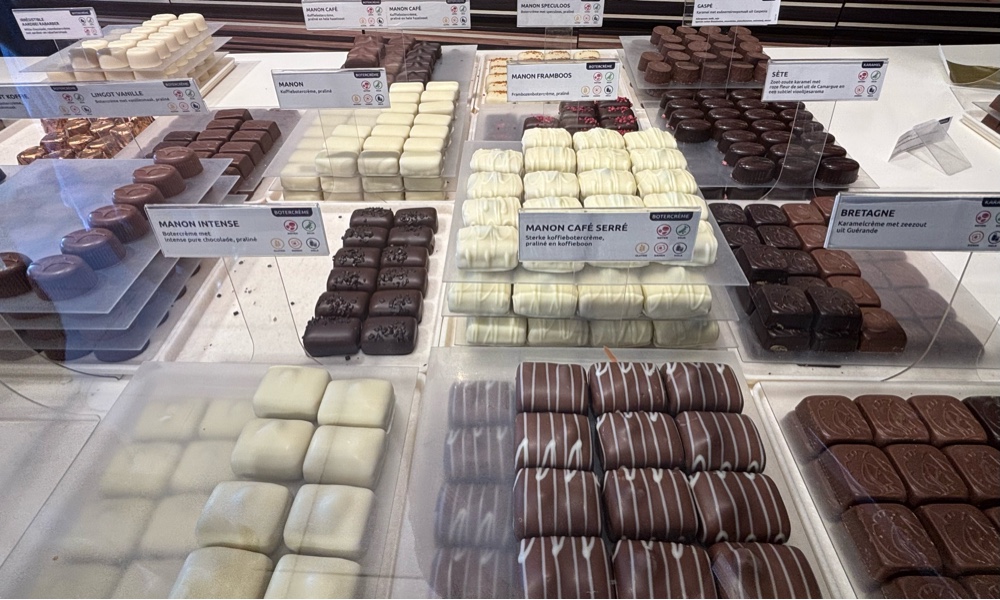
| Belgian chocolate is world renowned. We had our first in-country taste today in Ghent. |
Graslei and Korenlei:
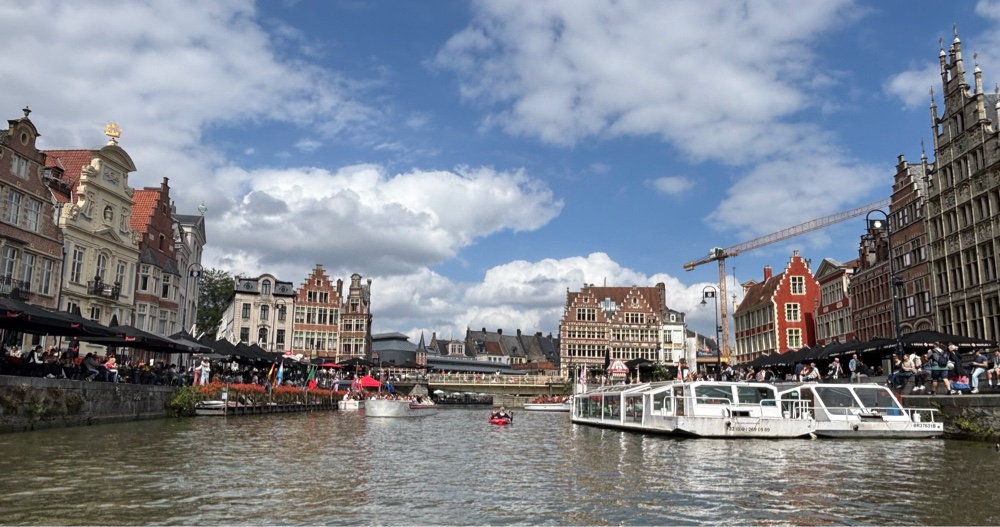
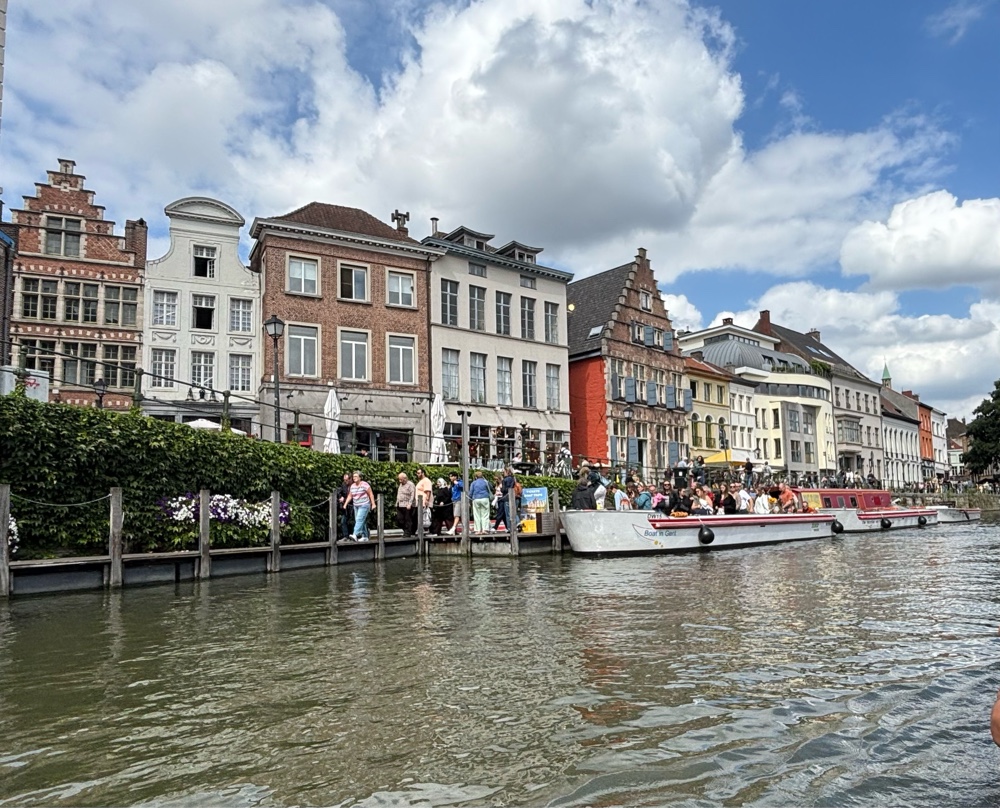
Graslei, to the left of the river, and Kornlei, to the right of the river, served ashistoric quays along the river featuring stunning old guildhalls. Each trade had a guildhall — sort of like today’s unions.
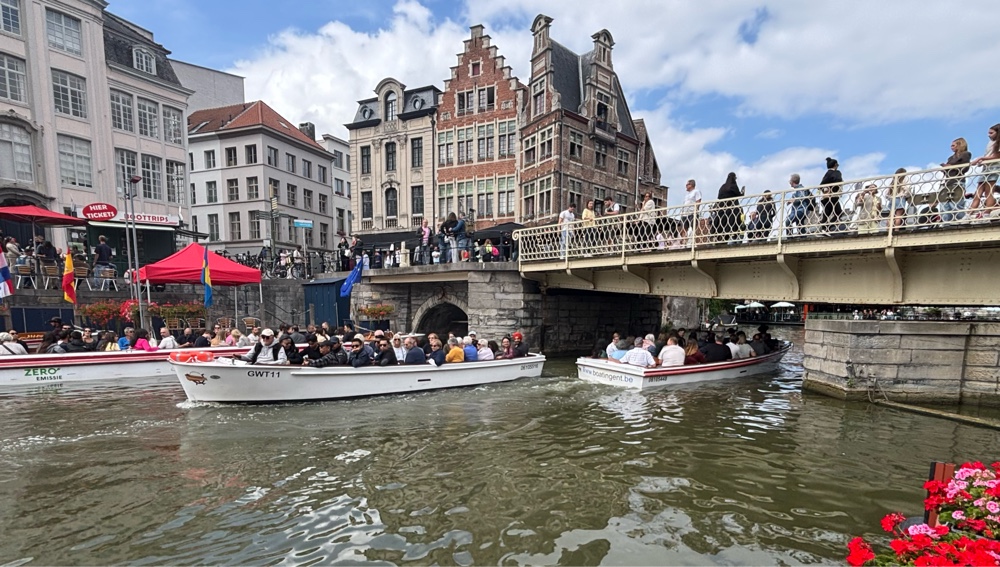 |
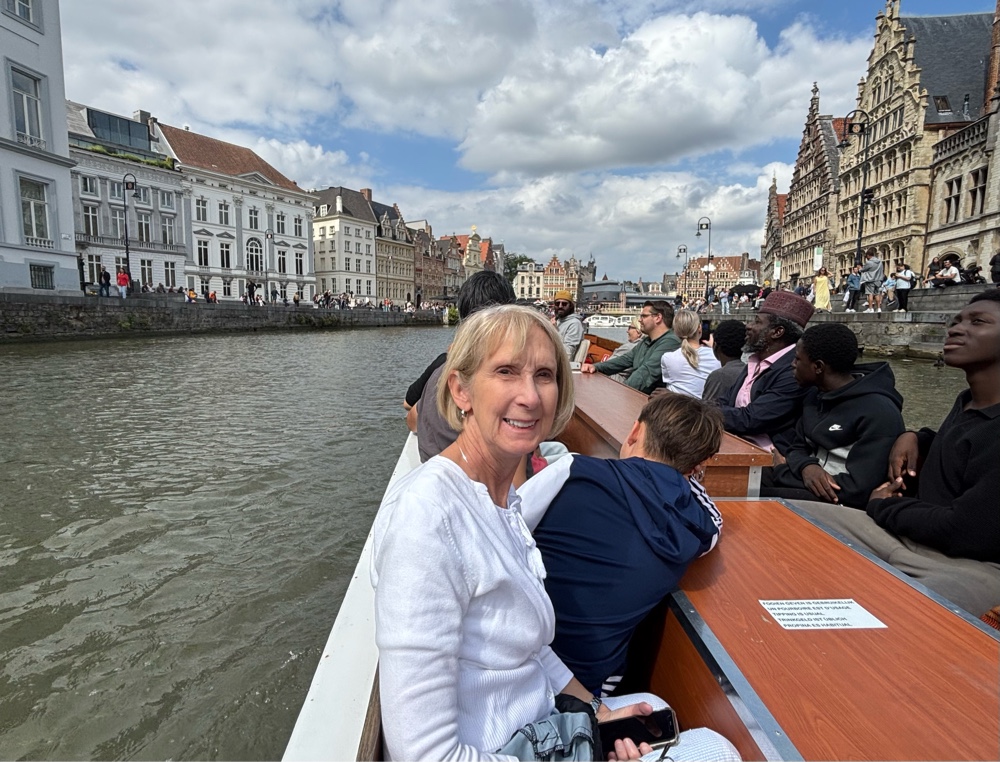
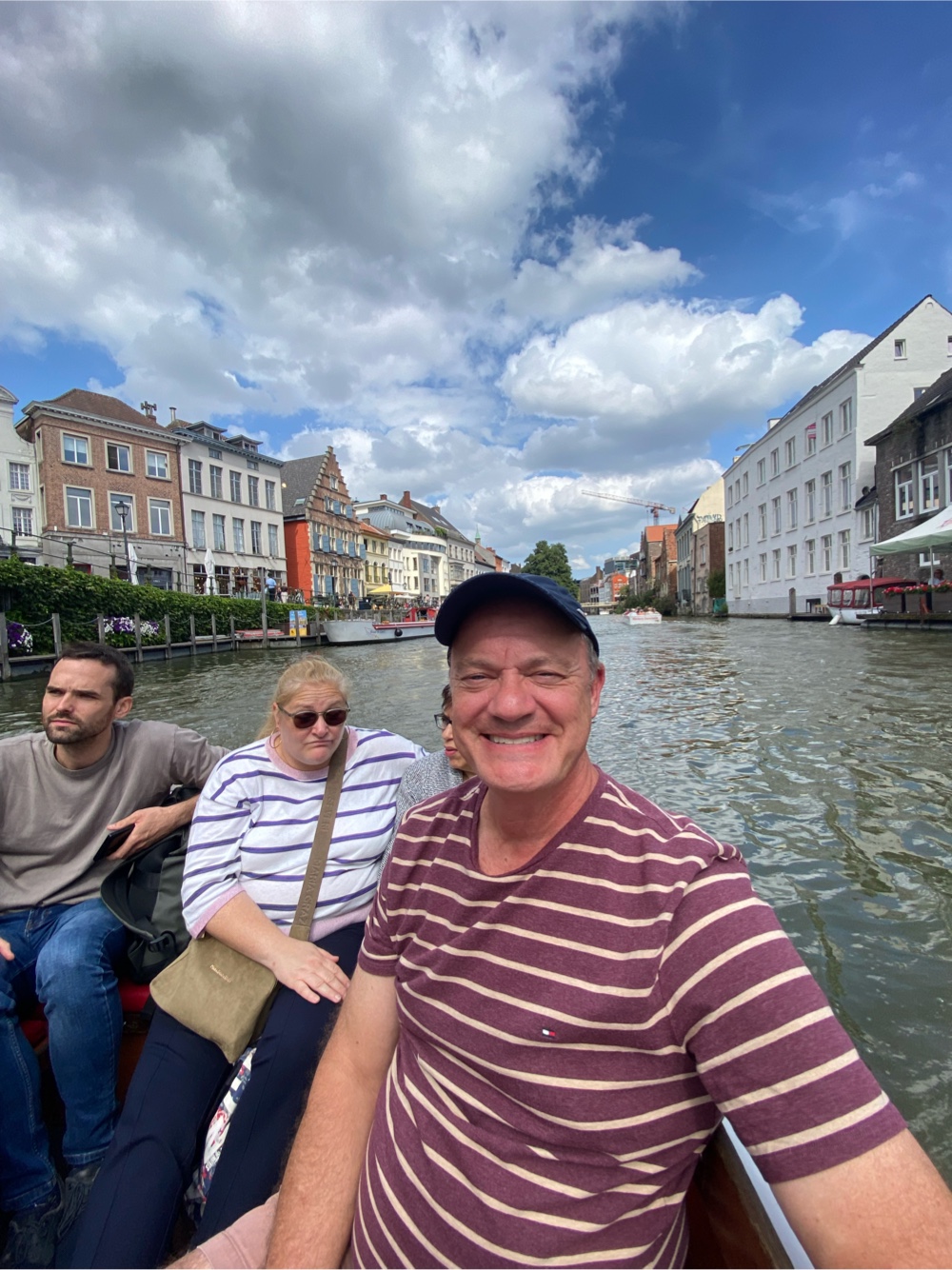
| The river is literally crawling with tour boats like the one we took. |
Boat Tour of the Leie River
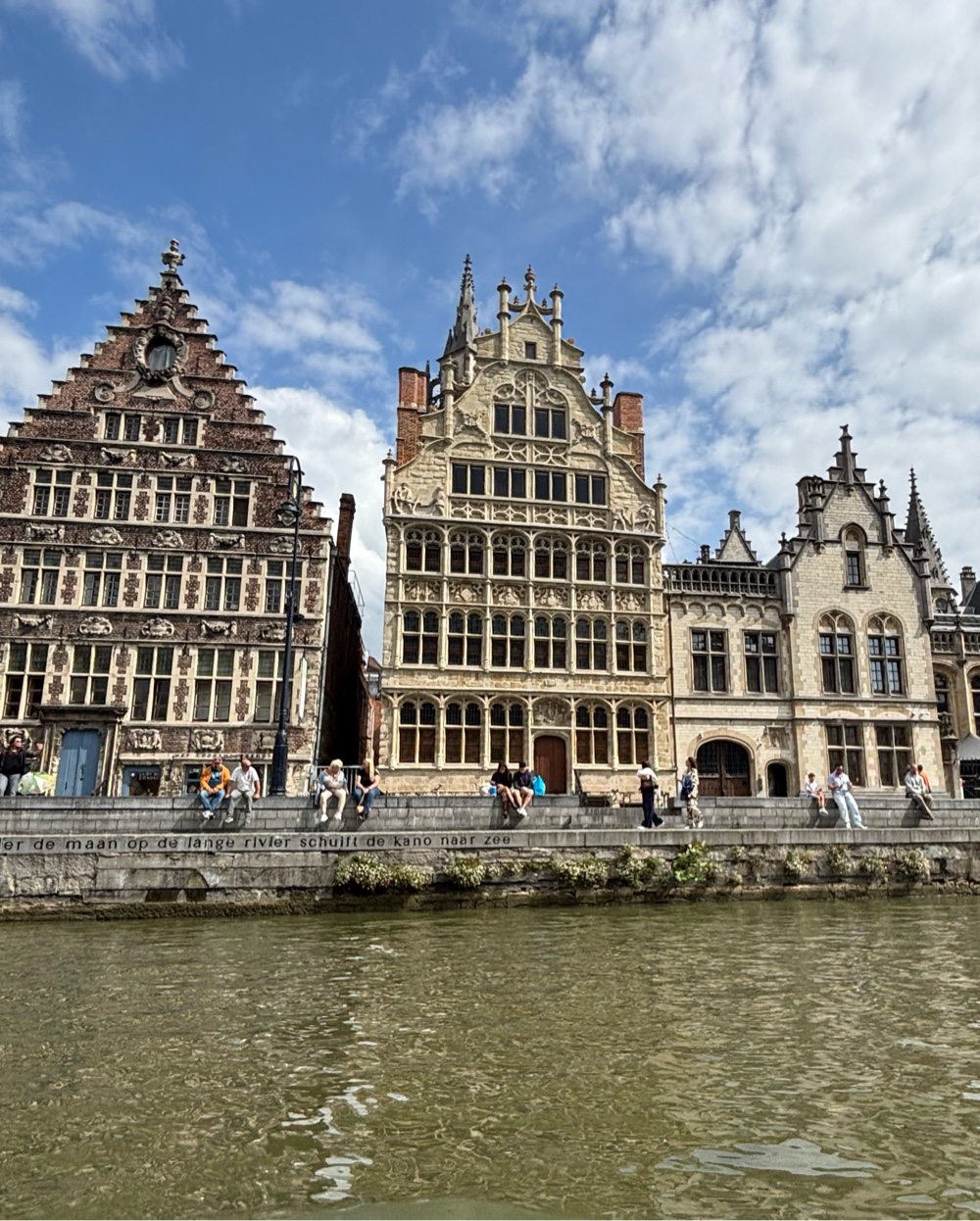 |
| The beige building is one of Korenlei’s most famous guildhalls. |
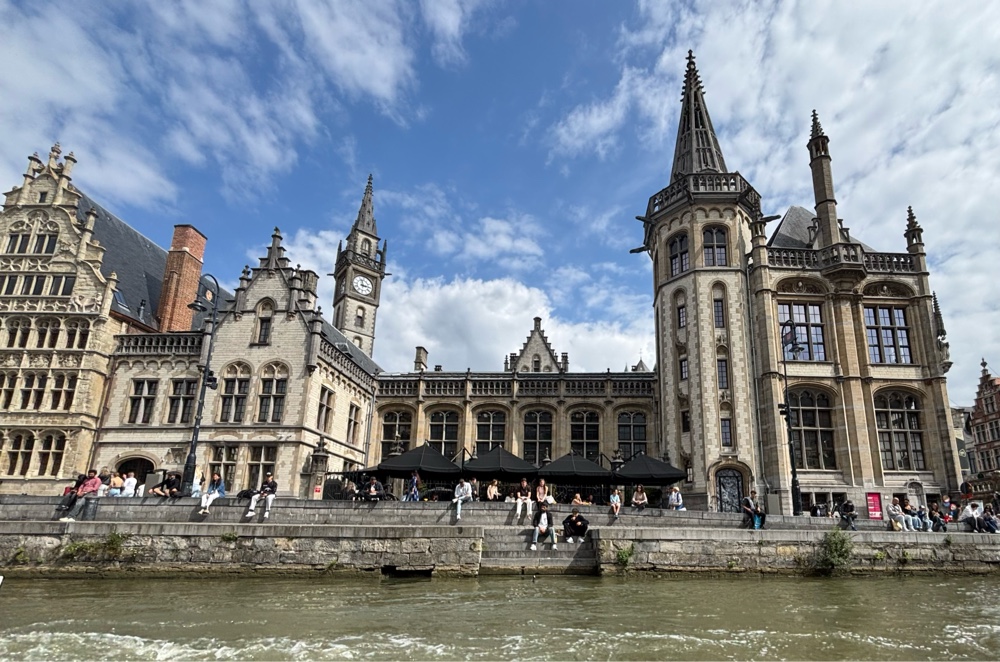 |
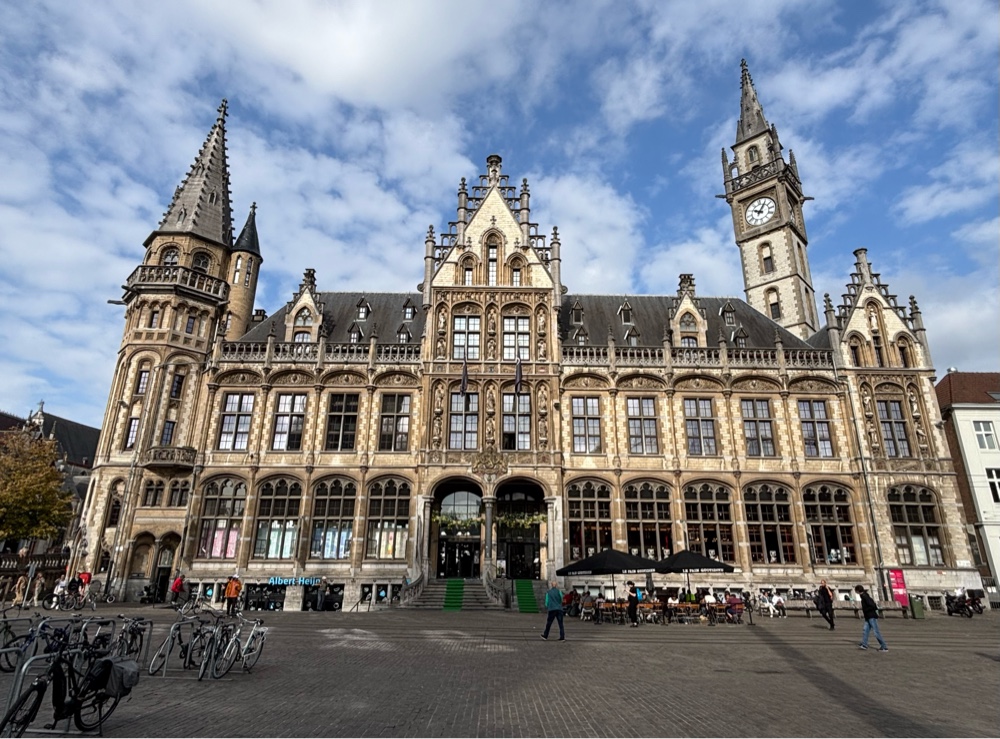
| The post office building was built as part of Ghent renewal efforts for the 1913 World’s Fair. |
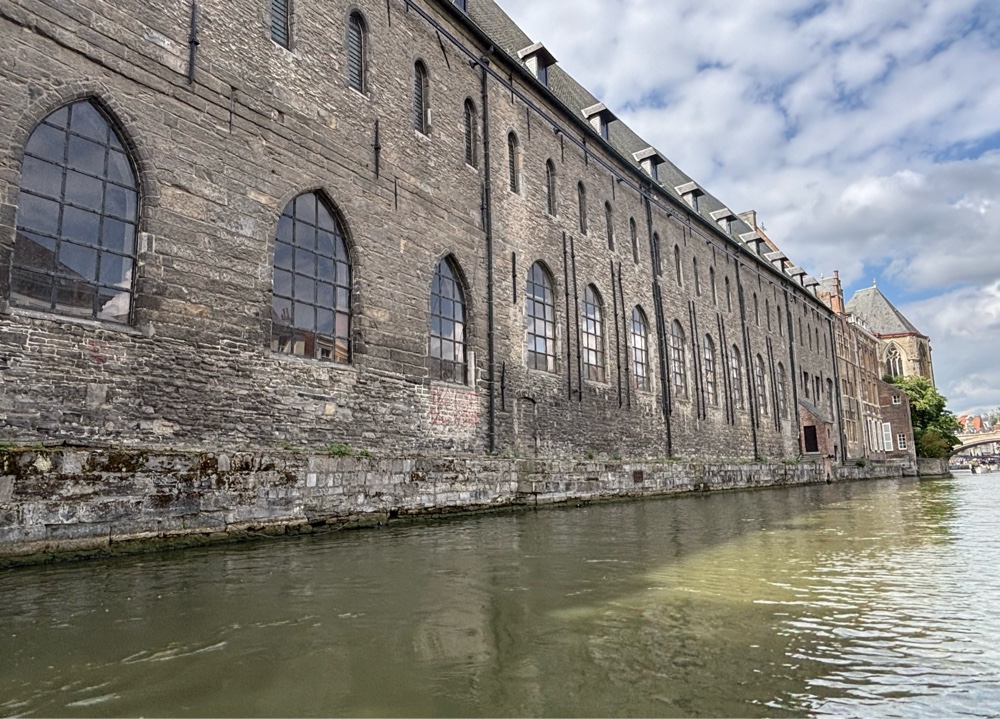 |
| The monastery adjacent to St. Michielskirk. At one point, in an act of religious revenge, raiders threw 30,000 books and manuscripts out of its windows and into the river. |
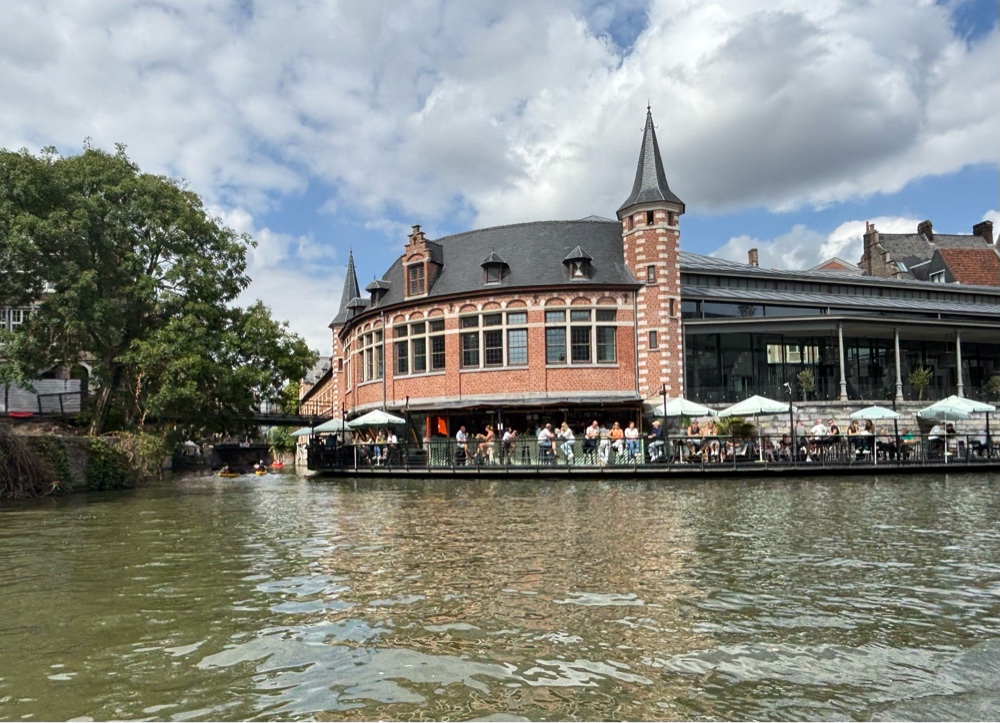 |
| The former fish market. It was renovated in 1913 for the World’s Fair. |
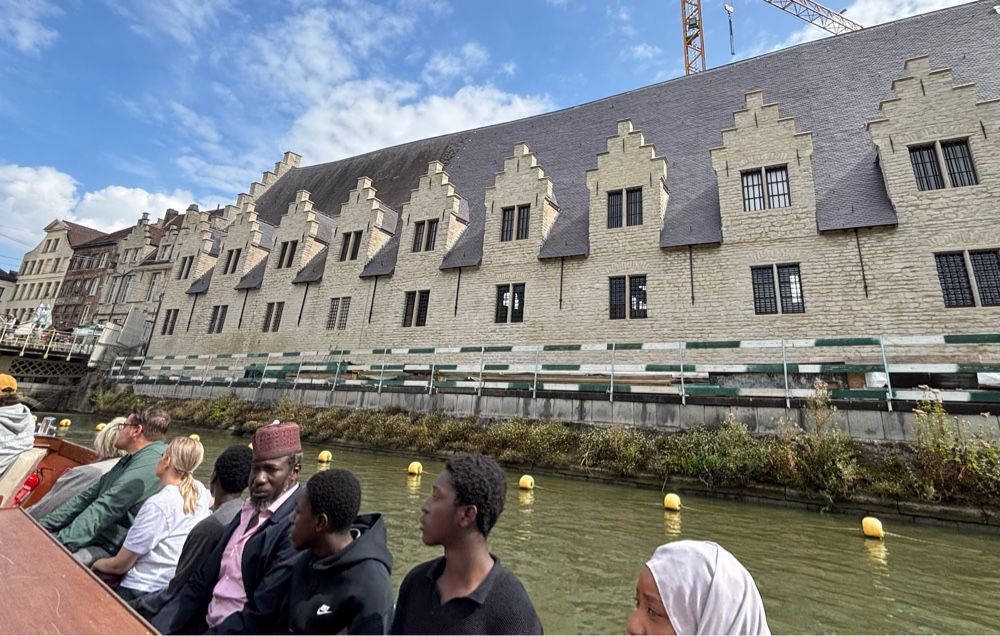 |
| This is the Great Butcher’s Hall, currently being renovated, where all of Ghent’s meat was sold in the Medieval period. Only the rich could enter and purchase; the poor had to remain outside, where they could purchase the leftover and undesirable pieces and cuts, which they would turn into Flemish Stew. They used lots of beer to hide the poor taste of the meet. |
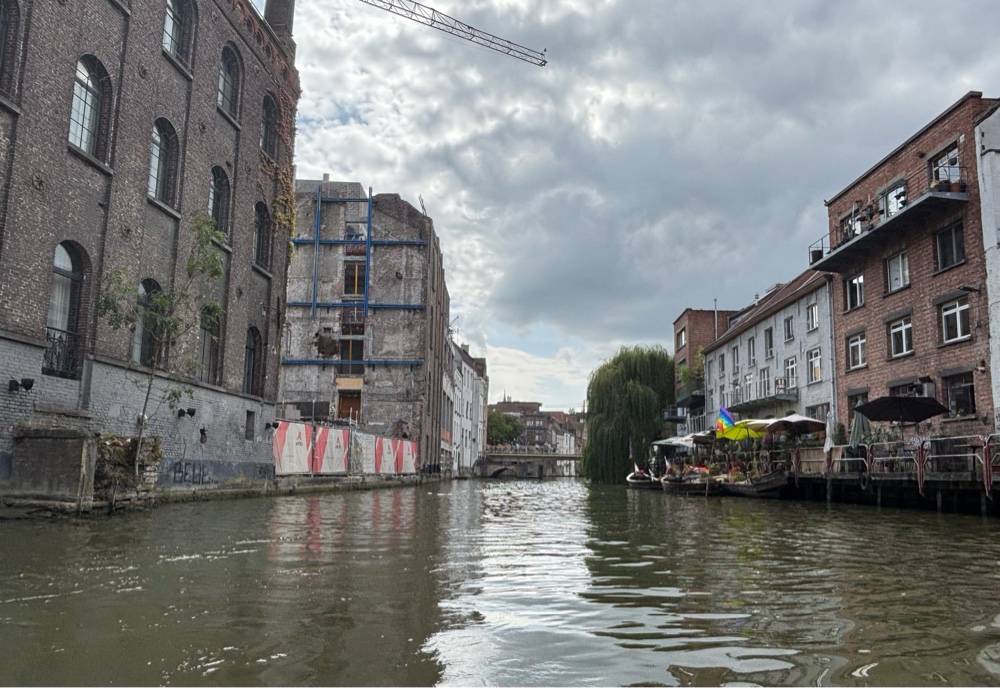 |
| After spies brought the British cotton Ginny technology into Ghent, it developed as an industrial center, with large workhouses along the river. Many of these are being repurposed and gentrified today. |
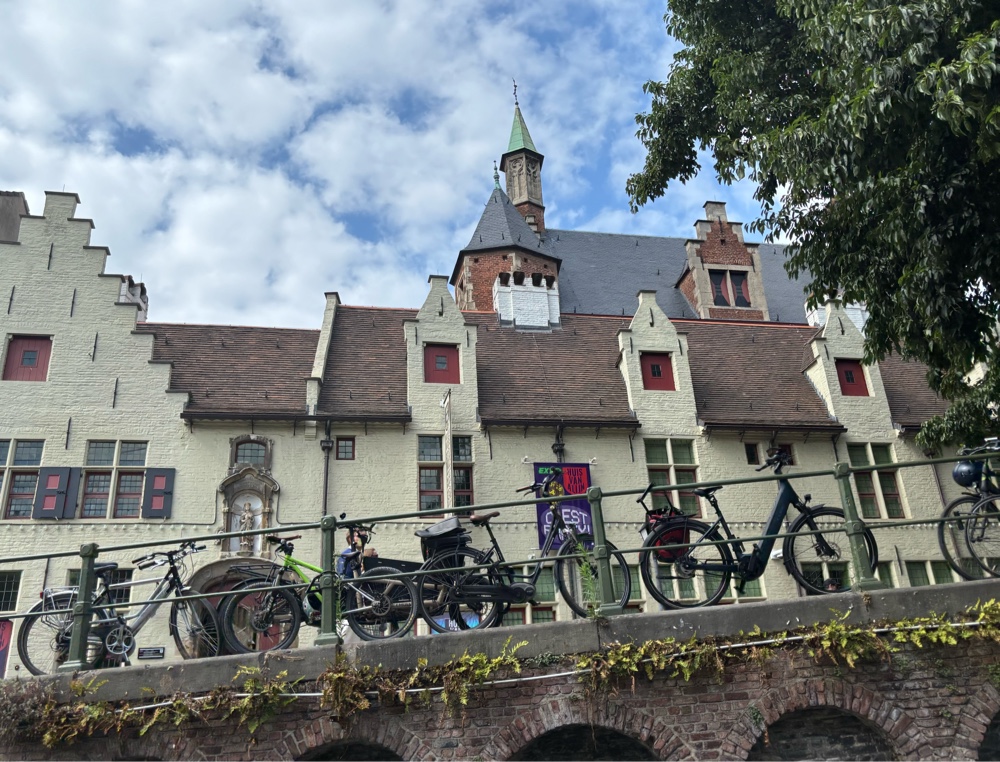 |
| The Hosue of Alijn served as a children’s hospital in the 1600s. |
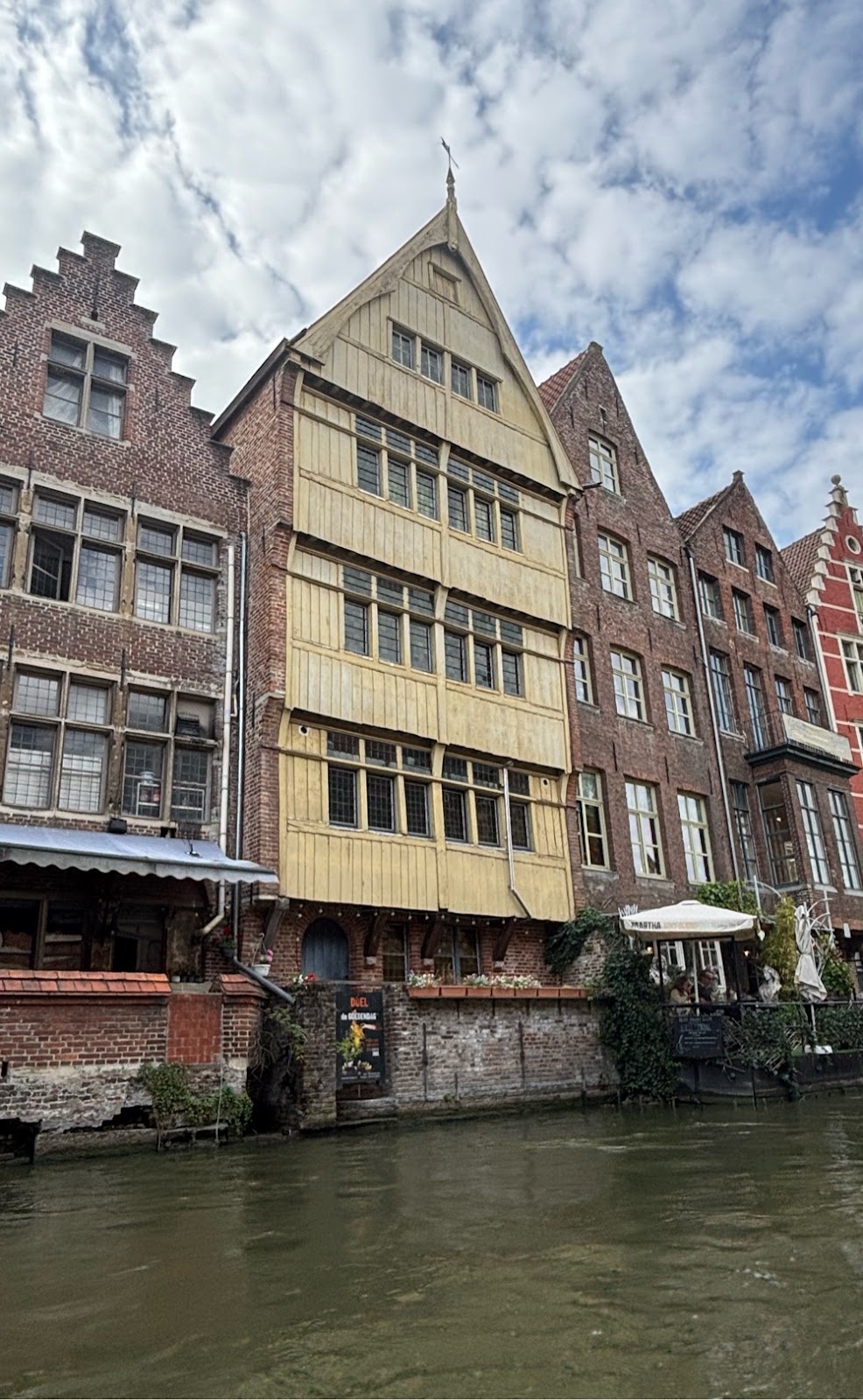 |
| This was the last house in Ghent to have a wooden exterior. After the great fire of London, Ghent’s buildings were slowly rebuilt using stone or brick. |
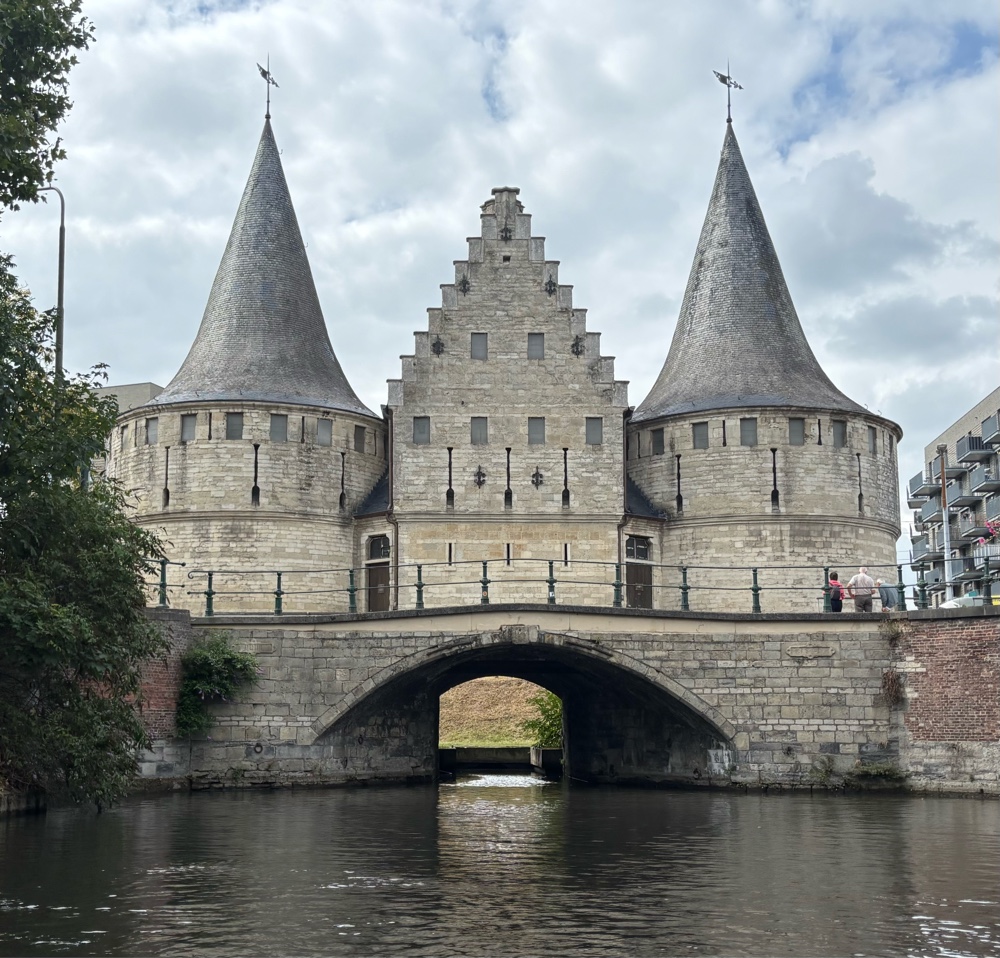 |
| The canal used to continue to Bruges and to the sea. But it was blocked with this building. |
 |
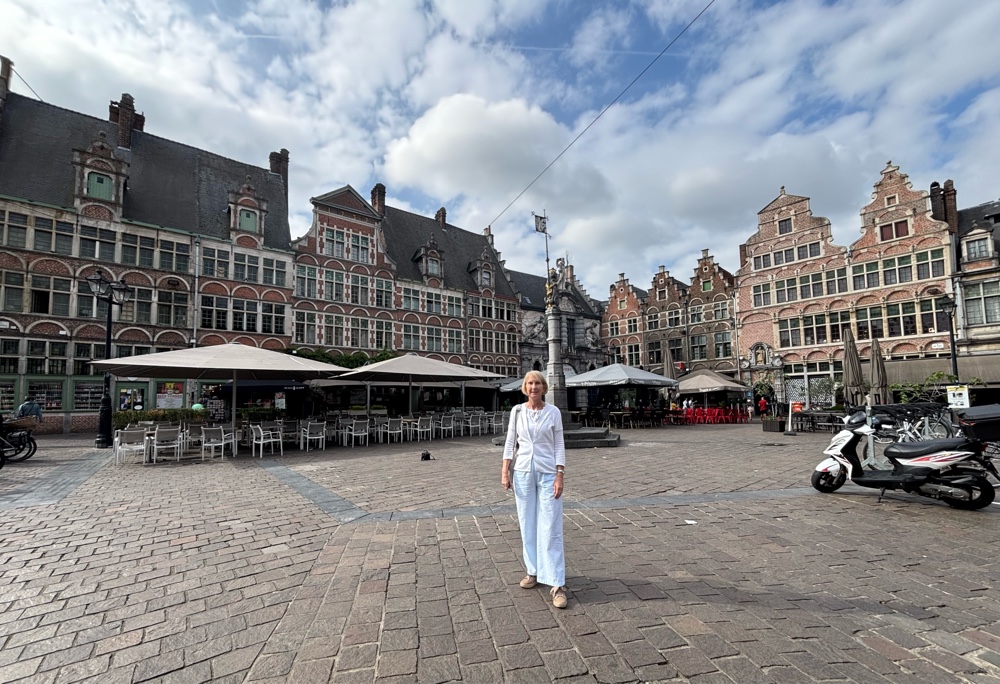
| What a gem Ghent is!! |
Comments
Post a Comment